
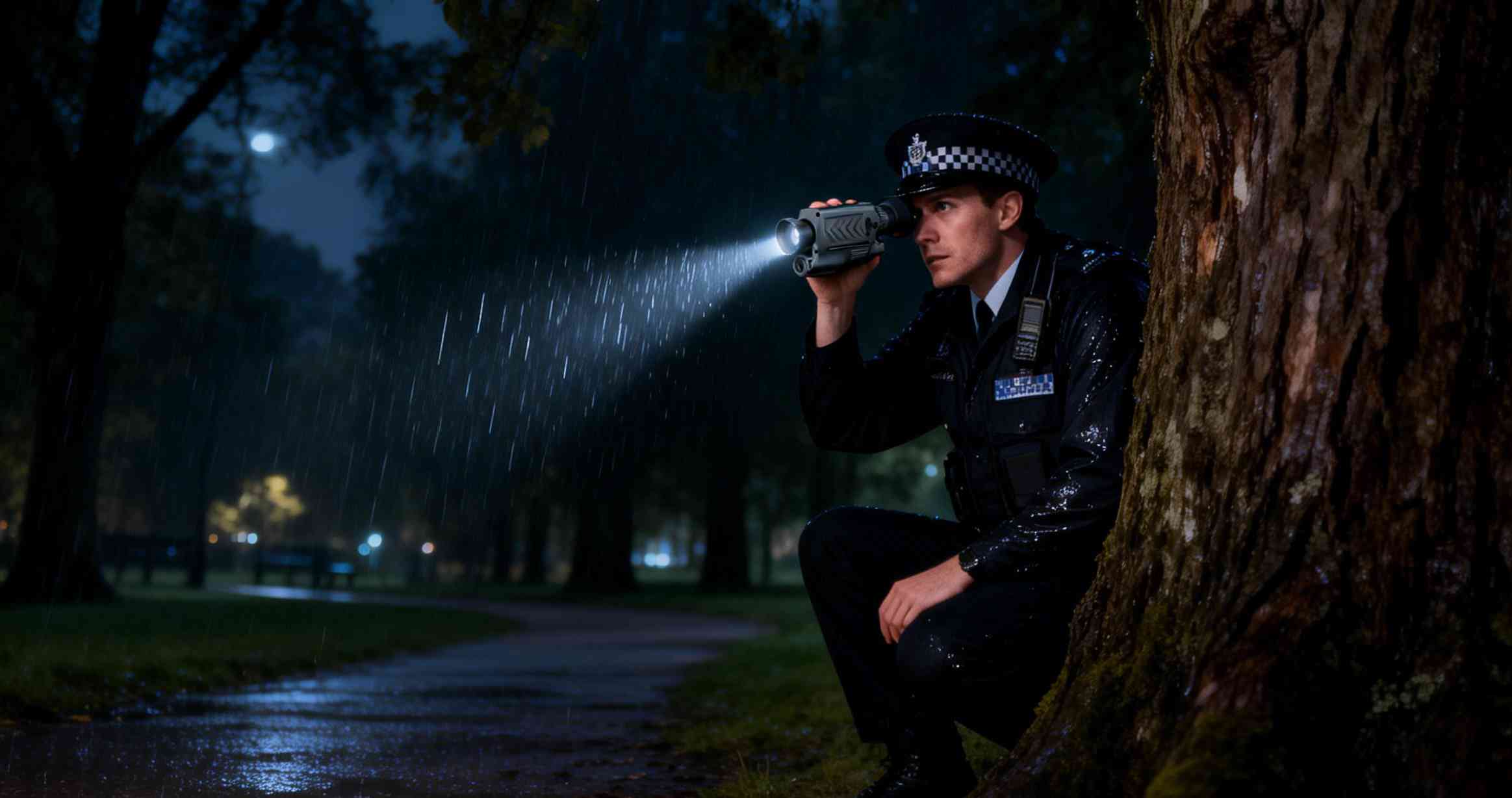
Imagine you take part in a night search for a missing person in thick woods. Monocular Thermal Vision lets you see heat shapes that normal eyes cannot see. You can see clearly in the dark, fog, or smoke. This helps you stay safe and do your job well.
You spot suspects hiding in hard places very fast.
You find lost people exactly during rescue work.
You watch borders and help stop illegal actions and human trafficking.
Key Takeaways
Monocular thermal vision helps police see heat in the dark. It works in fog or smoke too. This makes police safer and helps them do their jobs better.
Modern thermal devices are easy to use and not heavy. They have tools like laser rangefinders. They can share video live with others. This helps police work together well.
Thermal imaging is very important for search and rescue. It helps police find missing people fast. It works well in hard places to search.
Using thermal vision lets police watch crowds and events. It helps keep people safe by spotting danger early. Police can stop problems before they get worse.
Police must practise with thermal devices often. They need to follow rules when using them. This helps them use the devices well and keeps people’s trust.
How Monocular Thermal Vision Works

Principles Of Thermal Imaging
Monocular thermal vision helps you see heat that eyes cannot see. The device uses special sensors called amorphous silicon microbolometers. These sensors take in infrared energy from things around you. They turn this energy into pictures you can see. Each pixel works like a small thermometer. It checks how hot or cold each spot is. This lets you spot people, animals, or cars in darkness, fog, or smoke.
Feature | Description |
|---|---|
Technology | Amorphous silicon microbolometer technology |
Function | Changes infrared (IR) energy into pictures you can see |
Application | Lets you find targets day or night, in bad weather, and far away |
Mechanism | Pixels take in heat, working like thermometers to check temperature changes |
Thermal imaging helps you in any light. You can see movement and find suspects or missing people when it is hard to see.
Features Of Modern Devices
Modern thermal monoculars, like the FLIR Breach PTQ136 and Verytek MV Series, have many helpful features for police work. You get clear screens, different colour choices, and can record what you see. Some devices, like the FLIR Scion PTM, send safe video to command centres. This helps your team work together better.
Small and light so you can carry them easily
Menus with icons make them simple to use
Fast pictures (up to 60 Hz) show smooth movement
Thumbstick controls let you use them in the dark
Zoom options help you see far away
Polarity modes let you pick white hot or black hot views
The Verytek MV Series has a laser rangefinder built in. It can measure up to 1000 metres. You can send pictures and videos live with Wi-Fi. This helps you share important news fast.
Limitations And Considerations
There are some things to think about when using monocular thermal vision. It works well when you cannot see well, but it does not show faces or colours. You might need other tools to know who someone is. Battery life and how strong the device is matter for long jobs. You need to practise often to read thermal images right and not make mistakes.
Tip: Always check your device’s battery and settings before you go out. Practising often helps you stay calm and ready when things get tough.
Applications In Police Surveillance
Suspect Pursuit And Apprehension
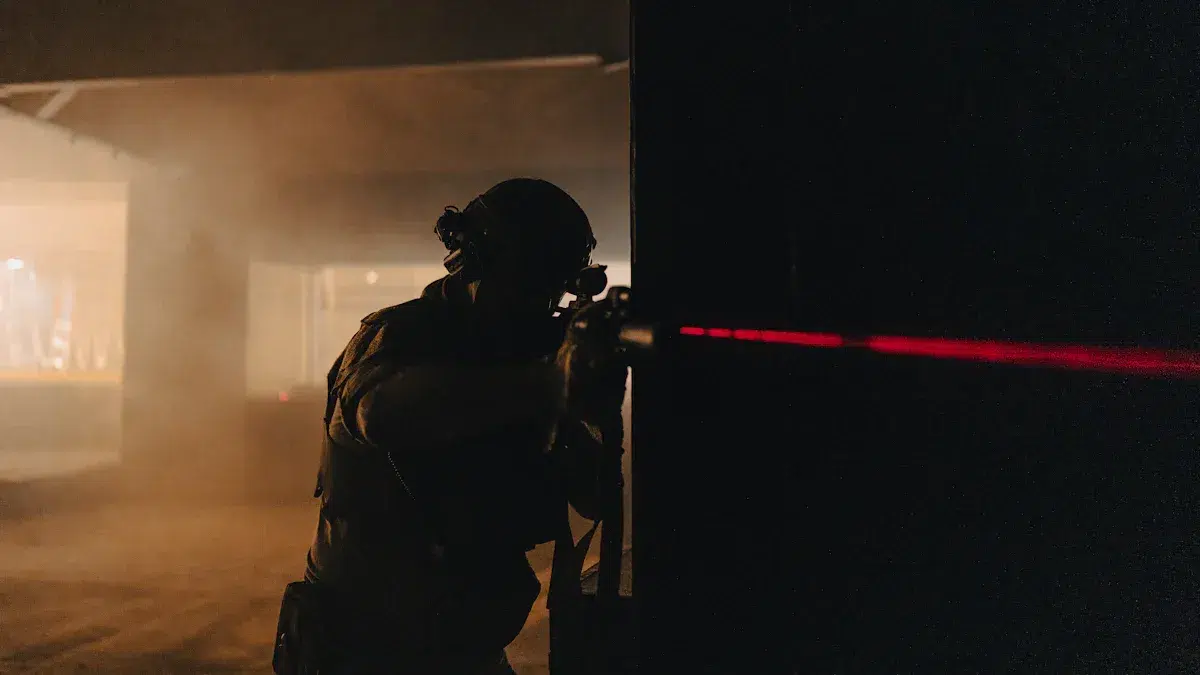
It is hard to follow suspects at night or in tricky places. Monocular thermal vision helps you see better than with your eyes alone. You can spot heat from people hiding behind things or in busy city areas. Tools like the FLIR Scout Pro and Verytek MV Series Infrared Thermal Monocular help you find suspects fast, even if they try to hide.
SWAT teams use thermal imaging to find suspects near buildings or in fields. In one robbery, officers found a suspect in a field next to a building with a thermal monocular.
You can follow the heat left by footprints. This helps you track suspects who run away. In an auto theft, police used thermal cameras to follow a suspect through a car park and woods.
The Verytek MV Series has a laser rangefinder. It measures how far away a suspect is. This keeps you safer and helps you act quickly.
Note: UK police often need to watch people secretly. Small thermal monoculars let you work quietly, even in busy streets or the countryside.
Search And Rescue Operations
When someone is missing, every second matters. Monocular thermal vision helps you find people by seeing their body heat, even in darkness, fog, or smoke. This is very important for search and rescue, especially for children or older people with dementia.
The FLIR Scion OTM 266 can spot a person at 950 metres, recognise them at 237 metres, and identify them at 118 metres. The Scion PTM series can see even further.
The Verytek MV Series has different imaging modes. You can pick Black Hot, White Hot, or Rainbow for the best view.
You can share pictures and videos live with Wi-Fi. This helps your team work together and rescue people faster.
You can use thermal monoculars in cities or the countryside. In parks, you can look for lost children at night. In the country, you can find hikers or drivers stuck far away.
Crowd Monitoring For Public Safety
Big events and crowds are hard for police to watch. You need to keep people safe, spot danger, and act fast in emergencies. Thermal imaging lets you see through smoke, fog, or darkness. This makes it easier to protect everyone.
You can scan big areas fast. You can find people who need help or who might be a risk.
Some thermal monoculars have a 32-degree field of view. This helps you see crowds and focus on certain people at the same time.
Sharing images in real time helps officers work together and respond quickly.
Tip: At festivals or protests, thermal cameras help you find hidden dangers or people in trouble, even when you cannot see well.
Border And Perimeter Security
Keeping borders and important places safe needs you to watch all the time. Monocular thermal vision helps you spot people or cars trying to cross into restricted areas, even in bad weather or thick plants.
In Thailand’s Operation Vigilant Horizon, police used the FLIR Scout TK to find drug traffickers in the jungle. Officers followed their heat and found secret paths used by traffickers.
The Verytek MV Series is strong and can see far. It works well in the UK’s different landscapes. You can watch borders, ports, or important places with confidence.
Thermal imaging shows heat that normal cameras miss. This makes it easier to find intruders or illegal actions.
Feature | Urban Use Case | Rural Use Case |
|---|---|---|
Situational Awareness | Watch city streets and public events | Check open fields and forests |
Detection Range | Spot suspects in alleys or car parks | See people or cars far away |
Durability | Handle rain, dust, and daily use | Work in mud, cold, or rough places |
Real-time Collaboration | Share images with command centres right away | Work with teams over large areas |
The National Police Chiefs’ Council in the UK says thermal imaging is useful for secret watching and quick action. Officers say the Verytek MV Series helps them find people faster and search better, even when it is hard to see.
You can trust monocular thermal vision to help you watch, keep people safe, and do many police jobs. Whether you work in a busy city or far away in the countryside, this technology gives you an advantage.
Monocular Thermal Vision: Key Benefits
User-Friendly Operation for Enhanced Efficiency
You need tools that are easy to use, especially when you are under pressure. Monocular thermal vision devices like the Verytek MV Series have simple controls and clear menus. You can use them with one hand, so you can keep watching what is happening around you. The built-in laser rangefinder can measure up to 1000 metres. This gives you the distance right away. Fast, one-handed use helps you act quickly and get things right in the field.
Feature | Description |
|---|---|
Makes learning fast and easy, even when you are stressed | |
Long-range Laser Pointer | Measures up to 1000 metres for better aiming |
10x Continuous Zoom Optics | Lets you see faraway things clearly |
High-definition Colour Video | Shows clear pictures so you know what is going on |
SWaP-optimised | Easy to carry and ready to use quickly |
Compact and Portable Design
Police often work in tough places. A thermal monocular should be light and simple to carry. The MV Series is very light and small. You can put it in your pocket or clip it to your kit. You only need one hand to use it, so your other hand is free. The IP65 rating means it is safe from dust and rain. Battery reverse protection keeps it working during long shifts.
Very light and small, so you can carry it easily
One-hand use means you can get it ready fast
IP65 rating keeps it safe from dust and water
Battery reverse protection makes it safe for long use
High Image Clarity for Superior Visibility
You need clear pictures to make good choices. Monocular thermal vision uses special imaging to show sharp, detailed images, even in total darkness. The MV Series has different modes like Black Hot, White Hot, and Rainbow. You can pick the best one for each job. High-definition video and digital recording let you save and share important moments with your team right away.
Tip: Use WiFi to send live video to your command centre. This helps your team work together and act faster.
Improved Officer Safety and Situational Awareness
Your safety depends on knowing what is around you. Monocular thermal vision lets you see people or dangers without being seen yourself. You can find people hiding in thick bushes or darkness. This lowers risk when searching or chasing suspects. Police in the UK say thermal monoculars like the MV Series help them see better and find missing people or suspects quickly. Spotting threats early keeps you and your team safer.
Use Case | Benefits | Example |
|---|---|---|
Finds suspects in bushes or darkness | Police use thermal cameras to track suspects in woods |
Monocular thermal vision gives you a big advantage. It makes police work faster, safer, and better.
Real-World Impact On Public Safety
Case Studies In Law Enforcement
You can see how monocular thermal vision helps police in real life. Many police teams now use thermal cameras to solve hard cases and keep people safe. Here are some examples:
Police in the UK used the FLIR Breach PTQ136 to find suspects hiding in gardens at night. Officers found clues in total darkness. This helped them arrest people quickly.
In a search and rescue in a faraway place, a team used the Verytek MV Series. The laser rangefinder helped officers know how far away a lost hiker was. The team sent live pictures to the control room with Wi-Fi. This led to a fast rescue.
In a city chase, officers used the FLIR Scion PTM to send safe video back to headquarters. The command team could guide officers on the ground. They also got back stolen things.
These stories show that thermal cameras help you find suspects, get clues, and save lives. You get better results, even when it is dark or the weather is bad.
Enhancing Community Security
You help your community feel safer when you use smart tools. Monocular thermal vision lets you spot danger before it gets worse. You can watch crowds at events, check borders, and act fast in emergencies.
Situation | Benefit for Public Safety | Device Example |
|---|---|---|
Night patrols | Find hidden threats | Verytek MV Series |
Large gatherings | Monitor crowds for safety | FLIR Breach PTQ136 |
Border surveillance | Detect illegal crossings | Verytek MV Series |
Search and rescue | Locate missing persons fast | FLIR Scion PTM |
You see faster action and less risk for police and the public. The National Police Chiefs’ Council says these devices are useful every day. Officers say using monocular thermal vision makes them feel more sure and helps them protect people better.
Note: When you use the right technology, you make your community safer for everyone.
Addressing Concerns And Ethics
Privacy And Public Perception
You must think about privacy when using monocular thermal vision. People sometimes worry about being watched without knowing. The Information Commissioner’s Office (ICO) in the UK makes rules for watching people. You have to follow these rules to keep people’s rights safe.
Tip: Always tell the public if you are watching in public places. This helps people trust you and shows you care about privacy.
Many groups support police using thermal imaging for safety and emergencies. But some people feel nervous about new technology. You can help by being honest about how and why you use thermal devices.
Technical And Operational Challenges
You might have problems with the device in the field. Officers say fog, heavy rain, or cold weather can make pictures less clear. You need to practise often to read thermal images the right way. The College of Policing says you should get hands-on practice to stop mistakes.
Battery life can make long jobs hard.
You must check your device before every shift.
Sharing pictures safely is important for data safety.
Police in the UK say the Verytek MV Series is helpful. Officers like the laser rangefinder and Wi-Fi because they work faster. But they also say devices need updates and support often.
Responsible Use And Policy
You must use thermal vision in the right way. The National Police Chiefs’ Council (NPCC) says you should follow strict rules. You should only use thermal imaging for police work, like finding suspects or saving lives.
Best Practice | Why It Matters |
|---|---|
Follow local policy | Makes sure you use it the right way |
Keep records | Shows you are responsible |
Train regularly | Stops mistakes and builds confidence |
Remember: Using devices the right way keeps people trusting you. Always follow the law and your force’s rules.
You can see how monocular thermal vision helps police watch people. It gives you some big advantages. You can find suspects fast, even in places that are hard to reach. You stay safer when things are dangerous. You can search in the dark, fog, or smoke and help save lives more quickly. You need to use new technology but also respect people’s privacy and trust. In the future, you will get even better features. These include fused imagery, digital upgrades, and better ways for devices to work together.
Feature | Description |
|---|---|
Fused Imagery | Puts thermal and normal images together for a clearer view. |
Digital Capabilities | Gives you smart digital tools for better police work. |
Interconnectivity | Lets devices link up for faster teamwork and quick help. |
Thermal vision will keep getting better. It will help you protect your community with care and confidence.
FAQ
What makes monocular thermal vision essential for police surveillance?
You can see heat shapes in the dark or bad weather. This helps you find suspects or missing people very quickly. The National Police Chiefs’ Council says it is useful in cities and the countryside.
Can thermal imaging devices see through walls or glass?
Thermal imaging cannot look through walls or glass. The device only shows heat on the outside of things. If someone is behind a wall, you will not see them. You can still notice heat changes on open surfaces.
How does monocular thermal vision support public safety?
Monocular thermal vision helps you find danger or people who need help. You can act faster in emergencies and keep your community safe. Police say they can respond quicker and keep everyone safer.
Are these devices difficult to operate in the field?
Most modern devices are easy to use. Simple menus and controls help you focus on your job. Officers say they learn fast and the devices work well, even when things are stressful.
What should you consider before deploying thermal imaging equipment?
Check your device’s battery, settings, and calibration first. Practise often so you can read images the right way. The College of Policing says hands-on training helps you avoid mistakes and get good results.
See Also
Utilising Thermal Imaging Cameras for Effective Rescue Operations in 2025
Vanadium Oxide Thermal Imaging Cameras for Enhanced Rescue Efforts
The Importance of Thermal Imaging Cameras in 2025