
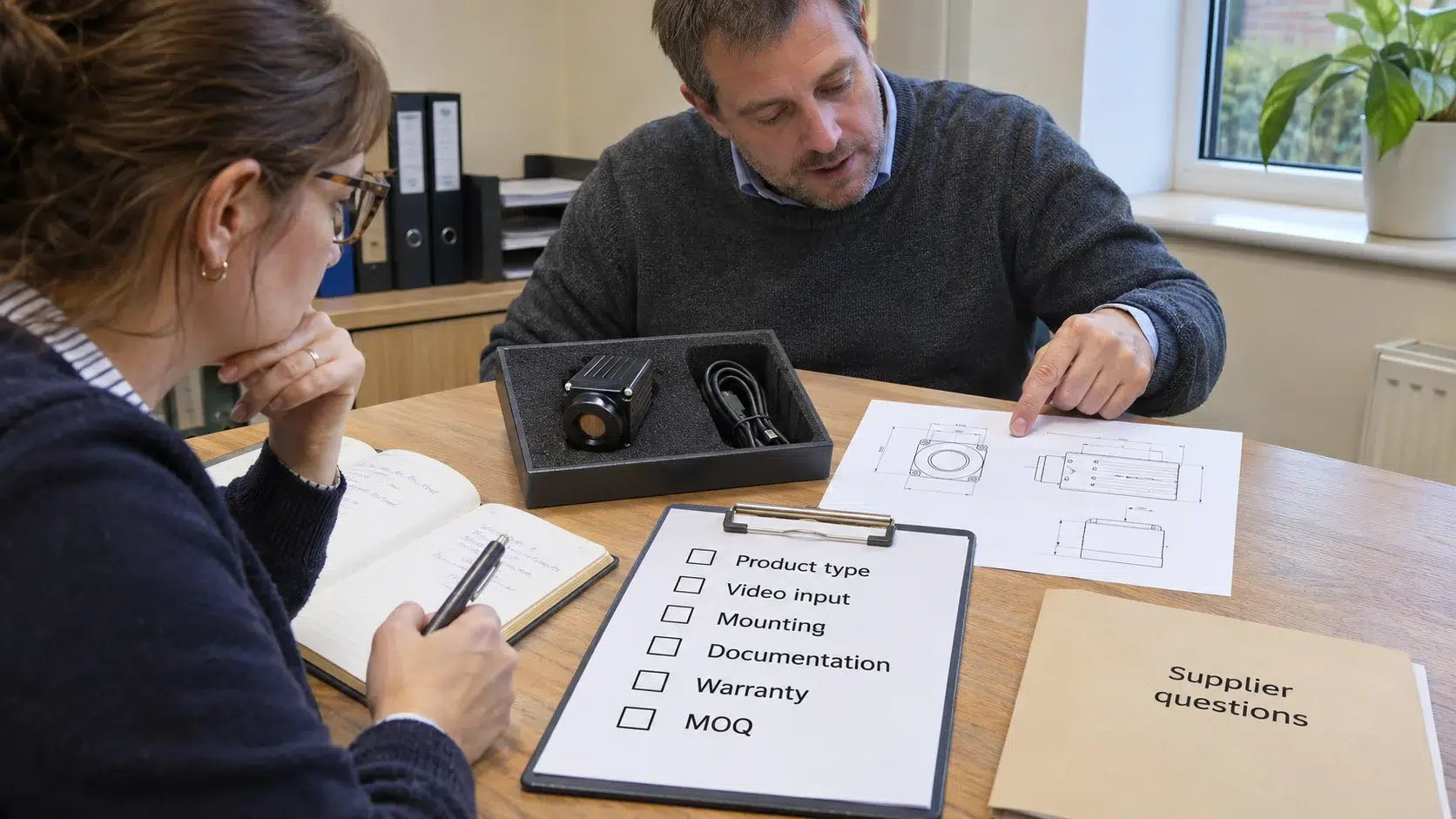
A 5-inch kit fits compact vehicles and tight-cab installs. A 7-inch kit suits fleets, commercial vehicles, and off-highway machines where display clarity matters most. That single rule settles most first purchases of a car thermal camera kit in India.
Three decisions follow. Buyers must weigh performance differences between configurations, confirm AIS compliance for road use, and arrange wholesale sourcing on workable terms. Each one rewards a little preparation. A buyer who requests a quotation for one clearly identified camera-and-display bundle, with screen size, detector resolution, lens, and accessory set stated, gets comparable prices and fewer surprises. The system assists the driver; it does not operate braking or steering.
Key Takeaways
Choose a 5-inch kit for small cars and tight spaces. Choose a 7-inch kit for fleets and large vehicles.
Detector resolution matters more than screen size. Pick from 256, 384, or 640 tiers based on your needs.
Check AIS compliance for road use in India. Confirm standards like AIS-004 Part 3 and CMVR Rule 126.
Request a quote for one clear bundle. State screen size, detector, lens, and accessories for comparable prices.
The kit assists the driver. It does not control braking or steering.
Car Thermal Camera Kits: 5-Inch vs. 7-Inch
Cab space and screen visibility come first. Application comes second. A buyer who follows this order avoids the common mistake of choosing a large display for a small cabin or a compact screen for a machine that needs fast readings at a glance.
The camera module itself rarely drives the choice. Compact modules, such as a 40mm x 30mm x 26mm unit, are positioned as fitting all car models. Size selection therefore centers on the display and the room available for mounting it. A car thermal camera kit is a display-led purchase in most cases.
Selection by Vehicle Type
Compact cars, hatchbacks, and tight-cab commercial vehicles favor the 5-inch kit. The smaller screen leaves the dashboard uncluttered and keeps the driver’s forward view clear. Installers also report shorter fitting times, because the unit needs less bracket space and fewer trim adjustments.
Fleets, SUVs, buses, and heavy commercial vehicles lean toward the 7-inch kit. The larger panel supports quicker recognition of pedestrians and animals at distance. A 7-inch kit commonly pairs an IPS display, for example 1024×600, with AI algorithm integration. That combination suits duty cycles where the driver checks the screen repeatedly over long shifts.
Selection by Application
Night driving on unlit highways rewards screen clarity. A 7-inch IPS panel shows warm objects against cold backgrounds with better separation, and AI overlays for pedestrians, vehicles, and animals remain legible. Buyers should confirm that the chosen configuration includes adjustable warning zones and recording, since these features support incident review after a shift.
Parking, low-speed maneuvering, and confined-site work favor the 5-inch kit. Its compact dash footprint leaves room for existing instruments, and the screen sits close to the driver’s line of sight. Off-highway operators often prefer the larger display instead, because vibration and dust make quick reading more important than dash space.
Wholesale buyers should request a quotation for one clearly identified camera-and-display bundle. State the screen size, detector resolution, lens, and accessory set in the inquiry. Confirm lens angle, defrost provision, and vehicle fitment for the selected configuration before ordering. The system assists the driver; it does not operate vehicle braking or steering.
Technical Performance Compared
Detector resolution drives image quality more than screen size does. Buyers should treat 256, 384, and 640 tiers as configurable options across both kit sizes, not as fixed features tied to a 5-inch or 7-inch display. A supplier can pair a compact screen with a high-tier detector, and the reverse also holds. The inquiry should therefore state the detector tier separately from the display choice.
Resolution, Field of View, and Clarity
Higher detector tiers resolve smaller temperature differences across a wider scene. A 640-tier sensor captures more detail at distance, which helps a driver spot a person or animal far down an unlit road. The 256 tier suits short-range work at lower cost, and the 384 tier sits between the two. Lens angle shapes the trade-off. A wide lens covers more of the roadside; a narrow lens pushes recognition further out. Buyers should confirm the lens paired with each tier, because field of view changes with focal length rather than with the display.
Clarity also depends on the panel. A 7-inch IPS display at 1024×600 keeps AI overlays for pedestrians, vehicles, and animals legible during long shifts. The 5-inch panel serves the same function in a smaller footprint. A car thermal camera buyer should test both under night conditions before committing to volume.
Durability and Environmental Ratings
Wide voltage support makes installation easier. A kit rated for 9-24V works across passenger cars and heavier commercial vehicles without a separate converter. Buyers should confirm this range with the supplier and check how the unit behaves during cranking, when voltage dips.
Environmental ratings deserve the same scrutiny. Ask for the operating temperature range, ingress protection level, and vibration tolerance for the camera module and display. Off-highway machines face dust and constant vibration, so mounting hardware and cable glands matter as much as the electronics. Document every confirmed rating in the purchase order.
Application Fit by Segment
Passenger Cars and Fleets
Private owners and small fleets gain the most from a compact 5-inch kit. The display fits a crowded dashboard, and the driver keeps a clear forward view. A car thermal camera of this size suits nightly commutes, rural roads, and unlit stretches where animals cross without warning. Fleet managers often standardize one configuration across a mixed pool of hatchbacks and sedans. That approach simplifies training and spare-part stocking.
Larger fleets and commercial operators usually move to the 7-inch kit. The IPS panel at 1024×600 keeps AI overlays for pedestrians, vehicles, and animals readable over a long shift. Recording and adjustable warning zones support incident review after a route. Buyers should confirm lens, defrost, and vehicle fitment for the chosen configuration. The system assists the driver; it does not operate braking or steering.
Off-Highway and Specialty Vehicles
Off-highway machines face dust, vibration, and constant glare. Operators here favor the 7-inch display, because quick readings matter more than dash space. Wide voltage support, such as 9-24V, lets one kit serve both light trucks and heavier equipment without a separate converter. Buyers should verify the operating temperature range, ingress protection, and vibration tolerance before ordering.
Specialty vehicles reward careful configuration. A 640 × 512 detector tier resolves distant objects better than a 256 × 192 tier, which helps on wide, open sites. The 384 × 288 tier sits between the two. Mounting hardware and cable routing deserve equal attention, since loose brackets fail long before the electronics do. Document every confirmed rating in the purchase order.
India Compliance and Homologation
Compliance work starts before the purchase order, not after the container lands. A thermal camera kit adds a display and a camera module to the cabin. Both items can fall inside the scope of Indian motor vehicle rules, so the buyer should map the intended fitment against the relevant standards early.
Relevant AIS Standards
The Automotive Industry Standards (AIS) frame the approval path. AIS-004 Part 3 covers type approval for CMVR-covered vehicles and their components. A kit sold as a vehicle accessory should be checked against this standard with the supplier and a local testing agency.
AIS-140 applies to public transport and commercial fleet tracking systems. A buyer who positions the kit inside a fleet telematics package should confirm how the two systems coexist. CMVR Rule 126 governs windscreen and driver-view obstructions. A 7-inch display mounted high on the glass may attract scrutiny, so installers should plan a dash or lower-window position.
Documentation for Importers
Importers need a clean paper trail. Request the product specification sheet, the bill of materials, and any test reports the supplier holds for the camera module and display. Ask for the HS code classification in writing, because tariff treatment varies by item description.
A wholesale buyer should request a quotation for one clearly identified camera-and-display bundle. State the screen size, detector resolution, lens, and accessory set in the inquiry. Confirm lens, defrost, and vehicle fitment for the selected configuration. Keep the supplier’s declaration that the system assists the driver and does not operate vehicle braking or steering on file. That statement supports the accessory classification and protects the buyer during inspection.
Wholesale Cost Considerations
Unit Price, Install, and Upkeep
Unit price reflects the detector tier, the display size, and the accessory set far more than the camera module alone. A 640 × 512 configuration costs more than a 256 × 192 build at the same screen size. Buyers should price each tier separately and compare like with like. A quotation for one clearly defined camera-and-display bundle, with screen size, detector resolution, lens, and accessories stated, keeps competing offers comparable.
Installation and upkeep shape the total cost of ownership. A 5-inch kit needs less bracket space and fewer trim adjustments, so fitting labor runs shorter. A 7-inch kit may require a sturdier mount and a more careful cable route. Buyers should ask suppliers about spare displays, replacement cables, and lens cleaning supplies. A kit with readily available spares avoids long downtime on a working fleet.
Value by Kit Size
The 5-inch kit delivers strong value for small distributors and private owners. Its compact dash footprint suits hatchbacks and sedans, and the lower hardware cost supports competitive retail pricing. Stocking one configuration across a mixed vehicle pool simplifies inventory and training.
The 7-inch kit earns its premium in fleet and off-highway duty. The IPS panel at 1024×600 keeps AI recognition of pedestrians, vehicles, and animals readable over long shifts. Recording and adjustable warning zones add operational value that fleets can justify. Buyers should confirm lens, defrost, and vehicle fitment for the selected configuration before committing to volume. The system assists the driver; it does not operate vehicle braking or steering.
Complete Night-Vision Kit Contents
Core Components and Accessories
A complete kit ships as a matched set, not as loose parts. The box typically holds an externally mounted thermal camera, a 5-inch or 7-inch display, a mounting bracket, a power cable, and a video connection between camera and screen. Buyers should confirm every item on the packing list against the quotation before the order ships.
Accessory depth separates a workable kit from a frustrating one. Ask whether the bundle includes cable glands, weatherproof connectors, a sunshade, and a cleaning cloth for the lens. A wholesale buyer should request a quotation for one clearly identified camera-and-display bundle, including the screen size, detector resolution, lens and accessory set. VERYTek offers an aftermarket long-wave infrared (LWIR) night-vision system with an externally mounted thermal camera and a 5-inch or 7-inch display. Camera options listed by the manufacturer are 256 × 192, 384 × 288, and 640 × 512, with AI recognition of pedestrians, vehicles and animals, adjustable warning zones and recording.
Pre-Order Confirmation Checklist
Confirm the configuration in writing before production begins. State the display size, the detector tier, the lens angle, and the defrost option on the purchase order. Lens, defrost and vehicle fitment must be confirmed for the selected configuration. A car thermal camera kit with an unconfirmed lens angle can arrive unsuited to the intended vehicle.
The checklist should also cover documentation and support terms. Request the specification sheet, the bill of materials, and the warranty period. Confirm spare-part availability for the display and cables. Keep the supplier’s statement that the system assists the driver and does not operate vehicle braking or steering on file. That record protects the buyer during inspection and supports the accessory classification at import.
256/384/640 Model Tiers
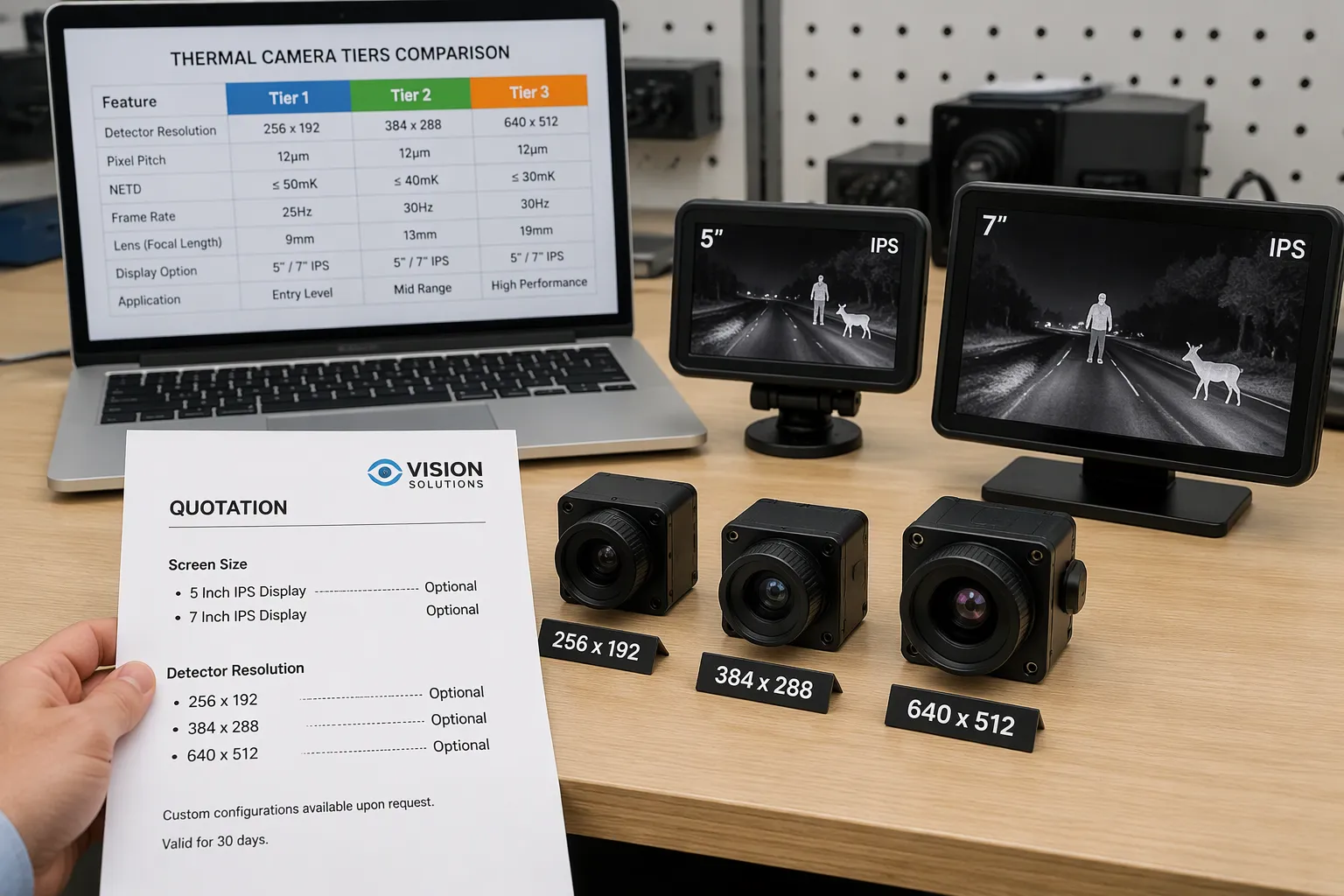
Detector resolution sets the price and the practical reach of any kit. The three common tiers are 256 × 192, 384 × 288, and 640 × 512. Each tier describes the sensor array, not the display. A buyer who fixes the tier first can then choose a screen size without renegotiating the whole specification.
Matching Tier to Use Case
The 256 × 192 tier suits short-range work. City driving, parking, and low-speed maneuvering keep objects close, so a smaller array still delivers a usable image. Distributors serving private owners find this tier easy to stock and easy to sell on price.
The 384 × 288 tier covers the middle ground. Highway night driving and mixed fleet duty benefit from the extra detail, and the cost step above the entry tier stays modest. Fleet managers often standardize here.
The 640 × 512 tier resolves distant objects best. Wide, open sites and unlit rural roads reward the higher array, because a person or animal appears earlier in the frame. Off-highway specialists and long-haul operators justify the premium most easily.
Tier | Best fit | Trade-off |
|---|---|---|
256 × 192 | City driving, parking, entry price points | Shorter recognition range |
384 × 288 | Highway night driving, mixed fleets | Moderate cost step |
640 × 512 | Open sites, rural roads, long-haul duty | Highest unit cost |
Tier Availability by Kit Size
Both display sizes accept all three tiers. A supplier can pair a 5-inch screen with a 640 × 512 sensor, and a 7-inch screen with a 256 × 192 sensor. Buyers should treat the tier as a separate line on the quotation, never as a feature implied by screen size.
Pairing deserves thought. A 7-inch IPS panel at 1024×600 shows the extra detail of a higher tier well. A 5-inch panel keeps the dash compact, and the 256 × 192 tier matches its everyday use. A wholesale buyer should request a quotation for one clearly identified camera-and-display bundle, including the screen size, detector resolution, lens and accessory set. VERYTek lists 256 × 192, 384 × 288, and 640 × 512 camera options for its aftermarket long-wave infrared night-vision system, with AI recognition of pedestrians, vehicles and animals, adjustable warning zones and recording. Lens, defrost and vehicle fitment must be confirmed for the selected configuration. The system assists the driver; it does not operate vehicle braking or steering. A car thermal camera buyer who confirms the tier in writing avoids a costly substitution later.
Packaging and Brand Customization
OEM Branding and Manual Language
Branding scope covers four items: logo placement, box design, manual language, and label requirements. A distributor should settle each one in writing. Logo placement ranges from a printed mark on the display bezel to a sticker on the outer carton. Box design covers artwork, print colors, and the board grade of the carton itself. Manual language matters most in India, where a kit may ship with English, Hindi, or a regional language booklet. Label requirements include the model number, voltage range, serial number, and country of origin.
Manual content deserves its own review. The booklet should explain mounting, cable routing, and the warning that the system assists the driver and does not operate vehicle braking or steering. A buyer should approve the final text before printing. Translation errors in a safety note create avoidable risk at inspection.
Packaging and Documentation Checklist
Customization terms belong in the purchase agreement before the first production run. A late change to box artwork or manual language disrupts tooling and delays the shipment. Buyers should attach a signed artwork proof and a manual draft to the order.
The checklist should confirm the carton dimensions, the internal foam or molded tray, and the accessory bag contents. Ask for a sample carton before mass production. Confirm that the label carries the model number, the detector tier, and the serial number range. Keep the specification sheet and bill of materials in the same file. Buyers should also record lens, defrost, and vehicle fitment for the selected configuration in that file, so packaging, manual, and product data stay consistent.
Sourcing Car Thermal Camera Kits
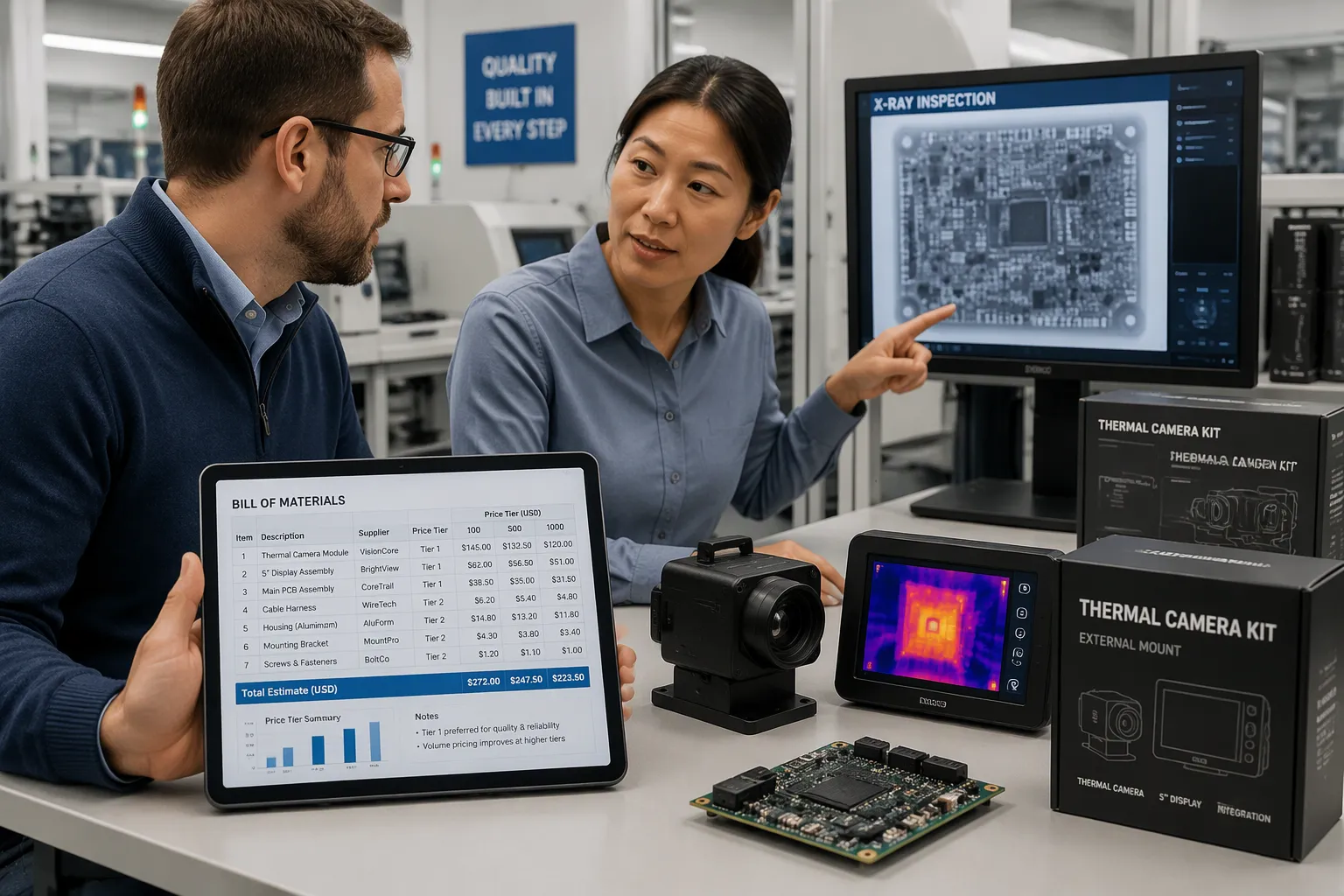
Sourcing starts with the right partner profile. A one-stop PCBA manufacturing partner handles the whole build under one roof. A Shenzhen-based custom PCBA manufacturer, for example, sources components from the customer’s bill of materials, runs turnkey and consigned assembly, performs functional testing, and adds X-ray inspection for hidden solder joints. That combination matters for a car thermal camera, because the display board, camera interface, and power stage all pass through the same quality gate.
MOQ, Trial Orders, and Price Ladders
Wholesale buyers should open the conversation with four questions. Ask for the minimum order quantity, the trial order terms, the price tiers, and the delivery schedule. A supplier who answers all four in writing gives the buyer a basis for comparison.
Trial orders deserve special attention. A small first run lets the buyer test fitment, screen visibility, and installer feedback before committing to volume. Price ladders usually step down as order quantity rises, so the buyer should request the full ladder rather than a single quote. The inquiry should name one clearly identified camera-and-display bundle, including screen size, detector resolution, lens, and accessory set. VERYTek’s aftermarket LWIR night-vision system fits this pattern: an externally mounted thermal camera with a 5-inch or 7-inch display, camera options of 256×192, 384×288, and 640×512, AI recognition of pedestrians, vehicles, and animals, adjustable warning zones, and recording. Lens, defrost, and vehicle fitment must be confirmed for the selected configuration. The system assists the driver; it does not operate vehicle braking or steering.
Delivery and Supplier Vetting
Delivery terms belong in the same conversation as price. Buyers should confirm the production lead time, the shipping method, and the packaging standard before the first run. A documented schedule protects both sides when demand shifts.
Supplier vetting stays neutral and comparative. Compare board construction, project files, and inspection needs in one conversation. Ask how the supplier reviews material, stack-up, and bend requirements before quoting. Request the inspection plan alongside the quotation, and confirm the X-ray scope for hidden joints. A supplier who raises engineering questions early usually runs a tighter build. Buyers should send PCB files with the BOM, placement data, and any programming or test instructions, then compare responses side by side. The strongest reply addresses construction, files, and inspection together, which supports a documented decision for the next build stage.
Match kit size to cab space and application first. Then confirm detector tier, compliance paperwork, and sourcing terms. That order keeps a car thermal camera purchase predictable.
Small-volume distributors should stock the 5-inch kit with the 256 × 192 tier and keep one 384 × 288 option on hand. Fleet suppliers should standardize on the 7-inch IPS kit at 384 × 288 or 640 × 512. Off-highway specialists should lead with the 640 × 512 tier and verify environmental ratings in writing.
Buyers can request MOQ details, trial order terms, price tiers, and delivery schedules today. One clearly defined bundle in the inquiry yields comparable quotes.
FAQ
Which kit size suits a compact car?
A 5-inch kit fits a compact cabin best. The small display leaves the dashboard clear and keeps the driver’s forward view open. Installers need less bracket space, so fitting runs shorter. Buyers should confirm the mount position before ordering.
Does screen size limit detector choice?
No. Both display sizes accept the 256 × 192, 384 × 288, and 640 × 512 tiers. A buyer should list the detector tier as a separate line on the quotation. Screen size and sensor array are independent choices.
What should a wholesale inquiry include?
State the screen size, detector resolution, lens, and accessory set for one clearly identified bundle. Ask for the minimum order quantity, trial order terms, price tiers, and delivery schedule. A defined bundle keeps competing quotes comparable.
Which standards apply in India?
AIS-004 Part 3 covers type approval for CMVR-covered vehicles and components. AIS-140 applies to commercial fleet tracking systems. CMVR Rule 126 governs windscreen and driver-view obstructions. Buyers should check each standard with the supplier and a local testing agency.
Does the kit control braking or steering?
No. A car thermal camera kit assists the driver with night vision only. It does not operate vehicle braking or steering. Buyers should keep the supplier’s written statement on file, because it supports the accessory classification at import.
See Also
OEM Automotive Thermal Camera Supply for India Commercial Vehicle Integrators
UK Distributors Guide to Auto Thermal Cameras OEM Kits Technical Selection
Wholesale Car Thermal Camera Buying Guide for Distributors
Automotive Thermal Camera OEM Suppliers B2B Engineering Checklist Guide
Wholesale Motorcycle Thermal Camera System 2026 Deals Available Now