
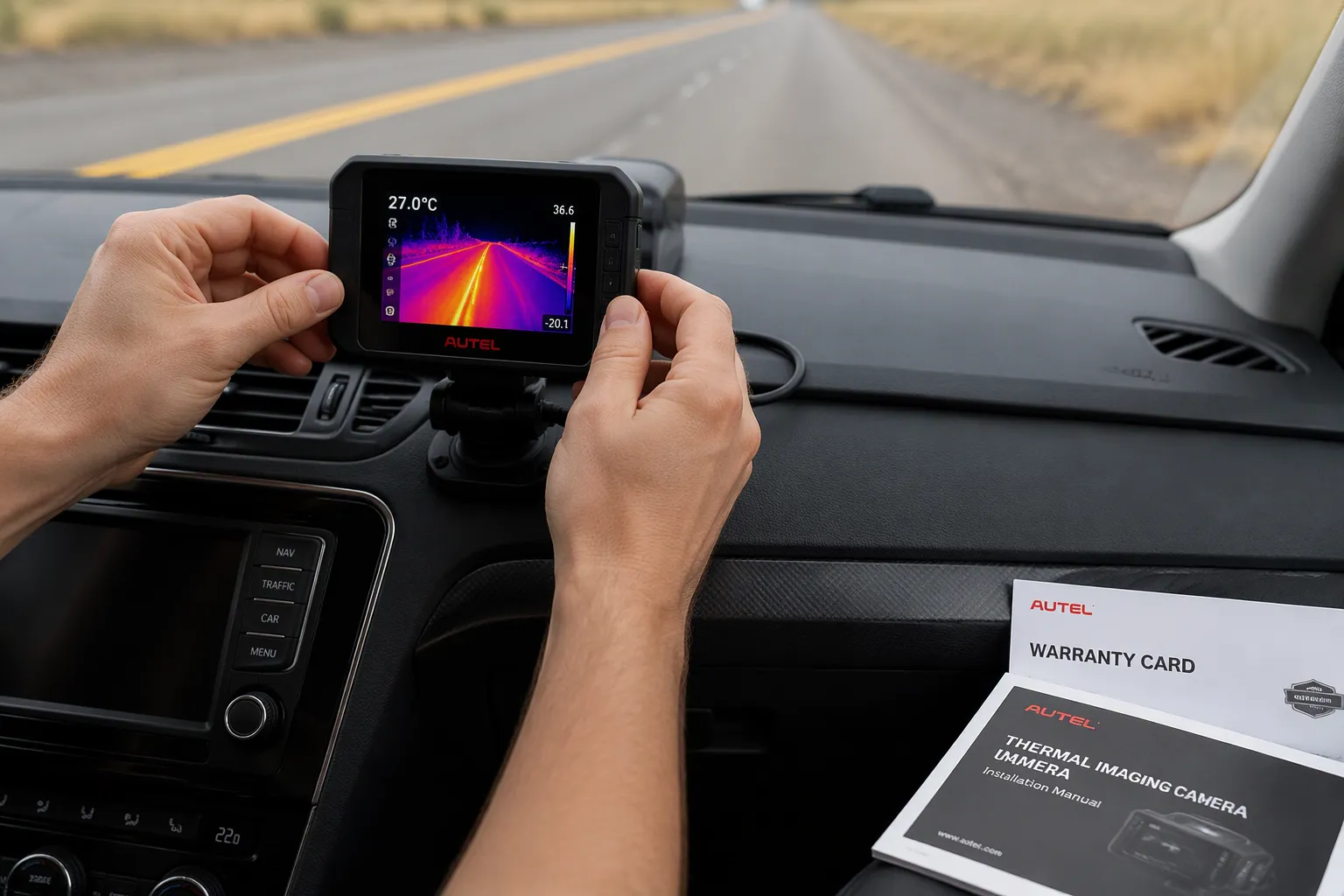
Canadian buyers ask two questions first. Which display comes with a car thermal camera kit? You pick a 5-inch L5P or a 7-inch L7P touchscreen inside the car. Each one pairs with a small external LWIR camera. What warranty applies? The manual lists a 3-month replacement for damage not caused by people, plus a 2-year warranty. Both follow the current written terms.
This is an aftermarket night-vision kit for driver help only. It does not brake or steer for you. It is not just a bare sensor, a factory OEM-installed system, or a hand-held temperature gun.
Three things decide whether thermal cameras work in Canada: how well they fit when installed, bilingual paperwork, and local service costs. Every answer here can be checked, not just guessed.
Key Takeaways
Pick a 5-inch or 7-inch touchscreen display for your car thermal camera kit.
The detector resolution (256×192, 384×288, or 640×512) matters more than screen size for image detail.
Put the camera on the outside of the car, such as on the grille, because the windshield glass blocks thermal vision.
Ask for manuals and labels in both English and French for use in Canada.
Make sure you get the warranty terms and service costs in writing before you buy.
Complete Car Thermal Camera Kit and Display Options
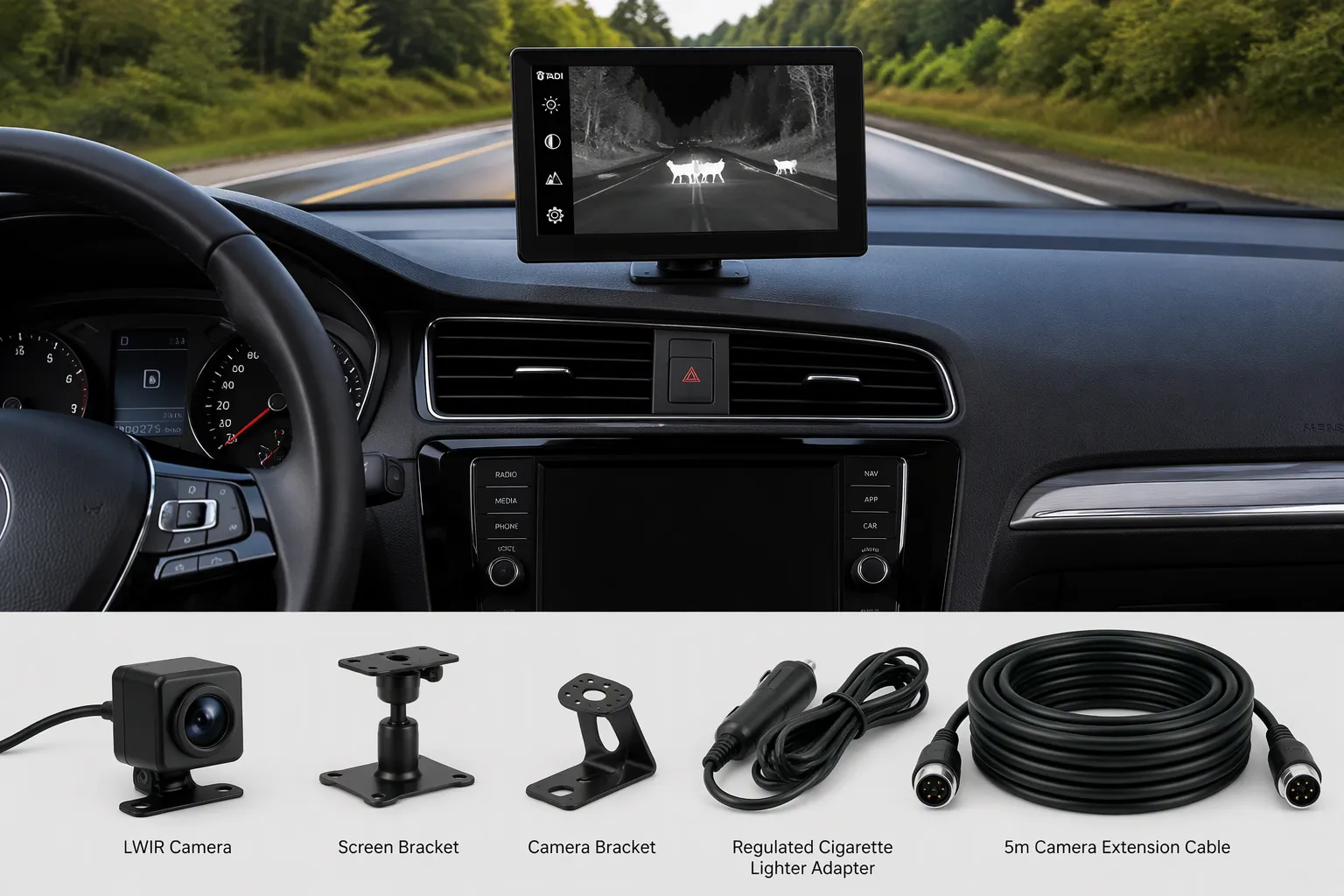
A car thermal camera kit comes as a matched set, not a box of loose parts. VERYTEK offers six order models: L5P-2, L5P-3, L5P-6, L7P-2, L7P-3, and L7P-6. The suffix shows which detector is inside. Each kit should include the chosen 5-inch or 7-inch touchscreen, the chosen camera, a screen bracket, a camera bracket, the regulated cigarette-lighter adapter, and the 5m camera extension. Check the supplied bill of materials before you order. One missing bracket or the wrong adapter can delay a retrofit, and a partial kit makes your installer drive back to the bay. Write the model number on the purchase order, not just the screen size.
5-Inch and 7-Inch In-Cabin Displays
The L5P family uses a 5-inch touchscreen. The L7P family uses a 7-inch touchscreen. Both units stay inside the cabin, and both pair with a small external LWIR camera. Screen size is your first fitment choice. A 5-inch unit works well on tight dashboards and short windshield spans. A 7-inch unit gives the driver a bigger view of the road ahead. Place the unit so it never blocks the driver’s view or an airbag. Confirm fitment for every vehicle model you plan to support. Some vehicles come with built-in displays from the factory, and those dash layouts often leave little room for an add-on screen. Measure the dash before you promise a clean install, and plan the cable route for the 5m extension at the same time. A touchscreen keeps the controls within reach, and the separate camera keeps the optics outside where they belong.
Detector Resolution vs. Display Resolution
Do not read panel specs as sensor specs. The 1024×600 IPS panel is the display your driver watches. The detector is a separate part with three options: 256×192, 384×288, or 640×512. Thermal resolution describes the detector array, not the panel. A denser array captures more native scene detail before scaling. Buyers who compare kits on panel numbers alone often order the wrong sensor.
Part | What it defines | Options |
|---|---|---|
Detector | Scene detail captured | 256×192, 384×288, 640×512 |
IPS panel | What the driver sees | 1024×600 |
Thermal sensitivity sets how small a temperature difference the sensor can register. Two kits with the same detector count can still differ in thermal sensitivity, so ask for that figure for the exact configuration you plan to stock. Thermal cameras in this class reward a careful match between detector and screen. These thermal cameras are built for night vision, not spot readings. If your customers expect temperature measurement or measurement accuracy data, confirm in writing whether the configuration supports those functions.
The AI layer recognizes pedestrians, vehicles, and animals. You can adjust the warning areas and turn on recording. Recording gives you a review file after a shift, and adjustable warning areas let you tune the view for each route. Treat these thermal cameras as driver assistance only. They do not brake and they do not steer. A distributor who positions a thermal camera honestly wins repeat orders, because the driver knows exactly what the system will and will not do. Ask your supplier to confirm the detector, the panel, and the full kit list on every car thermal camera quote.
Thermal Camera Installation and Camera and Window Compatibility
Grille Mounting and In-Cabin Display Placement
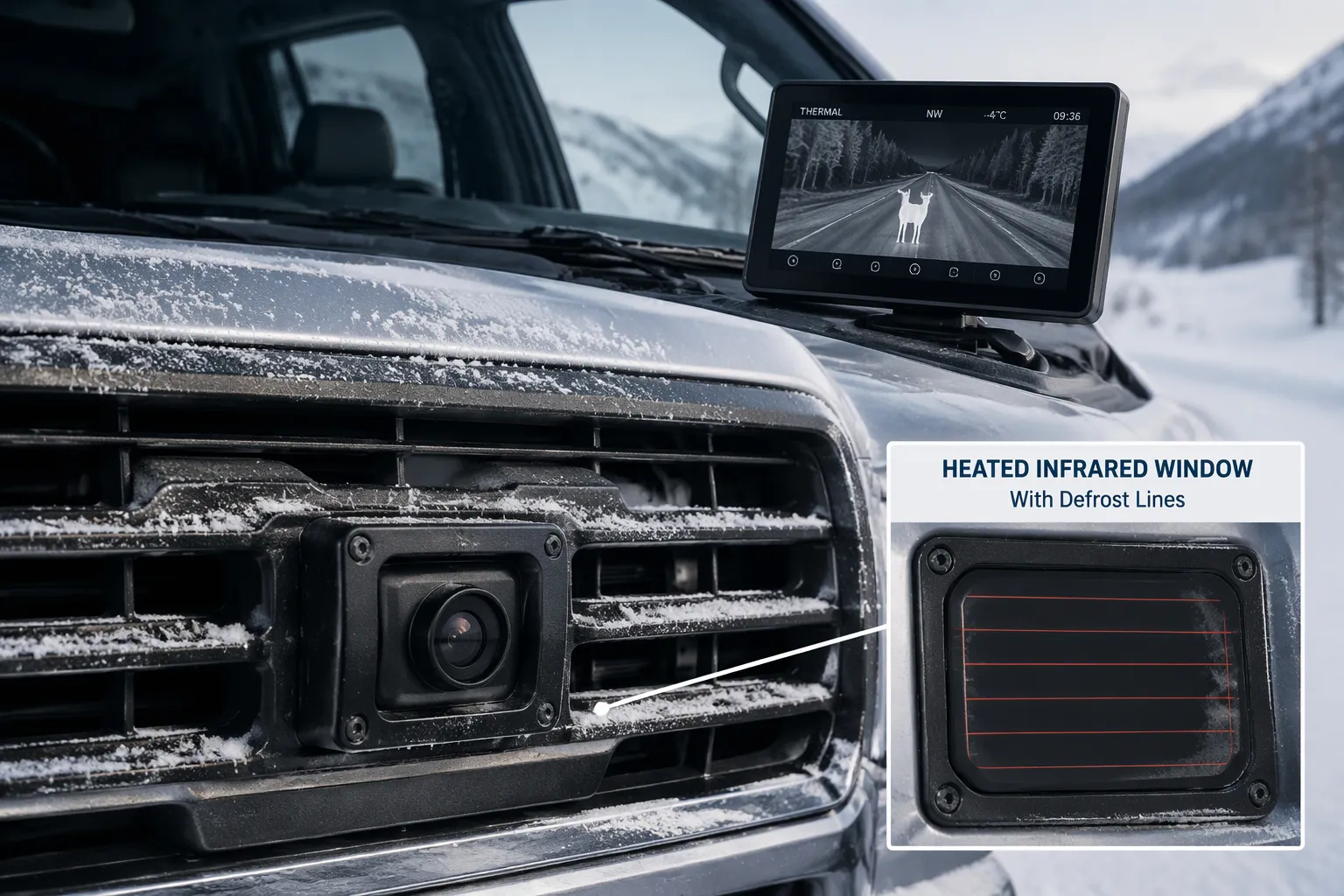
The camera has to be outside the vehicle, usually at the front grille, with a clear view down the road. Normal windshield glass blocks LWIR, so you cannot mount it behind glass. This one fact shapes camera and window compatibility for every kit you stock. Plan the bracket position before you quote the job. Make sure the grille slats, bumper trim, and license plate frame do not block the view. Keep the 5m camera extension away from hot parts and moving parts.
The display stays inside the cabin. Mount it firmly, and keep the driver’s view and airbag zones clear. Check fitment for each vehicle, because dash depth and screen angle vary a lot between models. A 7-inch L7P needs more dash space than a 5-inch L5P. Test the placement with the bracket in hand before you drill.
Infrared Window, Defrost, and Cold-Weather Checks
The brochure lists a protection window and automatic defrost for its shown 9.1mm kit configurations. Check the exact lens, camera, and heater setup before you order. Do not assume every lens offered has a heater. Ask your supplier to confirm the heater on the specific model you plan to stock. A heated infrared window keeps the optical path clear in frost and freezing fog. An unheated lens may need a different mounting plan.
Treat the ambient rating of −30°C to +70°C as an operating ambient figure. It is not a temperature measurement range, independent cold-start evidence, or permission to run below the limit. Cold-start behavior in a Canadian winter needs its own confirmation. The camera carries IP67 and the host carries IP66. Neither rating proves high-pressure washing, hot-water wash, salt-spray exposure, or road approval. Ask how the camera handles road salt and spray before you promise winter reliability.
Confirm the supplied hardware revision, matching regulated adapter and installation instructions before ordering. The manual specifies a supplied regulated adapter with a 12–24V input; confirm that the adapter and vehicle supply meet the requirements of the actual kit. Ask the supplier to confirm connection points, fuse protection and transient protection for the proposed vehicle installation.
Before ordering, verify image detail on a sample with the selected detector and lens, then confirm the camera window, heater, brackets and electrical accessories supplied with that exact kit. This product is a driving-assistance night-vision system; the supplied documents do not establish temperature-measurement functionality or accuracy. Record these checks in the trial acceptance list.
Confirm the lens, heater, adapter, and bracket set in writing before the vehicle enters the bay.
English and French Documentation to Confirm
English and French menu choices show up in the product listing. That detail helps a driver switch languages. It does not prove that the box, the manual, or the warranty card comes in both languages. Treat menu language as a software feature, not proof of bilingual documentation. Ask your supplier for a sample of the printed manual, the packaging label, and the warranty card before you place a Canadian order. A French-speaking installer needs a French manual on the bench, not a French menu on the screen.
Menus vs. Bilingual Manuals and Labels
A menu language switch lives in firmware. A bilingual manual lives in the box. These are different deliverables, and buyers often mix them up. Request the exact manual revision and the label artwork for the model you plan to stock. Check that safety notes, wiring steps, and warranty text appear in both English and French. Confirm the packaging label carries both languages too. If the carton ships with English-only labels, your Canadian retail partners may push back. Ask a direct question: does the supplied manual for model L5P-3 or L7P-6 include full French text? Get the answer in writing.
Market-Specific Support and Compliance Claims
English and French menu choices do not establish that the supplied manuals, labels, packaging or support services meet your Canadian market requirements. Request documents for the exact model, including installation instructions and warranty/RMA information in the languages your customers need. Confirm who provides technical support, where returns are handled, and any translation or localization charges before the trial order.
Put every documentation question to your supplier in writing before the first order ships.
Trial Order, Thermal Camera Pricing, and Warranty
Think of thermal camera pricing as something you ask for in a quote, not a number in a catalog. Ask for a trial order quote that names the exact display and camera setup and the vehicle fitment you plan to support. Request the same quote for each model you may stock, so you can compare thermal camera costs across detector options. Never publish a price, minimum order, or delivery term you have not confirmed in writing.
Sample BOM and Acceptance Checklist
Build a sample bill of materials before you commit. List the display model, the detector option, both brackets, the regulated adapter, and the 5m extension. Add the documentation and service items you need for Canada. Then test one unit against that list.
Confirm in writing | Your question |
|---|---|
Display and detector | Which L5P or L7P model, and which detector array? |
Fitment | Does the bracket set fit this vehicle? |
Documentation | Are the manual and labels bilingual? |
Warranty | What terms apply in Canada? |
Service | Where do returns go, and who pays freight? |
Warranty Terms, Exclusions, and Service Costs
The manual states replacement within 3 months for non-human-caused damage and a 2-year warranty. Treat these as manual terms, subject to current written notices for discontinued or special-sale units. Confirm the Canadian applicable written warranty before you buy. Ask about exclusions, the return location, freight and labor responsibility, response time, and localization cost. No document promises a Canadian service center or free replacement shipping.
Ask the supplier to identify exclusions for unauthorized repairs, display damage and installation-related faults in the applicable written warranty. Confirm which faults, replacement parts and service work are covered, and who pays diagnostic, labour and transport costs. Do not assume these services are included until the supplier confirms them in writing.
Request a trial order now, with confirmation of exact display and camera configuration, vehicle fitment, documentation, warranty, and localization cost. Confirm thermal camera costs and pricing in the same reply.
Match the display to the detector. Pair the L5P or L7P 1024×600 screen with a 256×192, 384×288, or 640×512 detector. Put the external camera at the grille, and check the brackets, adapter, and defrost setup for each vehicle. Get warranty terms, Canada applicability, and local service costs in writing.
An ambient rating of −30°C to +70°C does not prove cold-start performance in a Canadian winter. Bilingual manuals and market support need checking too. Ask for a trial order for your car thermal camera line, with the exact display and camera setup, vehicle fitment, warranty terms, and localization cost. Compare thermal cameras on paper before you stock them.
FAQ
Does a bigger display mean a better detector?
No. The 1024×600 IPS panel is a separate part from the detector. You pick a 256×192, 384×288, or 640×512 array. A bigger screen does not make the detector resolution higher. Ask for thermal sensitivity on the exact setup. Compare thermal cameras by detector specs, not by panel size.
Can I mount the camera behind the windshield?
No. Normal windshield glass blocks LWIR. Mount the camera outside, usually at the front grille, with a clear optical path. Keep the display inside the cabin, away from the driver view and airbags. Confirm the bracket set and heater setup for each vehicle before you order.
Does the kit include a heater and a protection window?
The brochure lists a protection window and automatic defrost for its shown 9.1mm setups. Check the exact lens, camera, and heater setup on the model you plan to stock. Do not assume every lens has a heater. Ask your supplier to confirm it in writing.
Are the manual and labels bilingual for Canada?
English and French menu choices are listed. That does not prove bilingual manuals, packaging, or labels. Request the manual revision and label artwork for your model. Confirm warranty and RMA language in both official languages. Menu languages do not prove canadian certification or local legal compliance.
What warranty and service terms should I confirm?
The manual states replacement within 3 months for non-human-caused damage and a 2-year warranty. Treat these as manual terms. Confirm the Canadian applicable written warranty, exclusions, return location, freight, labor, and response time. Compare warranties on paper. No document promises a Canadian service center or free replacement shipping.