
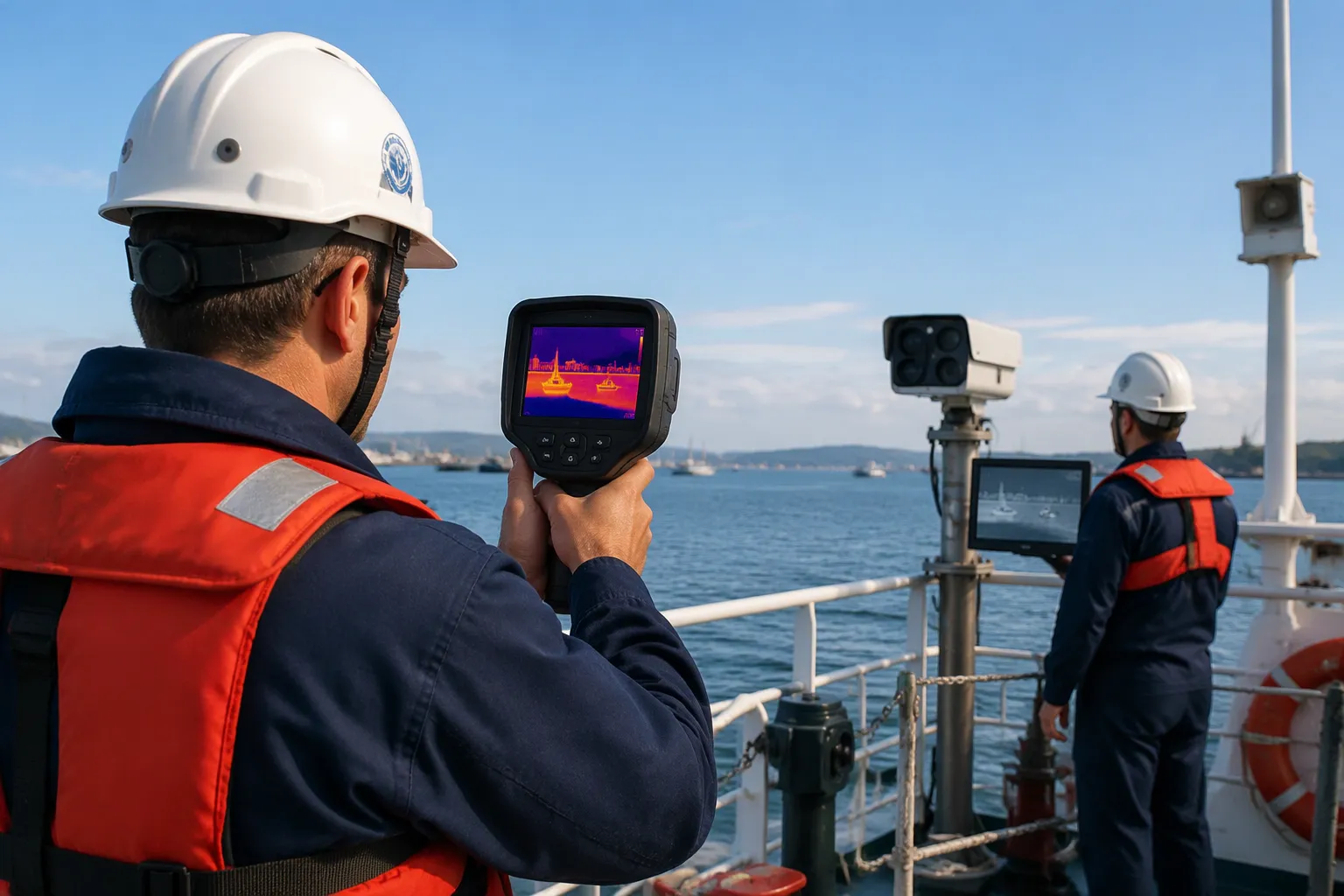
A vehicle marine thermal imaging camera has six main uses: night driving and pedestrian detection, perimeter and cargo security, equipment inspection, man-overboard search, low-visibility navigation, and dock and berth operations. Thermal sensors read heat signatures instead of reflected light, so a swimmer or small craft stands out against cool water, as SeatronX notes. In 2026, wider AI-assisted detection and more affordable pricing bring these capabilities to more fleets and vessels. AI models now flag pedestrians, vehicles, and animals in real time. Each use case below covers the scenario, the thermal value, performance needs, compliance, and cost.
Key Takeaways
Thermal cameras detect heat instead of light, so they work in the dark, in fog, and in bright glare.
Use thermal cameras to find people, animals, and obstacles so you can drive more safely at night.
Thermal imaging keeps parked vehicles and boats safe by spotting intruders when it’s dark.
Use thermal cameras to check engines and electrical systems, so you can find hot spots early.
AI helps thermal cameras spot risks and cut down on false alarms so crews can respond faster.
Night Driving and Pedestrian Detection
Scenario and Thermal Value
Commercial vehicles often drive at night, in fog, or through bright glare. Regular cameras have a hard time in these conditions. A table from Distar Mobility shows the pattern clearly.
Environmental Challenge | Traditional RGB Cameras |
|---|---|
Total darkness | Fails without headlights or other visible light |
Oncoming glare | Can be saturated or blinded by strong light |
Dense fog and heavy dust | Visibility can drop sharply |
Biological body detection | Depends on pixel patterns and visible contrast |
Bright lights from cars behind you, driving in and out of tunnels, and rain or snow all make it harder for drivers to see, according to Auto Equips. Thermal imaging fixes this problem. It reads heat, not light, so people and animals stand out against cooler backgrounds. AI models then mark people, vehicles, and animals and send alerts right away. More fleets are using AI, which is growing these use cases. AI programs can now tell a person from an animal and rank alerts by risk level, Leagend reports. This AI-based object recognition cuts down on false alarms and makes the system more reliable, Thermal Master adds. Thermal cameras also see farther than headlights, which gives drivers more time to react.
Performance, Compliance, and Cost
Pick the camera that fits the job. A 640×512 resolution and a NETD below 50 mK give sharp thermal contrast, per DYT. Lens choices set the field of view, and outputs like CAN, Ethernet, or automotive-grade serial communication connect to the screens you already have. A vehicle marine thermal imaging camera from a local lineup keeps pricing within reach in 2026.
Following the rules matters. FMVSS No. 127 requires pedestrian automatic emergency braking to work in daylight and darkness. NHTSA testing found that four of five production vehicles failed nighttime PAEB evaluations. Thermal sensors help close that gap. An AI-driven detection system pairs the sensor with real-time alerts. Automotive programs may also need ISO 26262 functional safety support, such as ASIL B. Weigh cost against the safety gain, and figure out roi from lower accident risk and fewer claims.
Vehicle Perimeter and Cargo Security
Scenario and Thermal Value
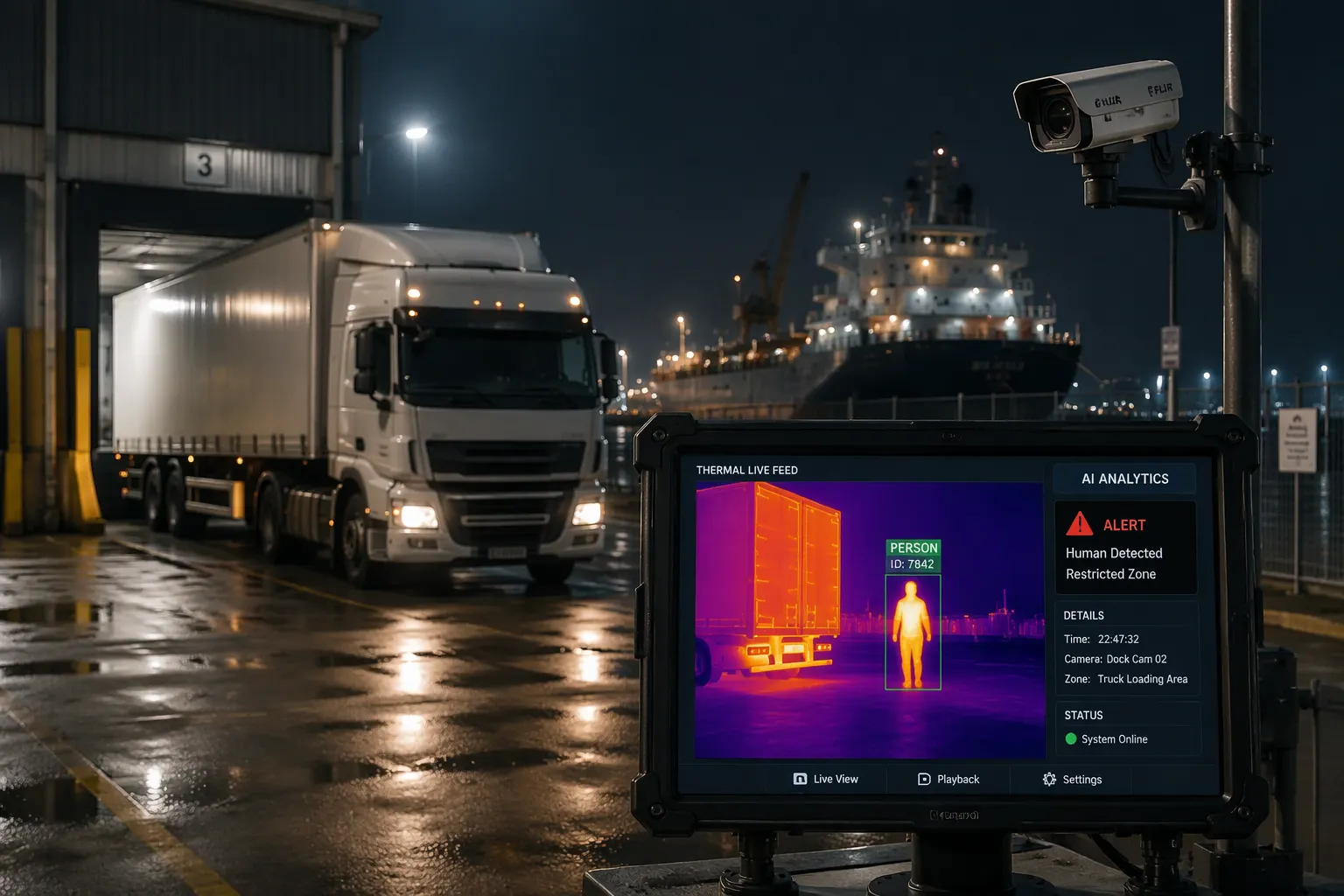
A parked truck or a docked boat carries valuable cargo. Intruders often strike after dark or in bad weather, but thermal cameras still catch them. Fluke explains that thermal cameras spot intruders in low light or rough weather by picking up their body heat. ClearView Communications notes that marine CCTV can watch the area around a ship for unwanted visitors. Video analytics send alerts when someone steps into an off-limits zone. You can redraw that zone quickly once the ship docks.
At sea, the same system watches other surface traffic and tracks how it moves, per ClearView Communications. Thermal imaging adds all-weather, day and night vision to that picture. Pair the camera with ai analytics, and the system flags a person on deck or a small boat near the hull. No guard has to stare at a monitor all night. This is where ai adoption pays off for security teams. The ai ranks alerts by risk, so your crew handles real threats first.
Performance, Compliance, and Cost
Match the sensor to the distance you must cover. LVT notes that detection range depends on the lens and sensor resolution. A thermal camera spots a heat signature long before it shows what the object is. Raythink lists common outdoor setups:
Thermal resolution | Lens configuration | Durability |
|---|---|---|
256 × 192 pixels | Optional 4mm/8mm visible and 3.2mm/7mm thermal lenses | IP66-rated, operating from -40°C to +70°C |
640×512 pixels | 5× optical zoom for infrared thermal imaging | IP66-rated, operating from -40°C to +70°C |
640×512 pixels | 37× optical zoom | IP66-rated, operating from -40°C to +70°C |
Axis builds thermal cameras with IP66, NEMA 4X and IK10 ratings for harsh environments. Raythink adds that IP66 and IP67 both mean dustproofing and resistance to powerful water jets. A vehicle marine thermal imaging camera with an IP67 aluminum housing fits this job well.
Cost and compliance shape the plan. Stellar MR reports that installation and maintenance costs block some buyers. False alarms raise operating costs through wasted responses. Sunell advises comparing resolution, lens, analytics and enclosure before you buy. It lists NDAA compliance and cybersecurity as buyer checks. Weigh those costs against the roi from fewer thefts and lower insurance exposure. In 2026, ai-driven detection makes that math easier to justify.
Under-Hood and Equipment Inspection
Scenario and Thermal Value
Engines, motors, and electrical panels can fail without warning. A loose connection or an overloaded circuit builds up heat long before you see smoke or sparks. Admiral Safety Consultants explains that hidden hotspots can cause electrical fires, unexpected equipment failures, costly downtime, and safety risks for your crew. A thermal camera shows that heat early. You catch a failing part before it stops the vehicle or the vessel.
InspectAPedia reports that thermal imaging has a long history of finding overheated electrical connections and motors. You can also spot overheating electric motors, compressors, and blower fan bearings with these methods. The key is a baseline of normal temperatures. Record a healthy reading first, then compare later scans against it. InspectAPedia notes that inspectors use infrared to find overheating components at electrical panels, switches, receptacles, and wiring. The same method works under the hood and in the engine room.
Performance, Compliance, and Cost
A vehicle marine thermal imaging camera with a 640×512 resolution and a NETD below 50 mK gives you the contrast to see small temperature gaps. A close-focus lens helps on tight engine parts. Outputs like CVBS/USB let you review images on a laptop or tablet. In 2026, ai tools can flag hot spots automatically and rank them by risk. That ai support speeds up inspections and reduces missed faults.
Compliance is mostly about your own maintenance program. Document each scan and keep the baseline readings. Cost stays modest. A handheld or fixed camera pays back through fewer breakdowns and less unplanned downtime. Weigh the price against the roi from avoided failures and longer equipment life. Wider ai adoption in maintenance teams makes these scans routine rather than special.
Man-Overboard Search and Rescue
Scenario and Thermal Value
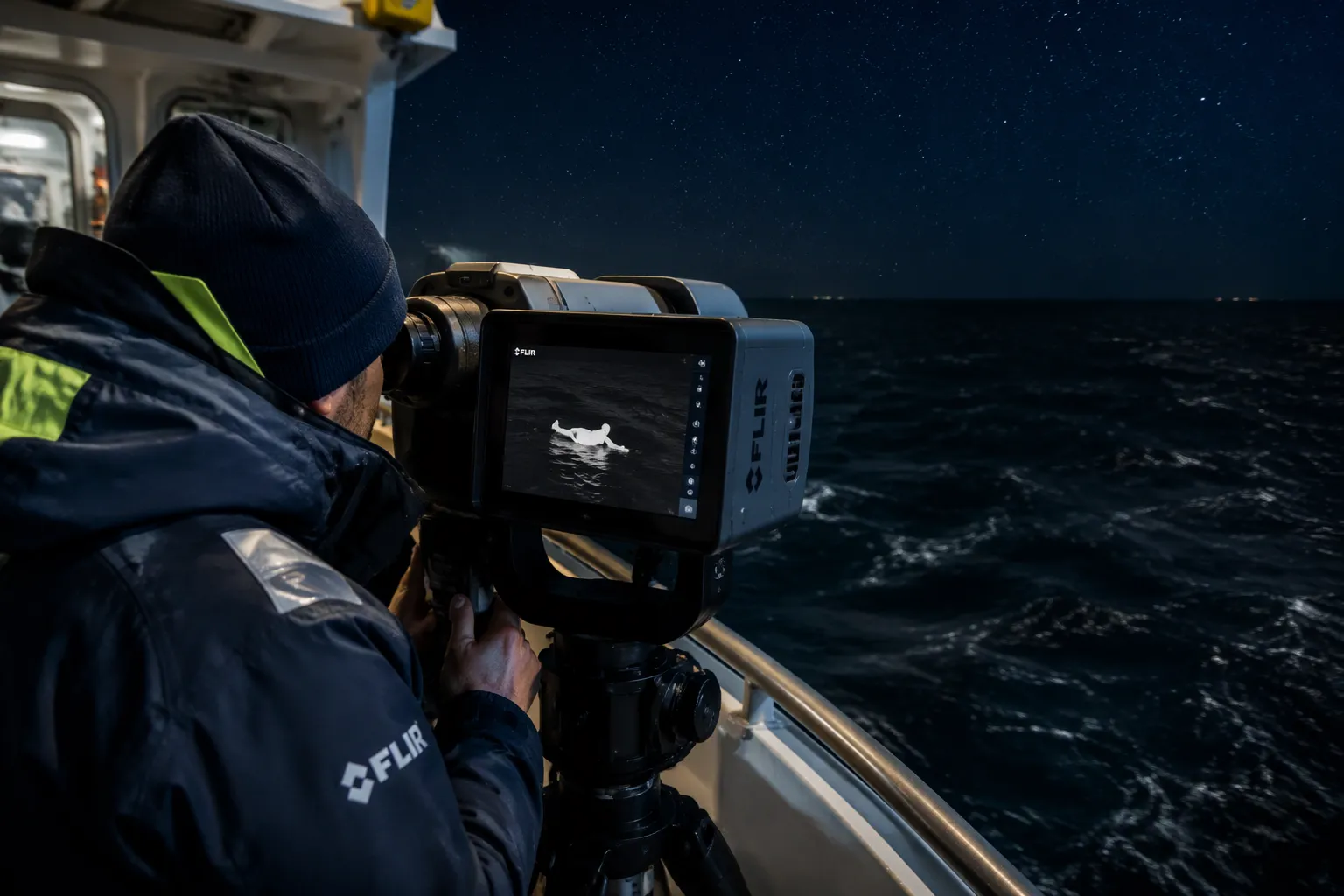
Someone falls over the rail at night or in rough weather. Each minute in the water makes survival less likely. Crews often hear about the fall from a witness, and the report must be checked before anyone acts, Security Today notes. That delay wastes time. A vehicle marine thermal imaging camera helps close part of that gap. The head of a person floating in the water looks like a white or red ball against a dark background, because body heat is warmer than the water, FLIR explains. This works at night and in daylight, so you get a true 24-hour response capability.
Thermal imaging also lets you scan a wide area faster than spotlights alone, Marine Technology Inc reports. You can track victims and rescue workers in the water at the same time, which makes everyone safer, per FLIR. Yushuo Lighting adds that thermal sensors read body heat in total darkness or bad weather, which speeds up precise action. Your turn choice matters too. The Williamson turn fits some situations better than others.
Situation | Suitability of the Williamson turn |
|---|---|
Immediate Action Situation | Not as quick as the single turn, and it takes the ship further from the casualty, but it is effective. |
Delayed Action Situation | Mostly it will take the ship to the casualty. |
Person Missing Situation | Recommended, because it brings the vessel to its reciprocal course. |
Performance, Compliance, and Cost
Match the camera to the search area. Long-range stabilized units reach detection ranges beyond 50 kilometers, per x20.org, with 640×512 thermal resolution and multi-axis gyro stabilization. The x26.com lineup lists similar ranges and continuous zoom lenses. Stabilization keeps the image steady on a rolling deck. AI helps here as well. An ai model can flag a small heat target and rank the alert, so your crew checks the right spot first. Wider ai adoption in 2026 puts these tools on more vessels, and ai-assisted tracking keeps a drifting swimmer in frame.
Compliance and cost need a plan. Report Prime notes that certification, marine safety standards, and hooking up to navigation systems make it harder to get started. Uncooled cameras work well for coastal fishing and small commercial craft, while cooled models fit search-and-rescue and patrol work, per Report Prime. Weigh the price against the roi from faster recovery and lower liability. Set aside money for upkeep in harsh salt conditions. Then make sure your ai alerts meet your flag state’s rules before you deploy.
Low-Visibility Marine Navigation
Scenario and Thermal Value
Darkness, fog, glare, and sea spray can block a captain’s view of buoys, shorelines, debris, and other boats. Radar, GPS, and sonar help you know what is around you, but they do not show you a direct picture, NightRide notes. Thermal imaging fills that gap. It builds a real-time image from heat, so boats, people, animals, and obstacles stand out against cooler water, day or night.
Raythink lists where this helps:
Low-visibility scenario | Described benefit of thermal imaging |
|---|---|
Nighttime | All-weather identification of vessels, buoys, shorelines, and floating debris; supports docking, narrow-channel navigation, and obstacle avoidance |
Heavy fog, rain, snow, overcast | Clear thermal images without relying on visible light |
Darkness, dense fog, rough waves | Highlights heat contrast between water and human bodies for fast recovery |
One boater on the Tugnuts forum shares a real-world note on what to expect: “It does not work in fog, or heavy rain – I just get a gray screen since everything is a uniform temperature.” Take that as a reminder to test your unit in your own waters.
Performance, Compliance, and Cost
Thermal beats night vision for plain detection. Night vision needs some light around, while thermal works in zero light and through fog, smoke, and rain, per NightRide. Operators report the difference. One captain spotted a drifting skiff without lights before radar saw it. A rescue chief added thermal to every SAR vessel in the fleet. In 2026, ai models flag heat targets and rank alerts, and wider ai adoption puts these tools on more boats. Pair ai detection with a steady mount, and your crew checks the right spot first.
Thermal cameras are not required under SOLAS, per PatSnap. The IMO treats them as extra aids, and IALA encourages pairing them with radar. Lloyd’s Register, DNV, and the American Bureau of Shipping run type approval programs. Budget for higher cost than standalone systems and for operator training. Weigh that against the roi from fewer groundings and faster rescues.
Dock, Berth, and Mooring Operations
Scenario and Thermal Value
Docking a large vessel is a slow job with a lot at stake. Your crew watches for pier edges, pilings, mooring lines, and nearby traffic. Glare off the water, spray, and nightfall can hide all of it. A vehicle marine thermal imaging camera gives you a heat-based picture of the berth. You see warm hulls, people on the pier, and small craft against cool water and concrete.
Future Vision Global describes this use well. High-magnification sensors check ship mooring maneuvers to prevent costly pier collisions. They also safely document cargo unloading. Thermal imaging also helps the crew on deck. A wide field of view lens suits mooring work, avoiding vessels and other obstacles, and searching for people in the water, per Tequipment. A narrow field of view lens suits zooming in on distant obstacles. Detector resolution matters too. Tequipment notes that larger pixel arrays measure smaller targets at longer distances with sharper detail. In 2026, ai models flag a person on the pier or a drifting line and rank the alert, so your crew acts on the right target first.
Performance, Compliance, and Cost
Salt, weather, and vibration punish dock hardware. Future Vision Global lists the hazards and the specs that answer them.
Hazard | Effect | Required Specification |
|---|---|---|
Salt fog corrosion | Rapid equipment degradation | 316L stainless steel or polymer corrosion-resistant housings, NEMA 4X compliance |
Extreme weather | Signal loss, lens obstruction | IP67/IP68/IP69K rating, heated optics, anti-condensation features, wiper systems |
Shipping dock vibrations, and physical tampering | Equipment Malfunction | IK10 Vandal Resistance |
For a dual-sensor unit, Future Vision Global suggests an uncooled thermal sensor from 320×240 to 640×512 pixels. It also suggests a NETD of 50 mK or lower for clear heat differentiation. Fixed starlight cameras suit berths and access points. Budget for corrosion-rated housings and heated optics. Wider ai adoption in 2026 brings ai-assisted docking aids to more ports, and that trend lowers the cost of entry. Weigh the price against the roi from fewer pier collisions and safer line handling.
Comparing Use Cases for 2026
Performance, Environment, and Compliance
Each use case needs something different from the sensor. Congruence Market Insights reports that uncooled systems hold about 67% of the global market. They work well for routine maintenance, fixed monitoring, and large commercial deployment. Cooled systems give greater sensitivity and longer-range detection for tough defense and aerospace work. Defense and surveillance makes up roughly 42% of applications, and military and defense organizations are about 46% of the global market. Those buyers use specification-driven, program-based purchasing. Industrial inspection buyers weigh total cost of ownership and ease of integration instead.
Your operating environment sets the durability bar. Harsh heat, dust, and remote sites raise the need for rugged housings and parts you can service. Congruence Market Insights notes that the Middle East and Africa and South America each held about 6.0% of the global market in 2025. Compliance burden follows the mission. Networked cameras bring cybersecurity duties once they connect to operational technology systems. Calibration, camera placement, and reliable connectivity decide whether alerts stay trustworthy at scale.
Cost Profiles and Deployment Priorities
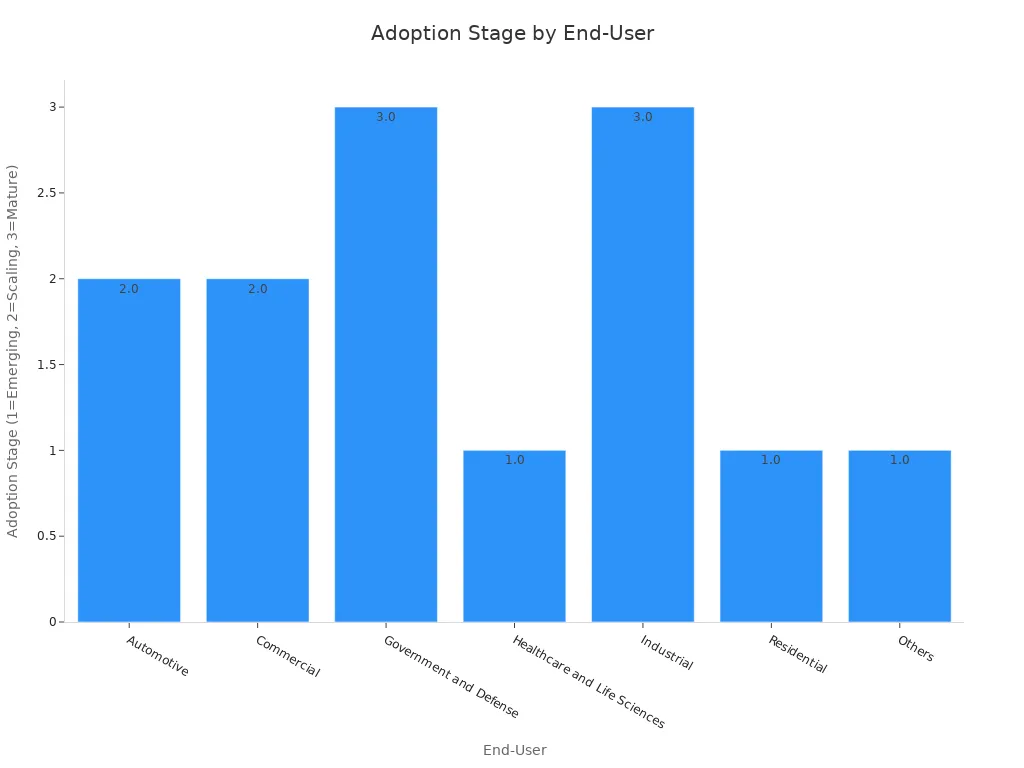
Cost profiles split along the same lines. Cooled and defense-grade systems carry higher purchase and maintenance costs. Congruence Market Insights advises buyers to compare lifecycle cost and service availability rather than purchase price alone. The Insight Partners projects a 2.5–2.9% CAGR for 2026–2034, with detection and measurement leading applications. The chart below shows adoption stage by end-user segment.
Enterprise ai adoption is reshaping these use cases across every industry in 2026. Enterprise ai deployment now spans simple night-vision aids to AI-driven detection systems, so each option fits a different need. Agentic ai and ai agents can triage alerts, while generative ai speeds inspection reporting. Pair ai insights for 2026 with a clear ai strategy, and you move from pilot to production with tangible business value. Track return on investment and roi as you scale.
Night driving and pedestrian detection serves the driver who needs warning time. Perimeter and cargo security serves the parked asset. Equipment inspection serves uptime. Man-overboard search, low-visibility navigation, and dock operations serve the crew on the water.
Build your plan in four steps. Match each use case to its environment first. Confirm performance next; Hongjing Optech lists thermal/IR modules at 160×120 to 640×480 resolution and an operating range of –40°C to 85°C. Check compliance obligations, including FCC, CE, and RoHS. Then weigh cost against safety gains. Verified Market Research ties uncooled systems to total cost of ownership. These action items for decision makers keep ai spending focused. In 2026, ai adoption keeps widening, so start with one use case and scale.
FAQ
What resolution do you need for most fleet and marine jobs?
A 640×512 sensor with a NETD below 50 mK handles most jobs. That contrast level helps you tell people and animals apart from cool backgrounds. Smaller arrays work fine for short-range perimeter checks. If you need to detect things farther away, choose a larger pixel array and a longer lens.
Which video output fits your existing setup?
Output | Best fit |
|---|---|
AHD/RS485 | In-cab displays that also carry distance data |
CVBS/USB | Laptops, tablets, and legacy monitors |
Ethernet | Networked security and bridge systems |
Pick the output that matches the screen you already use. That keeps installation simple and saves you from buying extra converters.
How does ai change these cameras in 2026?
An ai model spots pedestrians, vehicles, and animals in real time. It ranks alerts by risk, so your crew checks the right target first. This cuts false alarms and speeds up response. Wider ai adoption also brings these tools to smaller fleets at lower cost.
Do you need type approval for marine use?
Thermal cameras are not required under SOLAS. The IMO treats them as extra aids, and IALA encourages pairing them with radar. Class societies such as Lloyd’s Register, DNV, and the American Bureau of Shipping run type approval programs. Check your flag state’s rules before you deploy.
How should you choose your first use case?
Match the use case to your environment first. Confirm performance next, then check compliance duties like FCC, CE, and RoHS. Weigh cost against safety gains last. Start with one use case, prove the return, then scale with ai support.
See Also
Selecting Marine Thermal Cameras for Safe Night Navigation
AI Thermal Cameras for Vehicles Ensure Clear Vision in Mines
Top AI Thermal Cameras for Vehicle Night Vision Systems
Choosing High Resolution Thermal Cameras from Manufacturers for OEM ODM
Guide to Selecting Thermal Camera Modules for Drone UAV OEMs