
Five criteria guide the choice of an automotive thermal camera for a mining fleet: thermal performance, durability, vehicle integration, compliance and total cost of ownership. Thermal performance matters because dust and heat haze shorten the real detection range during 24-hour operation. Durability matters because vibration and temperature extremes punish weak housings. Vehicle integration matters because mounting points and power supplies differ across heavy vehicles. Compliance matters because mine sites ask for documented certification. Total cost of ownership matters because the purchase price alone hides maintenance and downtime costs. This guide compares options fairly and helps readers match cameras to specific fleet needs. The body turns each criterion into a concrete specification or document to request from suppliers.
Key Takeaways
Check thermal performance: resolution, sensitivity, and detection range all affect how well a camera spots people and vehicles in dust and heat.
Check durability evidence: assess the IP rating and request applicable vibration and temperature reports. Verify the test conditions against the intended mining installation.
Match the camera to your vehicle: check the mounting options and power supply compatibility for each vehicle type in your fleet.
Ask for compliance documents: request EMC test reports and declarations to meet mine site rules and ensure safe operation.
Compare the total cost of ownership: think about maintenance and downtime costs, not just the purchase price, to avoid costly failures.
Core Thermal Performance
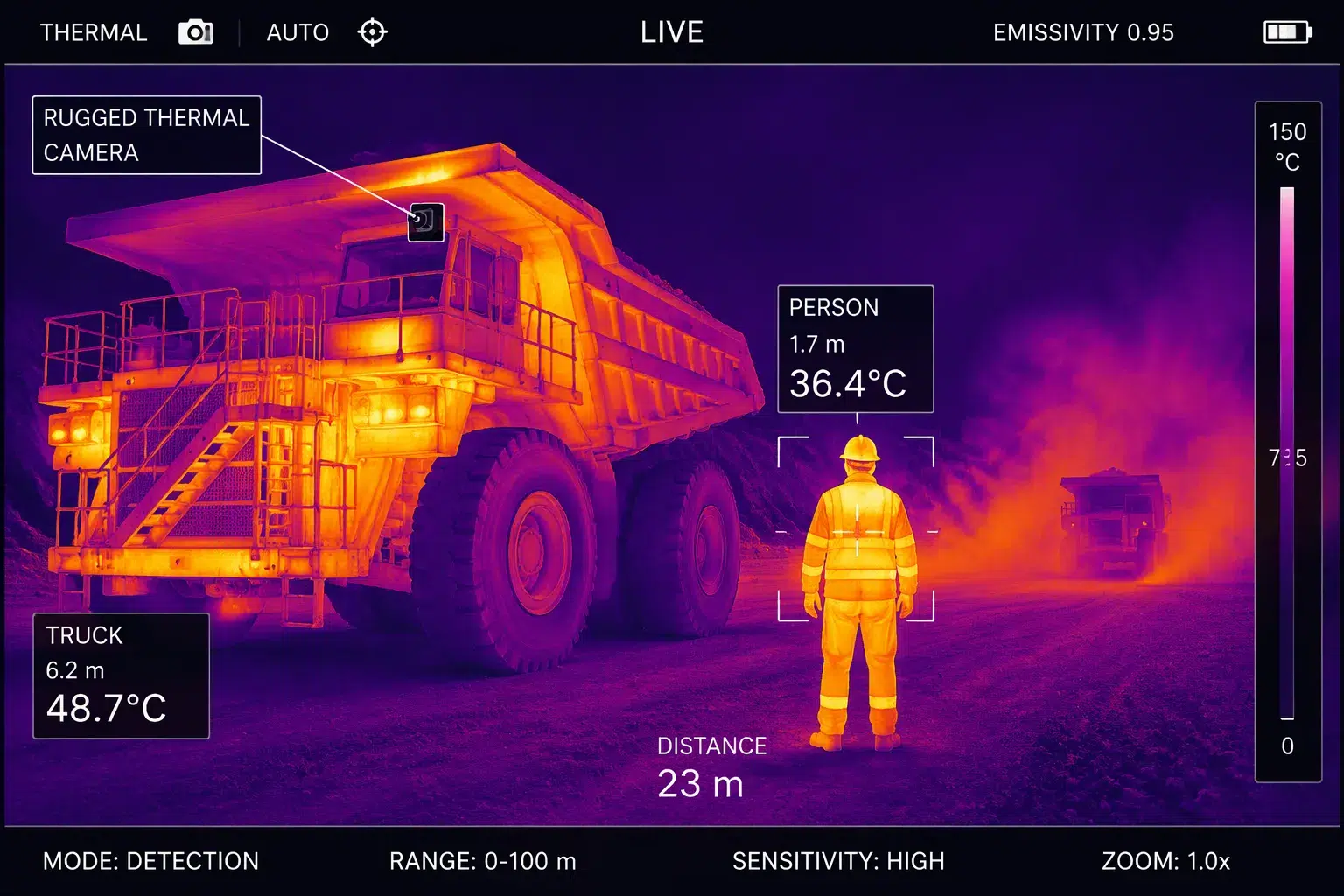
Thermal performance decides how much useful warning a camera gives a driver. Three specifications carry most of the weight: resolution, thermal sensitivity and detection range. Each one needs a practical reading, not just a datasheet figure.
Resolution and Detection Range
Resolution describes how much thermal detail the sensor captures. Useful detail and detection range depend on detector resolution, lens, field of view, target size and the number of pixels on the target, as well as scene conditions. A higher pixel count alone does not establish a longer TA Series AI recognition distance. Buyers should compare the specified lens and FOV for each configuration and request target-specific sample footage at the required distance.
Mining examples make the difference clear. A driver needs to spot a pedestrian beside a loading area in low light. The camera must resolve a human-sized target against warm ground and machinery. A supervisor watching a crusher feed needs to see a stopped vehicle behind a dust cloud. Here the target is large, so range matters more than fine detail. Buyers should ask the supplier for the target size and the distance behind each range claim.
One common confusion deserves attention. AHD video resolution is not the same as native thermal sensor resolution. The VERYTEK TA Series, for example, offers AHD output with 720p at 25 Hz as the default. That figure describes the video stream, not the thermal detector. Integrators should request interface details and test samples before they treat a video specification as a measure of thermal detail.
Sensitivity and Frame Rate
Thermal sensitivity, often stated as noise equivalent temperature difference, describes the smallest temperature contrast the camera can show. A sensitive camera reveals cool objects against warm backgrounds. This ability helps in mining, where a person, a tyre or a spillage may differ only slightly in temperature from the surrounding ground. Poor sensitivity hides these targets inside visual noise.
Frame rate describes how many images the camera produces each second. A higher frame rate generally improves motion continuity and gives the driver a smoother view. Motion blur also depends on exposure time, while end-to-end latency depends on the sensor, processing, transmission and display chain. Buyers should assess moving-target footage and measure latency in the proposed installation rather than infer either from frame rate alone.
Dust and heat haze reduce real-world range well below datasheet figures. Airborne dust scatters infrared energy and softens edges. Heat haze from engines, stockpiles or sun-baked ground bends the image and blurs distant targets. Suppliers often measure range in clean laboratory air. Buyers should therefore ask for sample footage recorded in dusty, hot conditions at the intended mounting height. That footage gives a truer picture of detection range than any clean-air specification.
Durability of the Automotive Thermal Camera
Mining vehicles face dust, chassis vibration and changing ambient temperatures. Cleaning procedures introduce additional requirements that must be verified separately. Buyers should assess the housing specification, installation details and relevant test evidence against the actual site conditions.
IP Rating and Ingress Protection
The IP rating follows IEC 60529 and describes protection against solid particles and water under specified test conditions. IP67 denotes a dust-tight enclosure and protection against temporary immersion under the relevant test conditions. Immersion testing does not establish resistance to water jets, high-pressure washing or hot-water cleaning.
The VERYTEK TA Series specifies an operating temperature range of −30°C to +70°C and an IP67-rated sealed aluminum housing. Buyers should check the temperature at the intended mounting location and confirm sealing requirements for connectors and cable joints. IP67 alone does not establish suitability for high-pressure or hot-water cleaning; the proposed cleaning method requires separate verification.
An IP rating describes the housing alone. It does not prove that the camera meets the environmental and electrical limits of a specific vehicle.
Suppliers should confirm environmental limits and electrical integration against the intended vehicle rather than assume compliance from an IP rating alone. This point matters for any 4WD or heavy-vehicle camera project.
Vibration and Temperature Testing
Vibration testing shows whether the camera survives engine idle, rough haul roads and bumpy surfaces. Buyers should ask for the test standard, the frequency range, the acceleration level and the test duration. Standards such as ISO 16750 give suppliers a known framework for road-vehicle environmental testing. A report that names the standard and the mounting method counts for more than a general claim of shock resistance.
The specified −30°C to +70°C range refers to the device’s operating ambient temperature, not a temperature-measurement range. It does not establish resistance to fire, high-temperature steam or hot-water cleaning. Check temperatures at the actual mounting location, including solar and engine heat, and request the applicable operating and storage limits and temperature-test conditions. IEC 60068 may provide relevant test methods where applicable; a reference to a standard is not evidence that this camera has passed it.
A practical check completes the picture. Ask for units that have run on site for a full season, and ask what failed. Honest field data reveals more about long-term durability than any laboratory certificate.
Vehicle Integration Essentials
Mounting Positions and Power Supply
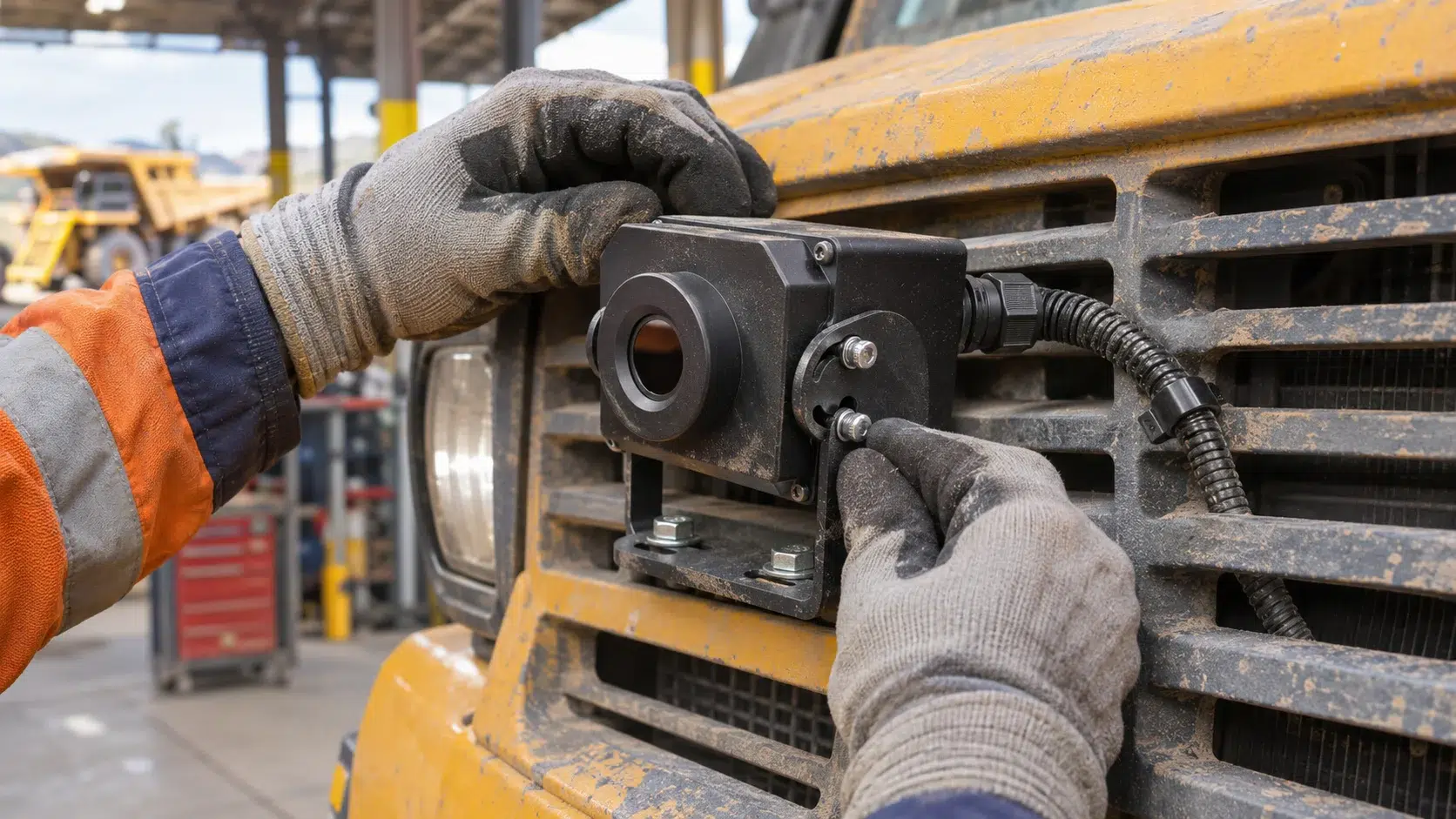
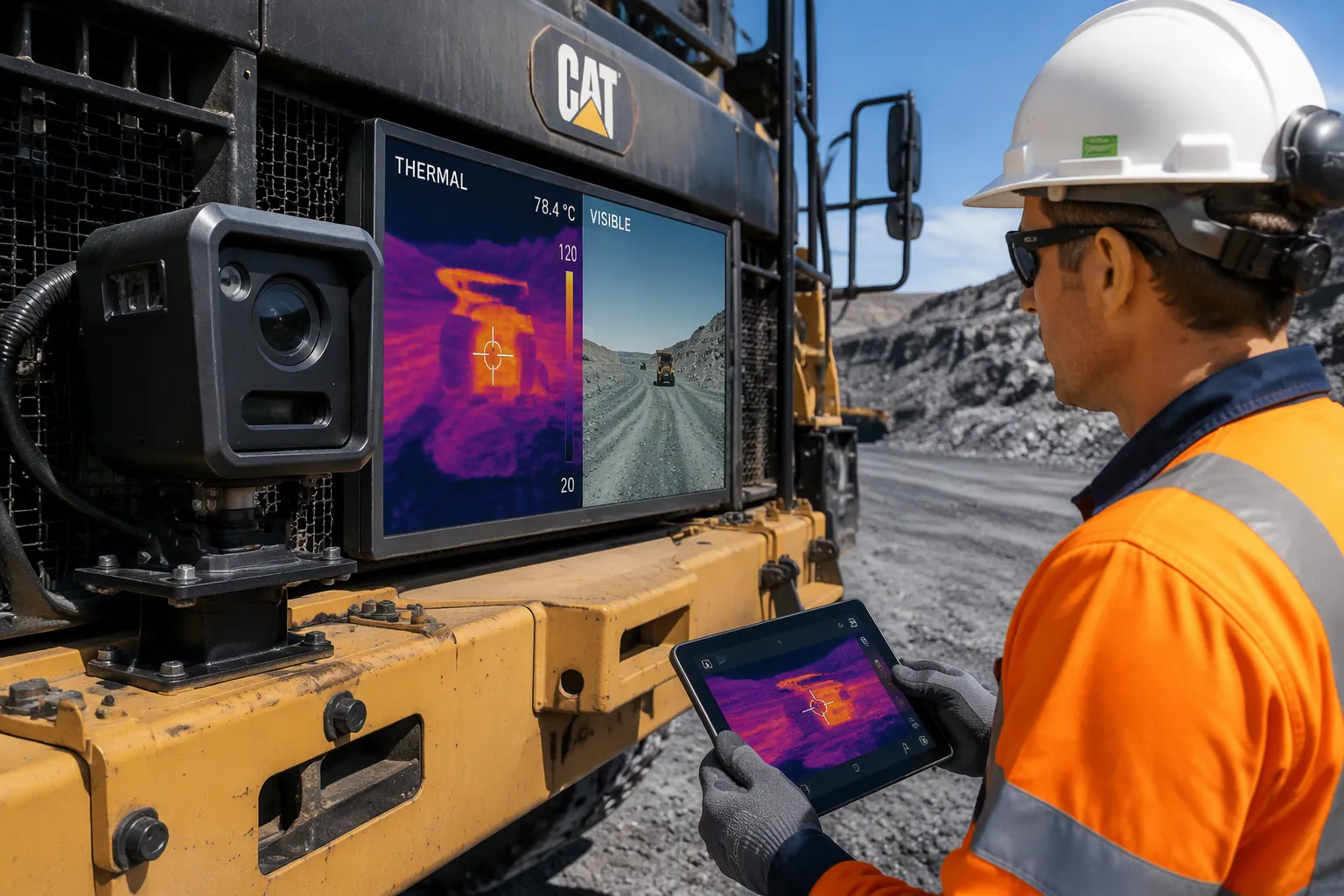
Fleet managers should match the camera to the vehicle before they compare picture quality. A 4WD light vehicle, a haul truck and a loader each give different space for mounting. Usual spots include the bull bar, the roof line and the mirror arm. Each spot changes the view, the vibration load and how easy it is to clean. A bull bar mount gives a low, forward view of the track. A roof mount sees further ahead but gathers more dust. A mirror arm mount sits close to the driver’s natural line of sight.
The VERYTEK TA Series specifies a 9–24 V DC input range. This is an input specification, not proof of direct compatibility with every nominal 12 V or 24 V vehicle electrical system. Before connection, verify the actual supply voltage during charging, starting and operation, transient conditions, and any required regulated supply or voltage-stabilisation arrangement with the supplier. Also confirm cable routing, fuse protection and ignition behaviour for each vehicle model.
Interfaces and Data Output
The interface list decides how the camera talks to the display, the recorder and the fleet system. The VERYTEK TA Series detects pedestrians and vehicles on the camera itself. It sends AHD video at 720p and 25 Hz by default, and it offers a separate RS485 interface for detection-related distance information. That split lets the video feed serve the driver while distance data feeds a logging or alert system.
Field of View and Sample Footage
Matching Lens and FOV to Task
Field of view means the area a camera takes in at one time. A wide view shows more of what is around, and a narrow view shows far objects in more detail. The lens you pick sets this balance, and no single lens works for every job. A camera on a mirror arm needs a wide view to cover the blind spot beside the cab. A camera on the roof of a haul truck needs a narrower view to spot a person far down the haul road.
Fleet managers should decide the task before they choose the lens. Reversing and close work are better with a wide field of view. Looking ahead at speed is better with a narrower one. Buyers should ask the supplier for the horizontal field of view in degrees. They should also ask how far away a human-sized target fills enough pixels to be recognised. The VERYTEK TA Series detects pedestrians and vehicles on the camera itself, so the field of view you choose also shapes what the detection function can see.
Evaluating Supplier Sample Clips
Sample footage is the fairest test of any camera. Suppliers should give clips recorded at the height the camera will be mounted. The clips should show dust, night and direct sun. The viewer should watch for sharp edges, lag on moving vehicles and how fast the image recovers after a dust cloud passes. Clips recorded on a bench tell the fleet very little.
Compare clips recorded with the proposed lens, FOV, mounting height and display chain. Record the target size, distance and environmental conditions, and test both detection behaviour and end-to-end latency. A short side-by-side trial on representative vehicles provides more useful evidence than a brochure alone.
Compliance and Certification
Mining Standards and EMC
Compliance shows that a camera meets the rules a mine site and a vehicle maker already follow. Site operators often want proof before they let a new device onto a vehicle. Buyers should check which standards apply at each site, because rules differ between regions and operators.
Electromagnetic compatibility (EMC) needs early attention. A camera shares the vehicle wiring with radios, controllers and lights. Poor EMC performance can upset those systems or pick up interference from them. Suppliers should state which EMC standards they tested against, such as CISPR 25 for vehicle parts or UN ECE R10 for vehicle approval. A test report from a recognised lab counts for more than a marketing claim.
An IP rating alone does not prove compliance for a given vehicle. The supplier should confirm environmental limits and electrical integration against the intended vehicle model. This check matters for every 4WD and heavy-vehicle camera project.
Documentation to Request
Request the documents applicable to the selected camera configuration and intended installation, and compare suppliers in the same format. The available VERYTEK project materials do not include vibration, temperature or EMC test reports, so these checks must not be presented as certifications already achieved by the TA Series.
The IP test report, naming IEC 60529 and the rating achieved.
Vibration and temperature test reports, naming the standard and test conditions.
The EMC test report and the standards it covers.
The declaration of conformity and the operating voltage range.
A datasheet that keeps video output separate from native thermal sensor resolution.
A certificate that names no standard and no test lab tells the fleet very little.
Integrators should also ask for interface details and test samples. A sample checks the paperwork against real behaviour. Fleet managers should file each document against the vehicle model, so an auditor can trace the evidence later.
Comparing Automotive Thermal Camera Options
Scoring Against Fleet Requirements
A scoring framework turns five criteria into one record you can compare. The fleet team lists each candidate in a column and each requirement in a row. Rows carry a weight that reflects the site: a dusty pit may weight ingress protection heavily, while a night-haul operation may weight sensitivity. Reviewers then mark each cell as pass, partial or fail, and cite the evidence behind the mark. A pass with no document attached counts as a partial.
Requirement | Weight | Evidence to cite |
|---|---|---|
Detection range for a person | High | Dusty-site sample clip |
Thermal sensitivity | High | Datasheet figure and test clip |
IP rating | Site-dependent | IEC 60529 test report |
Vibration and temperature | Medium | ISO 16750 or IEC 60068 report |
Power input range | Medium | Stated voltage range, such as the 9–24 V DC input of the VERYTEK TA Series |
Interfaces | Medium | AHD and RS485 details, plus test samples |
Compliance | High | EMC report and declaration of conformity |
The table puts every automotive thermal camera on the same level. No product wins on brand alone, and each option shows where it fits best.
Pilots and Rollout Planning
A pilot answers the questions a datasheet cannot. The fleet team fits a few units to the vehicle types that matter most, then records how they perform in dust and night conditions and during separately verified cleaning procedures. Drivers note false alerts and missed targets. Fitters note mounting problems and cable routing issues. A pilot like this tests the camera and the installation plan together.
Rollout follows the pilot evidence. The team confirms spare units, cleaning routines and maintenance support before it commits to a full fleet order. Suppliers should quote pilot quantities and state their support terms in writing. Fleet managers can then invite suppliers to discuss pilot quantities and maintenance support directly, using the scoring table as the agenda.
The selection process follows a set order. First, the fleet team sets out the thermal needs. Second, it checks the durability paperwork. Third, it confirms the camera fits the vehicle models and power supplies. Fourth, it checks compliance. Fifth, it compares the total cost of ownership for every automotive thermal camera on the shortlist.
A structured comparison framework plus real sample footage stops biased decisions. Each score cites evidence, and each clip shows how the camera really behaves in the field.
Fleet managers should now ask suppliers to talk about pilot quantities and maintenance support. A short trial on two vehicles settles more than any brochure.
FAQ
Does an IP67 rating prove a camera suits a specific vehicle?
No. IP67 describes enclosure protection against dust and temporary immersion under specified test conditions. It does not by itself establish suitability for high-pressure or hot-water cleaning, or electrical compatibility with a specific vehicle. Verify the cleaning method, connectors, mounting environment and vehicle power supply separately.
What should integrators check before trusting a video specification?
AHD video resolution is not the same as native thermal sensor resolution. A 720p stream can hide a modest detector. Integrators should ask for interface details and test samples. The VERYTEK TA Series, for example, offers AHD output at 720p and 25 Hz by default, plus a separate RS485 interface for detection-related distance information.
Which documents should a fleet team request from every supplier?
Request the applicable IP, vibration, temperature and EMC test reports, a declaration of conformity where required, and the configuration-specific datasheet. Check the model, standard, laboratory, test conditions and scope. These are document requests, not claims that VERYTEK has already passed those tests; the available project materials do not provide the corresponding vibration, temperature or EMC reports.
How does a fleet team run a fair pilot?
The team fits a few units to representative vehicle types after checking installation and electrical requirements. Drivers record false alerts and missed targets in the relevant dust and night conditions. Any cleaning trial must use a separately verified method. Fitters record mounting and cable-routing issues, and the team compares the results against the scoring table before a full order.
Why does total cost of ownership matter more than purchase price?
Purchase price hides maintenance and downtime costs. A cheap camera that fails in dust or vibration goes back to the workshop and pulls a vehicle off shift. The fleet team should weigh spare units, cleaning routines and support terms alongside the initial quote.
See Also
AI Thermal Cameras For Vehicles Ensure Clear Vision In Dark Mines
Top AI Thermal Cameras For Vehicle Night Vision Systems
Automotive Thermal Camera OEM Suppliers B2B Engineering Checklist Guide
Automotive Thermal Camera OEM Supply For Commercial Vehicle Integrators In India
How To Choose High Resolution Thermal Imaging Camera Manufacturers For OEM ODM Projects