Choosing a thermal imaging camera manufacturer for an OEM/ODM project is not simply a matter of comparing detector resolution. The right supplier must match your application, optical design, image processing, calibration, interfaces, production capacity, and long-term support requirements. Use this framework to compare suppliers with evidence instead of relying on broad marketing claims.
Key Takeaways
Define the application and required detection, recognition, and identification distance before selecting resolution or lens options.
Evaluate detector, optics, image processing, calibration, interfaces, and environmental design as one system.
Ask every supplier for written evidence covering specifications, quality controls, compliance, lead time, warranty, and change management.
Compare total project cost and integration risk—not only the sample price.
1. Define Your Thermal Imaging Camera Requirements
Match Resolution and Lens to the Application
Start with the target size, operating distance, field of view, installation space, temperature range, and whether radiometric measurement is required. Resolution alone does not determine image quality. Pixel pitch, lens focal length, detector sensitivity, image algorithms, display pipeline, and calibration all affect the final result.
For long-range observation or applications requiring more scene detail, a high-resolution core may reduce reliance on digital zoom. For compact devices, module size and power consumption may matter more. Calculate the expected field of view and pixels on target for each proposed lens rather than selecting from a generic product table.
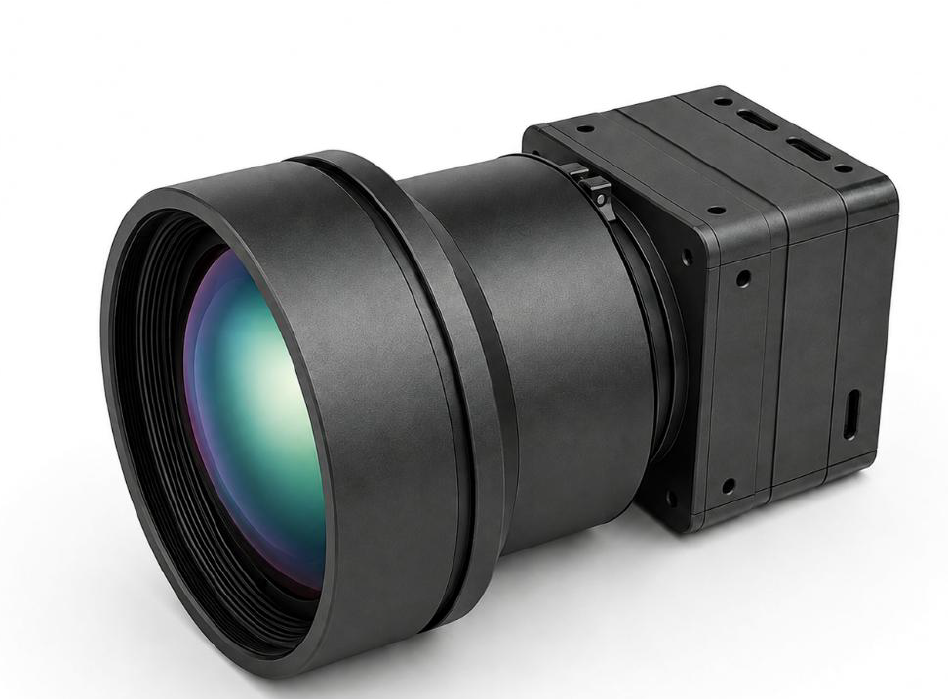
As one example, VERYTEK’s UVL12 1280×1024 uncooled thermal imaging module lists a 12 μm VOx detector, 8–14 μm spectral range, NETD ≤40 mK at F1.0, and 30/50 Hz options. These specifications should still be validated against your lens, enclosure, processing platform, and use case.
Set a Realistic Budget, Timeline, and Compliance Plan
Include the module, lens, mechanical design, interface adaptation, software integration, calibration, certification, tooling, validation samples, and after-sales support. Ask suppliers to separate non-recurring engineering fees from recurring unit costs and explain volume pricing.
Compliance depends on the exact product, destination market, application, and transaction. Ask the manufacturer for current documents for the quoted model and confirm export, import, safety, environmental, and industry requirements with qualified advisers.
2. Verify High-Resolution Thermal Imaging Capabilities
Review the Complete Imaging Chain
A credible manufacturer should explain the detector platform, optical compatibility, non-uniformity correction, bad-pixel replacement, noise reduction, image enhancement, digital zoom, startup behavior, and scene-based correction strategy. Request samples captured under conditions similar to your application and compare raw and processed output when possible.
Ask how the company controls consistency between engineering samples and production units. A strong demonstration unit is not enough; the supplier should describe calibration equipment, acceptance criteria, traceability, and final inspection.
Confirm Interfaces and Integration Details
Verify video output, control protocol, power input, startup time, data format, mechanical drawing, connector definition, SDK availability, and supported operating systems. The UVL12 description lists DVP, HDMI, USB3.0, and Camera Link interfaces, a module size of 70 × 70 × 28.7 mm, and power consumption of 3.5 W at 30 Hz or 4.5 W at 50 Hz. Confirm the final configuration in the current specification and quotation.
If temperature measurement is required, define the measurement range, accuracy target, distance, emissivity conditions, ambient compensation, calibration method, and reporting format. Radiometric performance should be assessed separately from visual image quality.
3. Assess OEM/ODM Customization and Manufacturing
Use a Written Customization Matrix
List every required change and identify who owns the design, tooling, firmware, source code, test fixtures, certification files, and resulting intellectual property. Typical areas include detector and lens combinations; mechanical size and enclosure; video and control interfaces; firmware and image algorithms; SDK, API, and protocol; branding and documentation; environmental testing and calibration.
For an overview of available platforms, see VERYTEK’s thermal imaging camera cores. Treat product pages as a starting point; the signed specification and approved sample should define the production configuration.
Audit the Production Process
Ask about incoming inspection, assembly controls, calibration, stress testing where applicable, final inspection, serialization, traceability, defect handling, and engineering change notification. For larger programs, request a factory audit or live review of the relevant production and test process.
Area | Evidence to Request |
|---|---|
Specification control | Revision-controlled datasheet and approved sample |
Quality control | Inspection plan, acceptance criteria, and test records |
Traceability | Serial or lot tracking and component records |
Change management | Written notification and approval process |
Support | Warranty, RMA workflow, response time, and spare-parts policy |
4. Compare Thermal Imaging Camera Manufacturers
Apply the same scorecard to every supplier and weight the categories according to project risk. Compare technical fit, application fit, customization scope, manufacturing controls, compliance evidence, commercial terms, lifecycle support, and supplier stability.
When comparing potential thermal imaging camera manufacturers, do not score claims that cannot be verified. Certificates, test reports, and references should match the legal entity, factory, product model, and evaluation date.
5. Send an Evidence-Based RFQ
Include the application, annual volume, target price, required resolution, lens or field of view, detection distance, interfaces, mechanical envelope, power limit, operating temperature, radiometric needs, target markets, sample schedule, and mass-production date. Ask the supplier to identify every assumption and exception.
Before approval, validate image quality, range performance, startup, interfaces, power, thermal behavior, environmental conditions, calibration, software stability, and unit-to-unit consistency. Keep the approved specification, golden sample, firmware version, and test criteria under revision control.
Conclusion
The best thermal imaging camera manufacturer is the one that can demonstrate technical fit, repeatable production, transparent customization, and dependable lifecycle support for your specific project. Define the requirement first, compare suppliers with the same evidence-based scorecard, and validate the exact configuration before committing to volume production.
To discuss a custom module or camera project, contact VERYTEK with your application, target range, interface, size, quantity, and schedule.
Frequently Asked Questions
What should I check first?
Start with target distance and size, field of view, resolution, lens, environment, interfaces, size, power, and radiometric requirements. Then verify manufacturing and support.
Is higher thermal resolution always better?
No. It can provide more detail but may increase cost, processing load, power consumption, and optical requirements. Choose the resolution that meets the measured application target.
What is the difference between OEM and ODM?
OEM commonly refers to manufacturing or customizing to a customer’s specification or brand. ODM usually includes more supplier-led product design. Define scope and ownership contractually because usage varies.
How can I verify a thermal module supplier?
Request model-specific documents, samples, test evidence, production and quality information, references where available, and a written change-control process.
Should I select the lowest unit price?
No. Compare total project cost, including engineering, tooling, integration, certification, yield risk, support, warranty, lead time, and lifecycle continuity.