
Picking an automotive thermal camera supplier for commercial truck safety systems comes down to a clear set of rules. You need a written use case, a good match for the job, automotive-grade toughness, video and data interface compatibility, proof of testing, and support over the product’s life. Platform fit, integration cost, and steady supply belong on that list too.
This post gives you a step-by-step selection process, a comparison framework, and a pilot approach. You can use them with any supplier. A thermal camera that passes a structured pilot and moves smoothly to production is the real test of a long-term partnership.
Key Takeaways
Write down your truck’s use case first. This keeps every supplier on the same page.
Match camera specs to your needs. Check durability and how the camera connects to your truck’s systems.
Ask for test proof. Do not trust certification claims without seeing the actual test report.
Look at total cost, not just unit price. Include installation, training, and maintenance.
Run a pilot with clear pass/fail rules. Score every supplier the same way and let evidence decide.
Where Automotive Thermal Cameras Add Value on Trucks
Low-Light and Night Operation Gaps
Night driving shows a real gap in visible-light systems. Headlights only reach so far, and glare, fog, and dust cut that reach even more. An automotive thermal camera works from heat contrast instead of light. Warm objects like people, animals, and running engines stand out against a cooler background. This makes truck-mounted thermal imaging useful on dark rural routes, in mining pits, and around loading yards after dark.
For a fleet buyer, the value is useful visibility at the moment it matters most. A driver sees a heat signature before the headlights pick it up. That extra time helps with forward hazard detection and safer speed decisions. An aftermarket thermal camera for trucks therefore earns its place as a night-operation aid, not as a replacement for careful driving.
Complementary Role With Visible Cameras and Radar
Automotive thermal cameras do not replace radar, visible cameras, or normal driving procedures. Each sensor answers a different question. Radar measures range and closing speed. Visible cameras read lane markings, signs, and color. A thermal camera adds heat-based detection where light fails. Together they give a fuller picture for blind-spot monitoring and blind-spot detection on large vehicles.
Treat the thermal camera as one input in a layered safety system. It provides observation and warning assistance only. It does not independently control braking or steering.
No thermal camera should be specified as an autonomous control device. Confirm this boundary with every supplier you shortlist.
This matters for integration cost and liability review. An aftermarket automotive thermal camera that feeds a display or DVR fits existing platforms with less disruption. That keeps the business case simple. Automotive thermal imaging then supports the driver, and the driver stays in control.
A Step-by-Step Process for Evaluating Truck Thermal Camera Suppliers
Start With a Documented Use Case
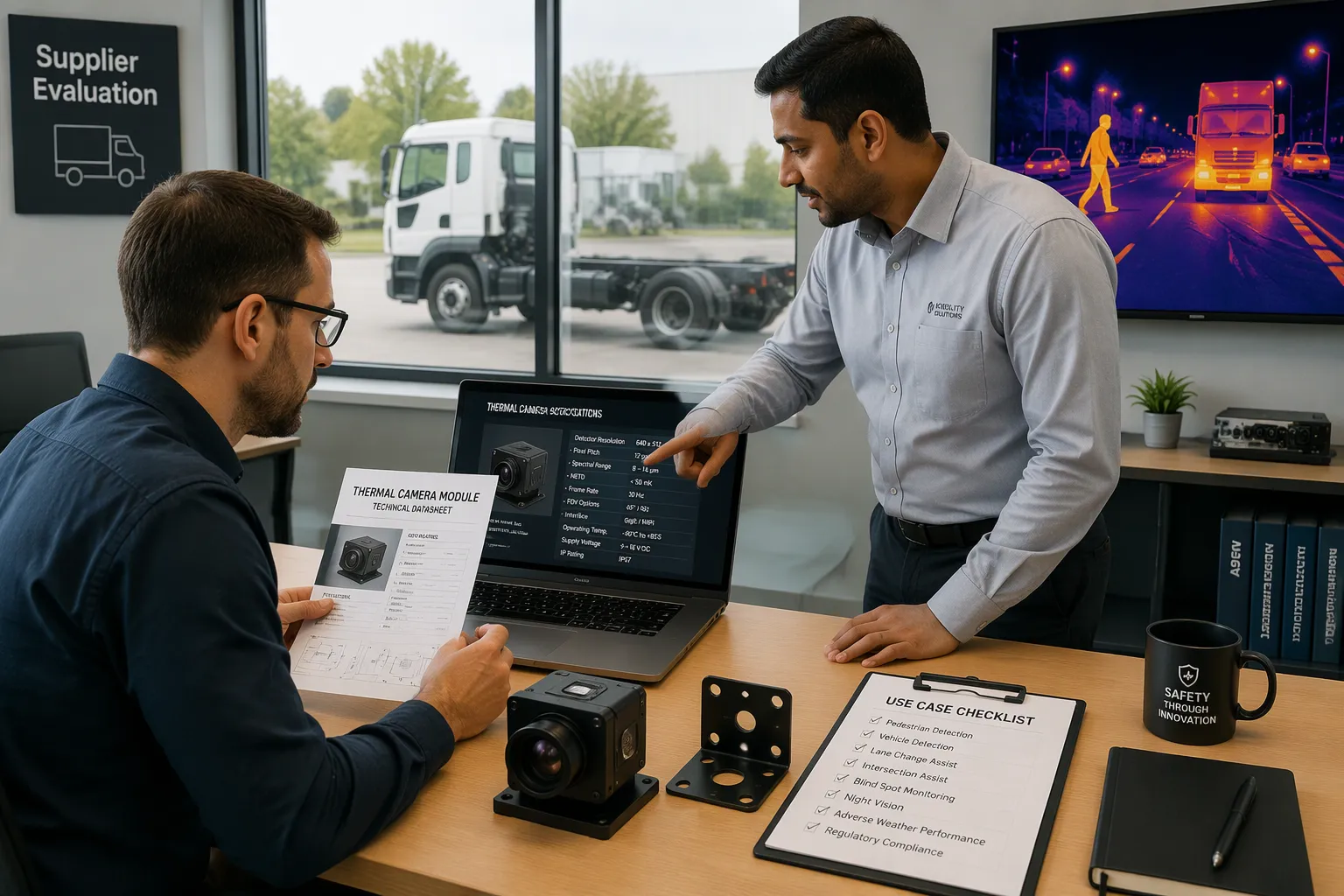
Write the use case down before you compare any datasheet. A written brief keeps every automotive thermal camera supplier on the same footing and protects your integration budget. Record these elements:
Truck type and chassis platform
Mounting position and viewing angle
Typical speed and road environment
Target hazards (people, animals, vehicles)
Display location in the cab
Operating temperature range
This brief becomes the main support of your truck-specific evaluation plan. It also tells you where to install a thermal camera on a semi truck without cutting or reworking existing structures.
Match Specifications, Durability, and Integration
Now compare thermal camera specifications against the brief. Ask each supplier for a technical package covering the points below.
Specification | What to compare |
|---|---|
Detector and band | LWIR technology in the long-wave infrared band, roughly 8–14 micrometers; uncooled microbolometer detectors are common |
Thermal resolution | 384 × 288 versus 640 × 512; higher thermal resolution keeps shape detail but raises cost and processing load |
NETD specification | Lower values mean greater sensitivity; confirm the test conditions behind the figure |
Lens and field of view | Wide views for close blind spots, narrow views for distance |
AI categories and data | Pedestrian detection and vehicle classes, plus distance-related output |
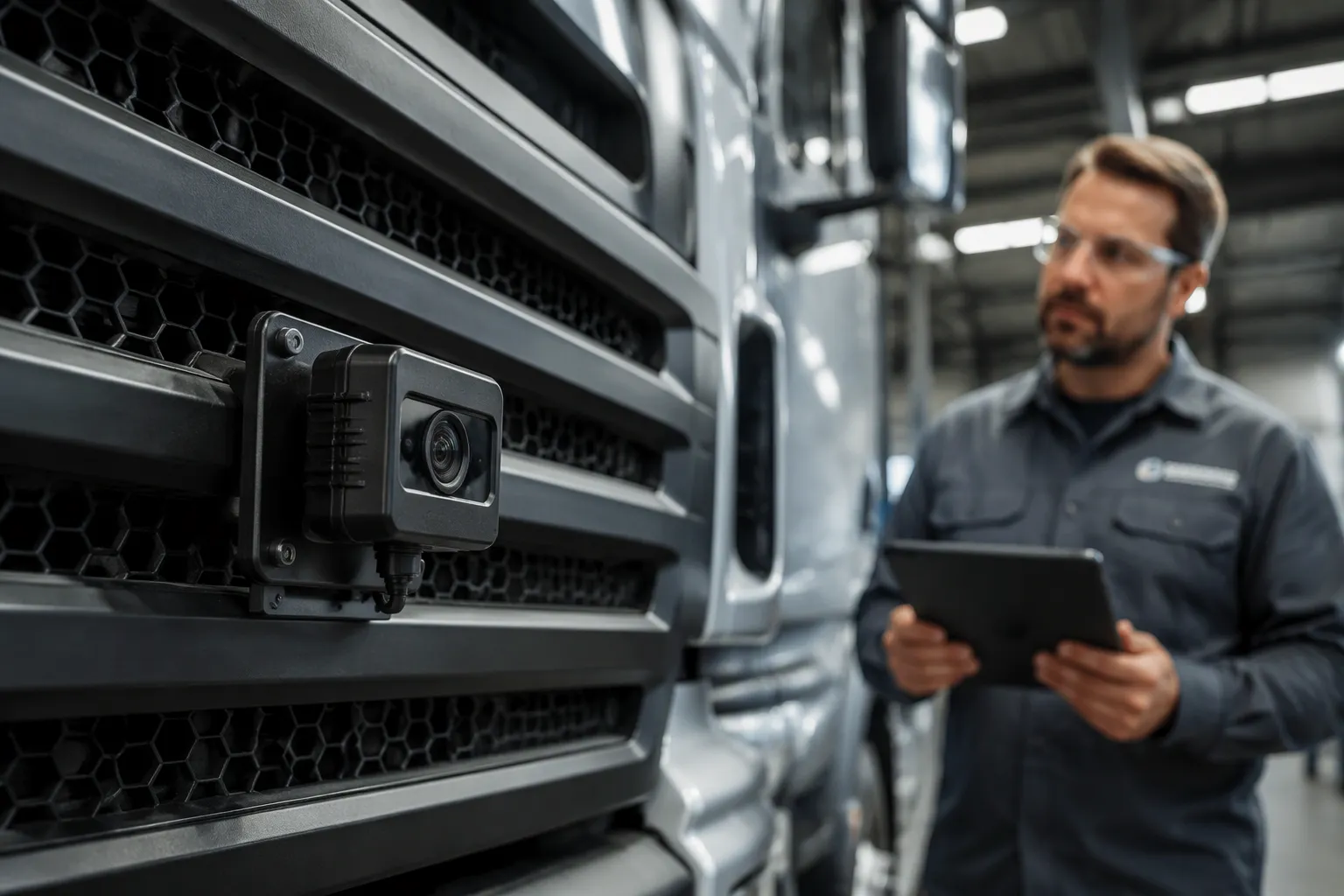
Durability and integration decide whether the unit survives the fleet. Check the IP-rated enclosure, operating voltage across 12 V and 24 V systems, temperature range, and power draw. Confirm AHD video compatibility with your displays or DVRs, RS485 data output, mounting hardware, and startup behavior. An aftermarket automotive thermal camera should start on power-up and feed existing screens without new wiring runs.
Validation comes next. Request test documentation and demand specific evidence behind any automotive certification claim. IATF 16949:2016 covers quality management, and AEC-Q100 covers integrated circuit stress testing. Neither proves a finished camera is automotive-grade on its own.
Assess a concrete configuration, such as the VERYTEK TA Series. This AHD-output AI vehicle thermal camera pairs a 12 μm uncooled VOx detector with an 8–14 μm band and 256×192, 384×288, or 640×512 resolutions. It offers 720p or 1080p AHD output, RS485 distance data, an IP67 aluminum housing, DC 9–24 V input, −30°C to +70°C operation, under 7 W draw, and 18°–110° HFOV lens options. Model choice balances resolution, lens, and detection range: the TA2-9.1 reaches 80 m for pedestrians and 150 m for vehicles, while the TA6-13 reaches 50 m and 100 m.
Features Worth Paying For in Automotive Thermal Cameras
Put your budget toward features that fit the use case you wrote down. Resolution and lens fit come first. A wide lens works well for close blind-spot work, and a narrow lens works well for long forward views. AI detection overlays and distance data output turn raw images into useful warnings for forward hazard detection. Configurable overlays and an alarm interface help drivers react without looking away from the road. Lens options that match the mounting position protect your integration plan. These features are worth their cost on trucks. Decorative extras are not.
Total Cost of Ownership Beyond Unit Price
Unit price tells you little about the real cost. Add installation labor, vehicle downtime, driver training, lens cleaning, and routine maintenance. A cheap unit with a difficult bracket can cost more over its life than a well-matched one. Judge value from pilot results, not from assumed accident reductions. Measure what the fleet actually sees and saves during the trial.
Common Procurement Pitfalls
The first mistake is comparing specifications before you define the use case. The second is over- or under-specifying resolution and lens. Too much thermal resolution wastes money, and too little limits detection range. The third is ignoring MDVR and display compatibility, which stalls installation. The fourth is accepting certification claims without evidence. Ask for test documentation every time.
Weigh these features against platform fit and supply continuity. A supplier who supports a pilot-to-production path protects your launch schedule. That partnership matters more than a small price gap. Many buyers rank the best thermal imaging camera for truck drivers by brochure numbers. Rank yours by evidence instead. A well-chosen aftermarket thermal camera for trucks, backed by solid LWIR performance and clear blind-spot detection output, supports safety without disrupting your platform. Confirm every claim through a pilot before you commit volume.
Comparing Automotive Thermal Camera Suppliers and Running a Pilot
Due Diligence Questions and Evidence
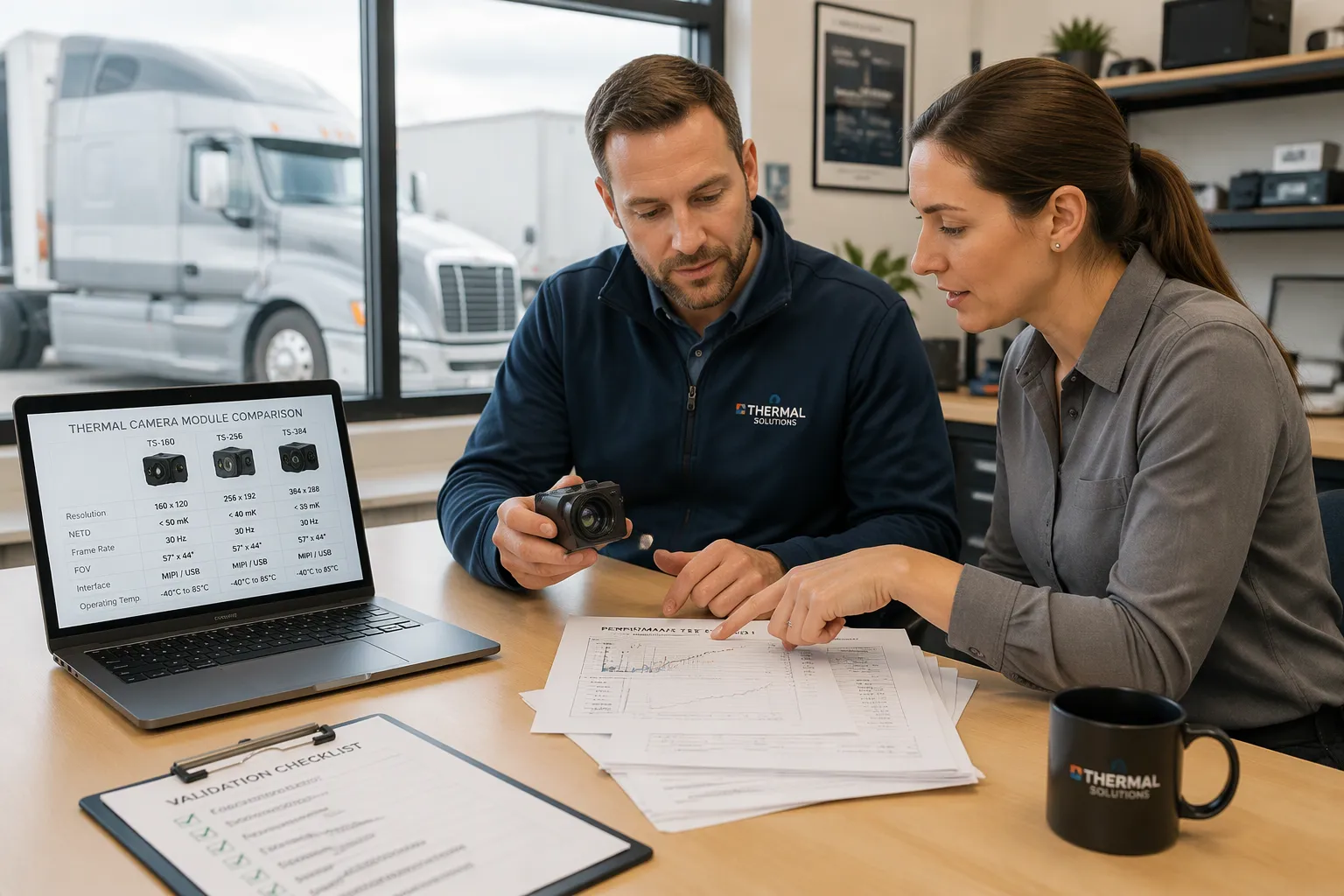
Due diligence helps you tell a capable automotive thermal camera supplier apart from a brochure. Ask every vendor the same questions, then compare the answers side by side. Request samples, quality records, delivery commitments, and any test documentation that applies. Confirm AHD video compatibility with your displays, the recognition categories they support, distance-related data, and the lens and resolution options you need.
Test documentation deserves a close look. Ask which tests were done and to which standard, the conditions and durations, how many samples ran, and the acceptance criteria. Find out whether the tests covered the bare module or the final housing. Ask what failed and what changed as a result. Then ask to see the report itself, not just the certificate. A supplier who answers these questions openly gives you evidence you can defend to your own engineering team.
Pilot Acceptance and Next Steps
Set up the pilot with clear inputs. Send the supplier your vehicle platform, display inputs, planned quantities, and project schedule. Ask for a configuration and pricing discussion built around those details. For example, you can contact VERYTEK with this package and review how the TA Series maps to your fleet. This step also tests supply continuity and the pilot-to-production path before you commit volume.
Define acceptance criteria before the trial starts. Measure detection performance in your fleet’s real operating conditions, not on a test track alone. Check integration with existing displays and DVRs, and time how long it takes to install a thermal camera on a semi truck in your workshop. Track support responsiveness during the pilot, since slow answers now predict slow answers in production.
Score each criterion and compare suppliers objectively. A strong pilot result on an aftermarket thermal camera for trucks should show stable video, usable warnings, and a clean fit with your platform. Use the same scorecard for every vendor, and let the evidence decide. The right automotive thermal camera supplier is the one whose configuration, documentation, and support match your operating profile and your launch schedule.
You now have a repeatable path. Document the use case first. Then match specifications and integration, verify durability and validation evidence, weigh total cost of ownership, and confirm every claim through a pilot. Run this sequence with each vendor, and you compare automotive thermal cameras on evidence rather than brochures.
Keep the due diligence questions and pilot criteria as a working checklist. Score platform fit, integration cost, maintenance needs, and supply continuity the same way for every supplier. The right partner for your trucks is the one whose evidence, support, and configuration fit your fleet’s actual operating profile. That fit protects your safety case and your launch schedule.
FAQ
How do I judge platform fit before I commit to a supplier?
Send the supplier your chassis platform, display inputs, and mounting position first. Ask for written confirmation that AHD video and RS485 data output will work with those inputs. A supplier who gives specifics, not general claims, shows you the integration path clearly. Good platform fit protects your launch schedule.
What drives integration cost beyond the camera unit price?
Installation labor, bracket design, wiring runs, and display or DVR compatibility drive the real cost. A unit that starts on power-up and feeds existing screens avoids new wiring. Ask each supplier to quote the full install package. Compare total cost, not unit price, across vendors.
How much maintenance should I plan for?
Plan for lens cleaning, routine inspection, and bracket checks. An IP67 aluminum housing and a wide operating range of −30°C to +70°C reduce environmental wear. Power draw under 7 W keeps electrical load low. Ask the supplier for a maintenance schedule and expected service intervals before you commit volume.
How do I confirm supply continuity and a pilot-to-production path?
Request delivery commitments, quality records, and a production ramp plan in writing. Ask how the supplier handles volume increases and lead times. Run a pilot with your own acceptance criteria, then score the results. A supplier who supports a clean pilot-to-production path protects your launch and your long-term partnership.
Which specifications matter most for a business case?
Match resolution and lens to your use case first. A 256×192 sensor with a wide 18°–110° HFOV lens suits close blind-spot work, while 640×512 with a narrow lens suits distance. Confirm AI detection range, such as 80 m pedestrian and 150 m vehicle, against your routes. Fit beats headline numbers.
See Also
Selecting Aftermarket Truck Thermal Cameras With VERYTEK: A Buyer’s Guide
OEM Thermal Camera Supply for India Commercial Vehicle Integrators
Key Features to Evaluate in Mining Fleet Thermal Cameras
Choosing Thermal Cameras for Canadian Winter Fleet Projects
B2B Engineering Checklist for Automotive Thermal Camera OEM Suppliers