
Night vision makes the light already in a scene stronger. Thermal imaging works in a different way: it picks up heat radiation and needs no light source at all. That one difference explains every trade-off between thermal night vision and light amplification.
Neither technology is best everywhere. The right choice depends on what the OEM is using it for, where it will be used, and what performance matters most. A product manager comparing the two should weigh five things: how each one works, how it does in total darkness, smoke, and fog, cost, telling details apart versus spotting heat targets, and whether the two can be combined.
This article compares thermal imaging and night vision head to head. It then matches each option to security, vehicle, and outdoor uses. A practical decision framework covers technical performance, application fit, regulatory compliance, and cost.
Key Takeaways
Thermal imaging picks up heat and works even in complete darkness. Night vision makes existing light stronger, so it needs some light to work.
Pick thermal imaging to detect things far away in darkness, smoke, or fog. Pick night vision to clearly identify things in low light.
Think about the total cost, not just the unit price. This includes power, service life, and extra parts like illuminators.
Putting both sensors in one device gives you the best of both: thermal finds targets, and night vision identifies them.
Check export rules and certifications early to avoid delays and extra costs.
How Thermal Night Vision and Light Amplification Work
Thermal Imaging Detects Heat Radiation
Thermal imaging picks up infrared radiation, which every object gives off as heat. The sensor turns temperature differences into a picture you can see. Warm objects like people, animals, and running engines stand out against cooler backgrounds. This is thermal detects temperature differences in its purest form.
The technology needs no light source at all. A thermal imager works in total darkness, inside a closed room, or under a thick canopy. This explains what a thermal imager is and why it works even without light: it reads heat, not reflected light. Passive thermal night vision therefore stays effective when no ambient light exists.
Night Vision Amplifies Available Light
Night vision makes ambient light stronger. A night vision device collects the small amount of light present—moonlight, starlight, or near-infrared illumination—and boosts it to a usable level. The image looks familiar because it keeps visible detail such as faces, clothing, and signage.
This approach depends on some light being present. In complete darkness, night vision devices degrade or fail unless an illuminator adds near-infrared light. That setup is called active infrared night vision. The distinction matters: active systems project light and can be detected, while passive thermal night vision emits nothing. Understanding the difference between night vision devices and thermal imagers starts here—one amplifies light, the other reads heat. Both thermal cameras and image-intensified systems rely on infrared sensors, but they capture entirely different signals.
Thermal Imaging vs. Night Vision: Key Differences
Detection, Range, and Image Detail
The table below sums up how thermal night vision and light amplification differ on the points that matter most when a project starts.
Criterion | Thermal Imaging | Night Vision |
|---|---|---|
Principle | Detects heat radiation | Amplifies ambient or near-infrared light |
Total darkness | Fully operational | Degrades or fails without an illuminator |
Range | Long detection range against warm targets | Shorter, light-dependent range |
Fog, smoke, rain | Less affected by light interference | Degrades as particles scatter light |
Camouflage penetration | Reveals heat signatures behind concealment | Limited by visible contrast |
Image detail | Strong target detection, weaker recognition | Strong recognition of faces and objects |
Cost | Historically higher, now declining | Generally lower entry cost |
Lifespan | Long, no consumable light path | Depends on intensifier tube life |
The difference between night vision devices and thermal imagers shows up first in detection. A thermal imager finds a person or vehicle by heat, often before your eye or a night vision device sees anything. Range favors thermal imaging in open terrain. Image detail favors night vision, which keeps the visual cues you need to identify a face, a tool, or a fence line.
Environmental Resilience and Cost
Atmospheric interference splits the two technologies apart. Thermal imaging is less affected by light rain, fog, or smoke, because heat radiation passes through particles that scatter visible light. Night vision depends on light bouncing back into the sensor, so heavy interference weakens the return signal. That is why thermal imaging works through fog and smoke more reliably than light amplification, and why teams that need to see through fog and smoke often choose thermal cameras.
Cost has changed the math. Thermal imaging has become cheaper, smaller, and better in image quality, making it a real option to traditional night vision for many OEM programs. A product manager weighing night vision vs thermal technology should compare total system cost, not unit price alone. Thermal imagers have no intensifier tube to replace, which makes long-term service simpler. Night vision devices stay cost-effective where low-light recognition is the main job.
The difference between night vision devices and thermal imagers comes down to mission fit in the end. Thermal imaging and night vision each win in different conditions, and neither fully replaces the other.
Choosing Night Vision or Thermal by Application
Security and Surveillance
Security work splits into two jobs: find the threat first, then identify it. Thermal imaging owns the first job. A thermal imager or night vision device placed on a perimeter will differ sharply here, because heat signatures reveal a person or vehicle before any light-based sensor registers a shape. Sites that need detection first—fence lines, open yards, remote gates—gain the most from thermal cameras. A night vision device suits the second job better. Close-range recognition of a face, a badge, or a uniform needs visible detail, and light amplification keeps that detail in controlled areas with clear sight lines.
Scene recognition also matters. A night vision device shows gates, tracks, tools, trailers, and fences in familiar visual form. Operators recognize the scene faster when the image looks like the world they know. Thermal imaging and night vision therefore work well together on the same site: one spots the heat target, the other confirms what the target is.
Vehicles, Outdoor Devices, and Drones
Vehicle programs face a harder trade-off. Thermal night vision supports long-range detection in total darkness and bad weather, which helps a driver or an autonomous system spot a pedestrian or animal early. Light amplification supports scene recognition in low-light driving, where reading lane markings and road signs matters. A product manager comparing thermal imaging vs. night vision for a vehicle platform should match each sensor to the driving task it serves best.
Outdoor devices and drones add a size, weight, and power limit. Uncooled thermal imagers shrink the payload and draw less current, which extends battery runtime on portable systems. Light amplification remains attractive where cost and familiar imagery dominate. Teams that need night vision to move and identify in the same mission often pair the two sensors rather than pick one.
Emergency and security teams benefit when night vision devices and thermal imagers work together. Thermal imaging delivers situational awareness at distance; night vision confirms identity up close. That pairing also answers the fusion feasibility question early in a project, because the two data streams can be blended into one view.
Compliance and Cost for OEM Integration
Regulatory and Certification Requirements
Compliance review should happen at the start of a project, not at the end. Export controls cover thermal imaging cores and night vision intensifier tubes alike, and the rules change by destination and by end use. An OEM should check the classification of each component before finalizing a bill of materials. Regional certifications add a second layer. Electrical safety, electromagnetic compatibility, and ingress protection marks differ by market, and a module approved for one region may need retesting for another.
Application-specific rules matter just as much. Firefighting, automotive, and medical products each carry their own performance and labeling obligations. A product manager comparing thermal cameras with light amplification should list every market the product will enter, then confirm the certification path for each sensor option. This step often shows that one technology has a shorter approval timeline for a given product class. Writing down the compliance path early keeps the schedule predictable.
Total Cost of Ownership
Unit price tells only part of the story. A full cost model adds integration effort, power budget, and service life. Thermal imaging modules draw modest current and need no illuminator, which makes the power design simpler on battery-operated devices. Night vision systems may need an infrared illuminator, and that addition raises both power draw and component count.
Lifespan shapes the long-term picture. A thermal imaging core has no intensifier tube to wear out, so field service stays simpler over the product’s life. Light amplification systems depend on tube life, and replacement cost belongs in the forecast. Thermal module prices have fallen steadily, and image quality has improved at the same time. That trend narrows the gap between the two options and makes thermal imaging worth re-evaluating on every new program.
Fusion: Combining Night Vision Devices and Thermal Imagers
When Fusion Outperforms a Single Sensor
At the start of a project, a product manager usually compares technology routes on five points: principle, performance in total darkness and in smoke or fog, cost, recognition capability, and fusion feasibility. The first four points narrow the field. The fifth point often settles the design. Fusion feasibility asks a simple question: can the product carry both sensors and blend their output into one image?
Fusion pairs a thermal channel with a visible-light or light-amplification channel. Each sensor covers the other’s weak spot. Thermal imaging finds the heat target at distance, through darkness, and past light interference. The visible channel brings back the detail a human operator needs to judge what that target is. The result is a total advantage: thermal for detection, visible or night vision for recognition. One sensor answers “is something there?” The other answers “what is it?”
This pairing turns a hard trade-off into a workflow. Operators detect with thermal and confirm with night vision inside a single viewfinder. The blended image removes the delay of switching between two handheld units. It also removes the mismatch that comes from comparing two separate scenes. Thermal imaging and night vision therefore stop competing for the same slot in the product and start dividing the work.
Typical fusion use cases follow that division of labor across three markets.
Security and surveillance. A perimeter camera blends a heat overlay onto a visible scene. The guard sees a warm shape at the fence line and reads the person’s clothing, tools, or vehicle in the same frame. Thermal cameras carry the detection load at night; the visible channel carries identification.
Vehicles. An automotive system overlays heat signatures onto the road view ahead. The driver or the autonomy stack spots a pedestrian or animal beyond the headlight beam, then reads the road context around it. This pairing supports the detection + recognition chain that safety functions depend on.
Outdoor devices and drones. A handheld monocular or a drone payload blends both channels for search and patrol work. The operator scans wide for heat, then zooms on a candidate and reads the detail. Uncooled thermal cores keep the payload light enough for battery-powered flight.
Fusion is often the best result when both detection and identification matter. A detection-only product misses the identification step. An identification-only product misses the target in the first place. Programs that need both steps in one pass gain more from a fused design than from either sensor alone. The same logic applies to night vision devices and thermal imagers sold as separate units: a team that deploys both still carries the integration cost in training and in the field.
Fusion does come with its own engineering cost. Two sensors add alignment work, processing load, and a calibration step. The design also needs enough compute headroom to line up the two images frame by frame. A product manager should weigh that cost against the operational gain. When the mission needs detection and identification in one view, the fused design usually wins. When the mission needs only one of the two, a single sensor stays the leaner choice. The comparison between night vision devices and thermal imagers ends in the same place either way: match the sensor set to the job, and let the job decide whether that set holds one sensor or two.
VERYTEK Solutions for OEM Projects
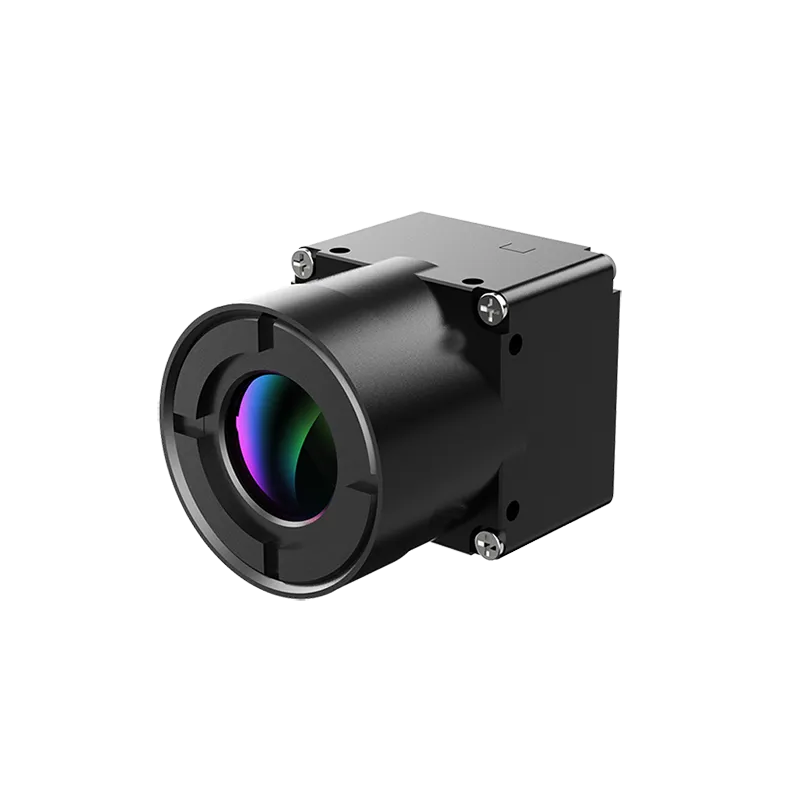
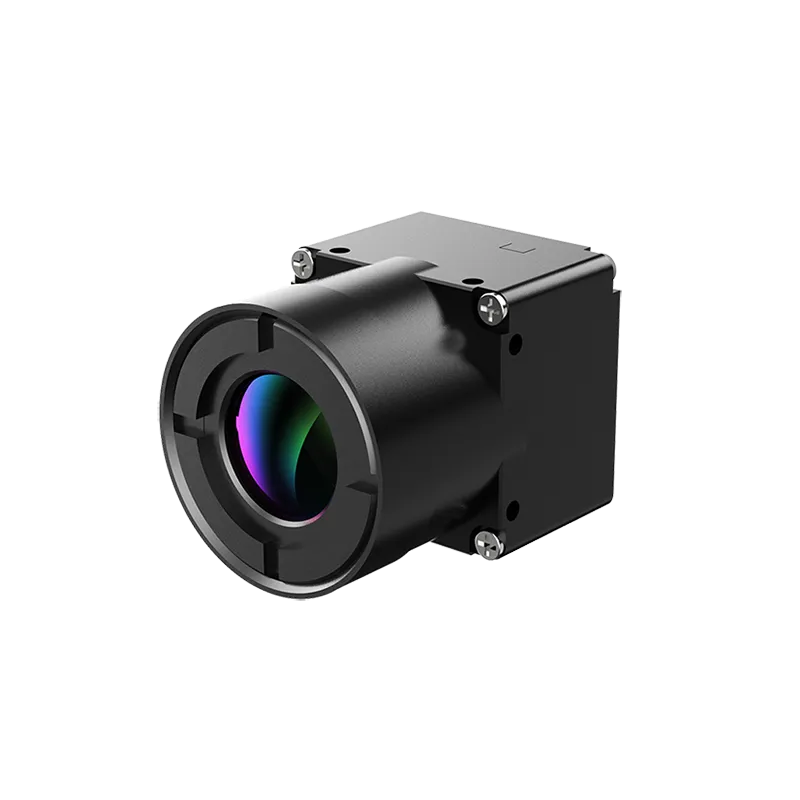
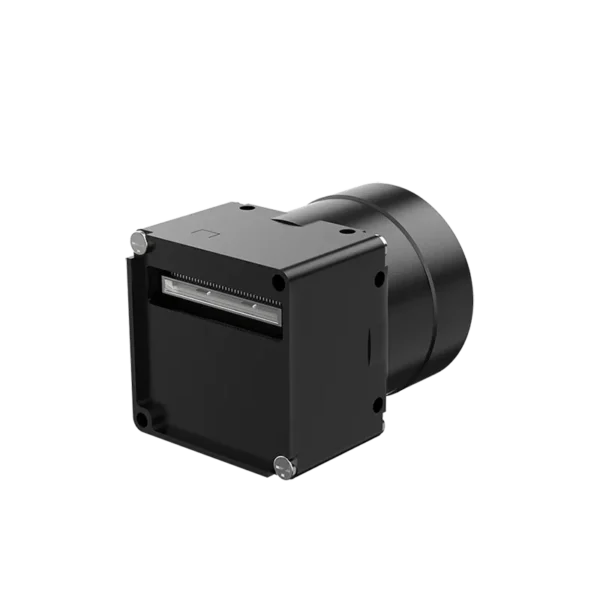
UVL12 Series Uncooled HD Thermal Imaging Module
VERYTEK is known as a leader among thermal imaging manufacturers. The company builds cores and finished devices for integrators who need reliable performance in security, vehicle, and outdoor product lines. OEM teams comparing thermal vs. night vision often start with the sensor core. That part sets the limit on range, image quality, and power budget.
The UVL12 Series Uncooled HD Thermal Imaging Module is made for exactly that job. It pairs a 1280×1024 high-resolution infrared detector with a 12μm pixel pitch. It outputs at 30Hz or 50Hz for smooth video in fast-moving scenes. The table below lists the core specifications.
Parameter | UVL12 Series |
|---|---|
Detector resolution | 1280×1024 |
Pixel pitch | 12μm |
Frame rate | 30Hz / 50Hz |
Outputs | Analog HD, digital interfaces, Ethernet |
Lens control | Zoom lens control and auto-focus |
Protection | Optional solar burn protection |
Cooling | Uncooled |
The uncooled design takes cryogenic cooling out of the bill of materials. That choice cuts size, weight, and power, and it fits portable and battery-operated systems. Low power consumption keeps runtime long on handheld units. Analog HD and digital outputs plus Ethernet give integrators flexible ways into existing video networks. Optional solar burn protection keeps the detector safe from sun damage and extends its working life.
This hd thermal imager fits several OEM markets. Security and surveillance programs use it for perimeter detection and long-range observation. Industrial inspection teams depend on its resolution for equipment surveys. Scientific research groups value the steady output and frame-rate options. Portable device makers get a compact core that fits in without a heavy power cost. The same module works as the building block for thermal imaging cameras sold under an OEM’s own brand.
VERYTEK also offers vehicle night vision and monocular product lines. These give OEMs a direct way to compare thermal imaging and night vision side by side. They can also build a fused design that carries both channels. A product manager weighing the five decision points—principle, darkness and smoke performance, cost, recognition, and fusion feasibility—can source each option from one supplier and shorten the evaluation cycle.
Thermal vs. Night Vision: Myths and Mistakes
Common Misconceptions
Many people believe thermal imaging can see through walls. It cannot. A thermal imager only reads the temperature on a surface, so a solid wall blocks the view just like it blocks light. Glass is another problem. Most glass lets visible light pass through, but it blocks the long-wave heat radiation that thermal cameras depend on. That means a window looks like a cold, solid pane. The sensor picks up heat differences on surfaces, not objects hidden behind them.
Another myth mixes up thermal imaging and infrared vision. A general IR camera usually means a near-infrared camera that needs a light source and gives back a black-and-white visible-light image. True thermal imaging captures heat that objects give off, with no light needed at all. That is the real difference between a thermal imager and a night vision monocular: one reads temperature, and the other makes light stronger.
Avoiding Specification Errors
Buying more than you need wastes money. A buyer who orders the highest resolution and longest range for a short-range gate camera pays for performance the site never uses. Buying too little costs more out in the field. A low-sensitivity core on a perimeter job misses warm targets at a distance, and a weak light-amplification tube fails on a moonless night.
The fix is a short checklist. A product manager should compare night vision vs thermal technology on five points before signing off: principle, performance in total darkness and in smoke or fog, cost, recognition capability, and fusion feasibility. That same list helps tell good night vision devices and thermal imagers apart from poor ones. Buyers who use it on both a thermal imager and a night vision monocular avoid the most expensive mistakes. The difference between night vision devices and thermal imagers rarely hides in a datasheet. It shows up in whether the sensor matches the job.
The decision framework comes down to what the job needs. Thermal imaging wins for finding things in total darkness and bad conditions. Night vision wins for identifying things in low light. Many programs get the best result from using both.
No single technology is best for every product. OEMs should let what the product needs to do guide the choice across five points: how it works, how it does in darkness and smoke, cost, the ability to recognize things, and whether the two can be combined. Teams comparing thermal imaging vs. night vision can use the same list for thermal cameras and light-amplification devices alike.
OEMs that want a faster path can talk to the VERYTEK team. VERYTEK helps match thermal imaging and night vision hardware, or a fused solution, to what each product needs.
FAQ
What is the main difference between thermal imaging and night vision?
Night vision makes the light that is already there stronger. Thermal imaging reads heat radiation and needs no light source at all. The first one keeps familiar visual detail. The second one shows warm targets in complete darkness. That one difference drives every trade-off in range, cost, and recognition.
Which option works better in total darkness, smoke, or fog?
A thermal imager works in total darkness and resists light rain, fog, and smoke. Night vision depends on available light, so heavy particles weaken its signal. Teams that must detect first usually favor the heat-based option.
How do the two compare on cost?
Thermal cores once cost far more than light-amplification tubes. Prices have fallen while image quality improved, so the gap has narrowed. Buyers should compare total system cost, including power draw, illuminators, and service life, rather than unit price alone.
Which technology is better for recognition?
Thermal cameras are great at spotting warm targets at a distance. Light amplification keeps the visual cues needed to identify a face, uniform, or tool. Programs that need both steps often pair the sensors instead of choosing one.
Can OEMs combine both technologies?
Yes. A fused design blends a heat channel with a visible or amplified-light channel. One sensor detects; the other confirms. Fusion adds alignment and processing cost, so it pays off when a single product must both find and identify a target.
See Also
Top AI Thermal Cameras Enhancing Vehicle Night Vision Systems
Choosing High Resolution Thermal Imaging Camera Manufacturers for OEM ODM Projects
Car Thermal Imaging Cameras: Field of View and Night Road Testing
AI Vehicle Thermal Cameras for Clear Vision in Dark Mining Environments
Key Features to Consider in Automotive Thermal Cameras for Mining Fleets