
Many people think a thermal camera only helps after dark. That idea misses the point. Thermal imaging reads heat signatures in bright daylight, through dust, smoke, and fog. Heat does not hide when the sun comes up.
A vehicle thermal camera on mining trucks improves mining safety and efficiency all day and night. It finds overheating brakes, tires, and engines before they fail. You get warning time that visible light alone cannot give.
This post explains how thermal cameras work and where thermal imaging fits in daytime and harsh weather. It also covers how the technology compares with visible-light cameras and radar. Finally, it explains which compliance factors matter for your fleet.
Key Takeaways
Thermal cameras sense heat, so they work in daylight, dust, smoke, and fog.
They find overheating brakes, tires, and engines early, which stops breakdowns.
Thermal imaging helps operators spot people and vehicles in blind spots.
Thermal cameras work together with visible-light cameras and radar to give full coverage.
Using thermal cameras every day makes mining safer and keeps equipment running longer.
How a Vehicle Thermal Camera Works
Reading Heat, Not Light
A thermal camera does not wait for light. It reads the heat that every object gives off. The detector works in the 8–14 μm spectral band, a range of infrared energy that passes through dust and haze better than visible light does. At the core sits a 12 μm uncooled VOx detector. You can think of it as a grid of tiny heat sensors. Each sensor turns incoming infrared energy into an electrical signal, and the camera builds a picture from those signals.
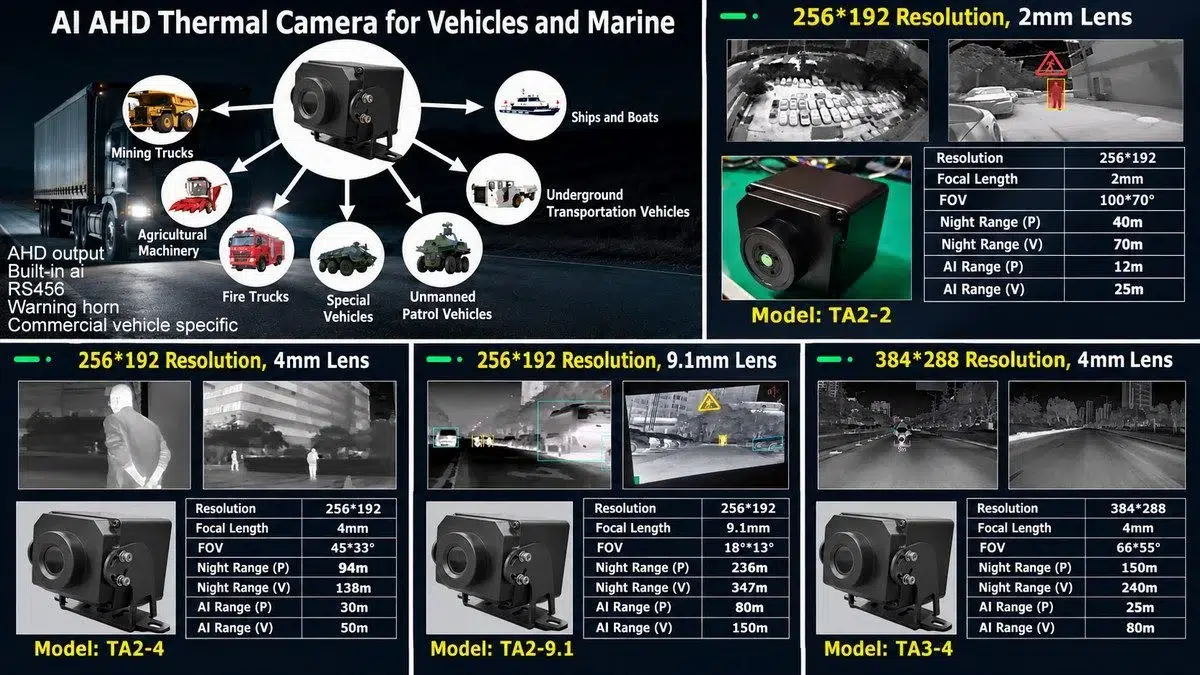
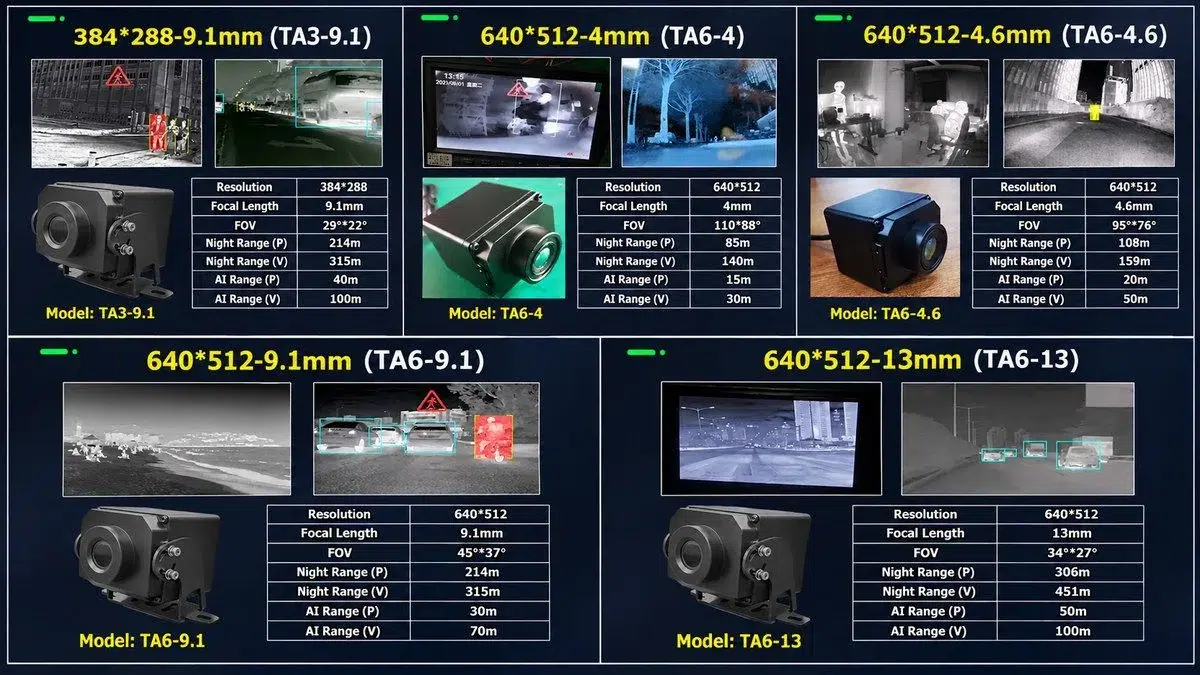
Resolution options give you a choice of detail. The 256×192 version suits close-range views. The 384×288 version balances coverage and clarity. The 640×512 version delivers the sharpest image for long-distance observation. The default output is AHD 720p at 25 Hz, with optional 1080p formats for displays and recorders that support them. The camera runs on DC 9–24 V and starts automatically when powered, so it fits neatly into existing infrared truck cameras wiring.
Why Heat Detection Matters in Mining
Heat signatures stay readable in full daylight. That fact changes how you use thermal imaging on site. A vehicle thermal camera spots a hot brake drum at noon just as clearly as at midnight. Dust clouds and smoke do not block the heat signal the way they block a normal lens.
This capability supports daily safety checks. Thermal inspection of tires, brakes, and engine bays reveals hot spots before a part fails. In mining, a failed tire or brake on a haul truck can halt a whole shift. Thermal imaging gives your team early warning during every operating hour. That is why thermal imaging belongs in the daytime routine, not only in the night shift plan.
All-Conditions Mining Applications
Seeing Through Dust, Smoke, and Fog
Dust floats in the air at every active bench and haul road. Smoke drifts from blasting and equipment fires. Fog can roll in with no warning. A visible-light lens loses contrast in all three conditions, so the operator loses the scene. A vehicle thermal camera keeps working because it reads heat, not reflected light. The 8–14 μm band carries heat energy through airborne particles that scatter visible light. You can see the shape of a person, a light vehicle, or a berm even when the air turns thick.
This matters most in daylight, when crews think they can see everything. A midday dust plume can hide a parked pickup beyond the bucket of a loader. Thermal imaging in mining gives the operator a second view that dust cannot erase. The same is true for smoke near a crusher and fog on a morning shift change. Thermal cameras do not replace your eyes. They add a channel your eyes cannot use.
Thermal Imaging Detect Tyre Tread Separation
Heat tells a story about component health. A haul truck tire builds heat as it flexes under load. A healthy tire spreads that heat evenly across the tread and sidewall. A failing tire shows a hot band where the tread is separating from the casing. Thermal imaging detect tire tread separation by making that band visible long before the damage shows on the outside. You catch the fault at a walk-around check instead of on the haul road.
The same logic covers brakes and engines. A dragging brake glows hot on screen. A coolant leak or a failing bearing leaves a bright spot in the engine bay. Thermal inspection of each truck at shift change builds a full vehicle thermal profile over time. You learn what normal looks like, and you spot the outlier fast. This supports safety and keeps mining haul trucks and heavy equipment in service.
Load monitoring also helps. A poorly loaded bed shifts stress to one side, and that side runs warmer. You can watch load distribution and component temperatures in plain daylight. A tire management programme gains real data from these readings. Tyre thermal signatures reveal pressure problems, alignment faults, and overload before a blowout. Thermal inspection of tires becomes a routine check, not an emergency response. That habit protects your haul truck tire budget and your people.
360° Blind Spot Monitoring for Mining Trucks
AI Detection and Distance Data
A haul truck has blind spots that no mirror can fully cover. The area beside the bed, behind the rear axle, and low in front of the bumper can hide people and light vehicles. A 360° blind spot monitoring for mining trucks setup closes those gaps with a camera that thinks. The VERYTEK TA Series builds AI detection right into the camera. It picks out pedestrians, bicycles, e-bikes, motorcycles, and vehicles in the thermal image. The camera draws a box around each target, adds an alert icon, and prints a distance label on screen. Your operator sees a person in the dust before the person sees the truck.
The camera also sends distance data out through an RS485 interface. This link only sends data, at 115200 baud. You can feed that data into a warning platform or a cab terminal. The terminal can then set off a buzzer or a light when a target enters a set zone. This makes the camera a data source for your mining truck monitoring system, not just a video feed. The detection runs on the camera, so you do not need a separate processing box in the cab.
VERYTEK TA Series in Truck Camera Monitoring Systems
The VERYTEK TA Series fits easily into a truck camera monitoring system. Its sealed aluminum housing has an IP67 rating, so dust and water jets do not stop it. Lens options range from 18° to 110° horizontal field of view. A narrow lens reaches far down the haul road. A wide lens covers the area close to the bumper. You pick the view that matches each mounting point on the truck.
The camera offers an alarm speaker interface for local alerts. IR remote configuration lets you adjust overlays without opening the housing. An optional defrost window keeps the lens clear in cold weather. These features suit industrial-grade mining camera systems that must run shift after shift. The camera supports advanced driver assistance and warning systems. It does not control braking or steering. Your operator or your automated platform stays in charge of the vehicle.
A full mining truck blind spot monitoring system combines several cameras around the truck. Each camera covers one zone. The thermal imaging channel adds target detection that works in dust, smoke, and fog. This supports mining truck safety management across the fleet. You gain a second set of eyes that never blinks. The same hardware fits an intelligent truck camera monitoring system or an intelligent mining truck monitoring system just as well. Operators of mining haul trucks gain awareness of people and vehicles in the worst visibility. That awareness protects your crew and your equipment. Good mining truck camera solutions start with the right sensor for each zone. Thermal imaging earns its place in that mix. Safety improves when the camera sees what the eye cannot.
Thermal vs. Visible-Light and Radar
Performance and Application Fit
Each sensor type answers a different question. A visible-light camera gives you color, detail, and readable signage. It works best in daylight for identification, like reading a plate or checking a load tag. Radar reaches far down the road and tracks speed and distance through poor visibility. It is great at long-range warning. Thermal imaging reads heat, so it sees people and vehicles through dust, smoke, and fog. It also shows a hot brake or a failing bearing that no other sensor can.
Think of the three as teammates, not rivals. A visible-light camera identifies a person in good light. Radar measures closing speed at a distance. Thermal imaging confirms the same person in a dust plume and flags an overheating part at the same time. Your mining operation gains the most when all three cover their own zone. Many fleets run thermal imaging beside visible-light cameras and radar for exactly this reason.
Compliance and Cost Considerations
Regulatory fit depends on the job. Visible-light cameras support record-keeping and incident review. Radar supports collision warning functions. Thermal imaging supports heat-based fault detection and low-visibility awareness. Check each option against the standards your site follows, and confirm the mounting and wiring suit your truck camera monitoring system.
Cost follows the same logic. A visible-light camera costs less per unit and covers color detail well. Radar carries its own price for long-range sensing. Thermal imaging costs more than a basic visible-light unit, yet it delivers fault detection that neither of the others provides. We may sell every option, so we will tell you plainly which one fits each task. Pair thermal inspection of brakes and tires with a visible-light view for identification. Add radar for distance. That mix protects your mining haul trucks and your crew.
A vehicle thermal camera proves useful on mining trucks in daylight, dust, and fog, not just at night. It finds brakes, tires, and engines that are getting too hot before they break down. It also helps operators see better when their eyes are not enough.
Thermal imaging, visible-light cameras, and radar each do different jobs. They work best when used together. One reads heat, one reads color and detail, and one measures distance.
Think of thermal cameras as a helpful tool for your mining fleet all year long. Use thermal imaging to boost mining safety every shift. That habit pays off in uptime, equipment life, and safety for your crew.
FAQ
Does a vehicle thermal camera work in daylight?
Yes. The camera reads heat, not light. A hot brake drum or a warm tire shows up at noon just as clearly as at midnight. You gain fault detection during every shift, not only after dark.
Can thermal imaging see through dust, smoke, and fog?
Yes. The detector works in the 8–14 μm band. That infrared energy passes through airborne particles better than visible light does. You keep a view of people and vehicles when the air turns thick. This makes thermal imaging useful in mining all day.
What does the built-in AI show on screen?
The camera detects pedestrians, bicycles, e-bikes, motorcycles, and vehicles. It draws a box around each target, adds an alert icon, and prints a distance label. It also sends distance data over RS485 at 115200 baud for your warning platform.
How does thermal imaging compare with visible-light cameras and radar?
Each sensor fits a different job. Visible-light cameras give color and detail. Radar tracks speed and distance at long range. Thermal imaging reads heat and sees through dust, smoke, and fog. Use all three together for the best coverage.
How does the camera fit into a truck monitoring system?
The VERYTEK TA Series runs on DC 9–24 V and starts automatically when powered. Its IP67 housing and 18°–110° lens options suit any mounting point. The camera supports warning systems but does not control braking or steering. Pair it with thermal inspection at shift change inside your mining truck monitoring system. The same hardware works in an intelligent mining truck monitoring system or any truck camera monitoring system. That mix strengthens safety across your fleet.
See Also
AI Thermal Cameras Enable Clear Vehicle Vision in Dark Mining Environments
Key Features to Consider in Automotive Thermal Cameras for Mining Fleets
Choosing the Right Aftermarket Automotive Thermal Camera for Your Truck with VERYTEK
Top AI Thermal Cameras for Enhancing Vehicle Night Vision Systems
Automotive Thermal Cameras Suited for Canadian Winter Fleet Operations