
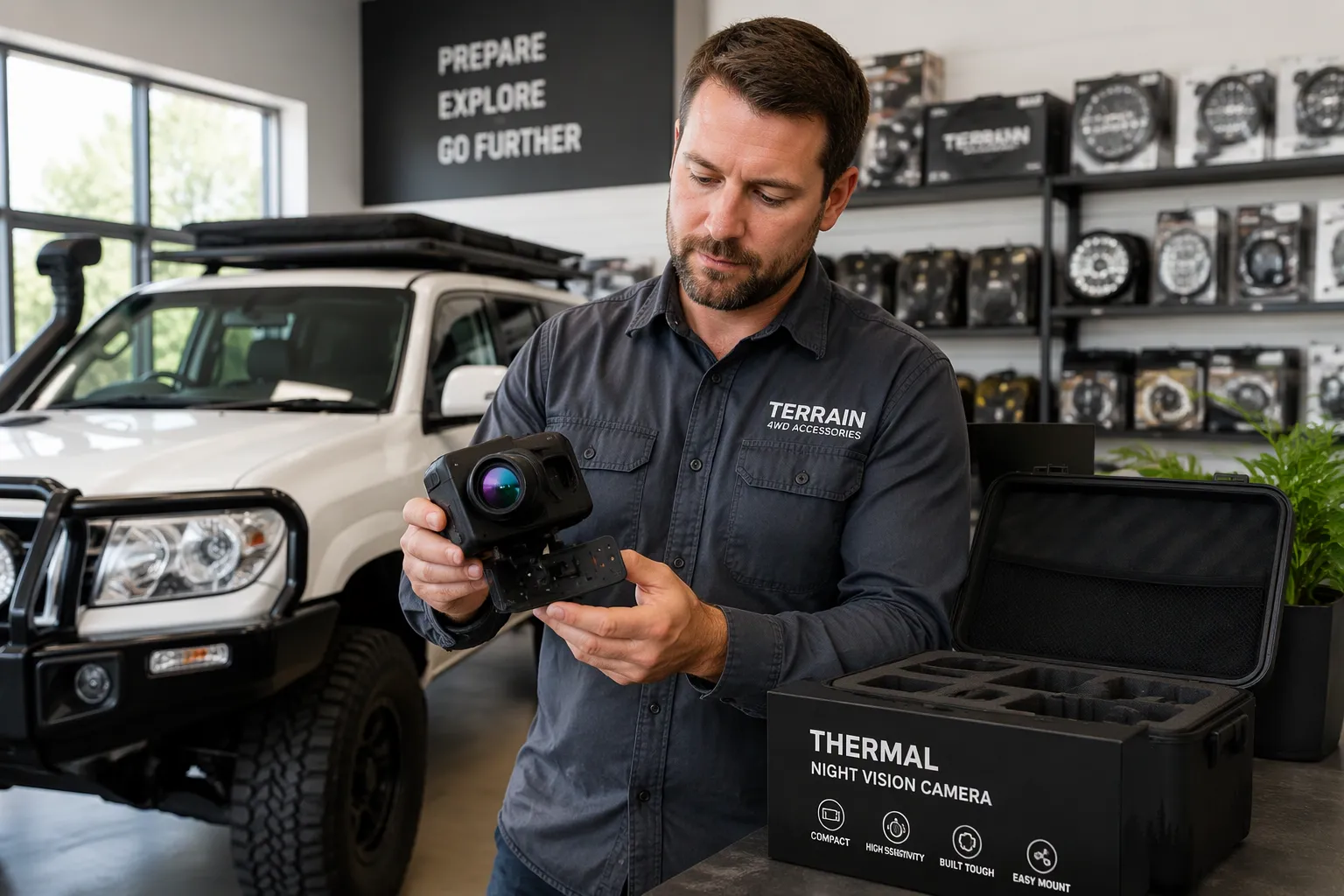
Which thermal night vision kits suit the Australian 4wd aftermarket? Judge every option on four points: legal compliance, technical performance, application fit and cost. These criteria separate a genuine night-safety product from a novelty add-on. Your customers trust you to stock gear that performs on unlit tracks and stays road-legal.
This post compares kit types neutrally. A car thermal camera package includes the camera, display, cable and mounting hardware, so assess the complete 4×4 bundle. Each format has a best-fit application. Match products to your customer base, and you will build a range that sells through.
Key Takeaways
Judge every thermal kit on four points: legal compliance, technical performance, application fit and cost.
Match the kit to the buyer: 5-inch screens suit compact cabins, 7-inch screens with AI suit long outback trips.
Check that kits survive dust, heat and vibration; ask suppliers for test reports.
Confirm road rules and display placement; the system assists the driver but does not brake or steer.
Start with a small trial order, measure sales, then scale up the range that works.
Car Thermal Camera Basics for 4WD
How Thermal Imaging Works at Night
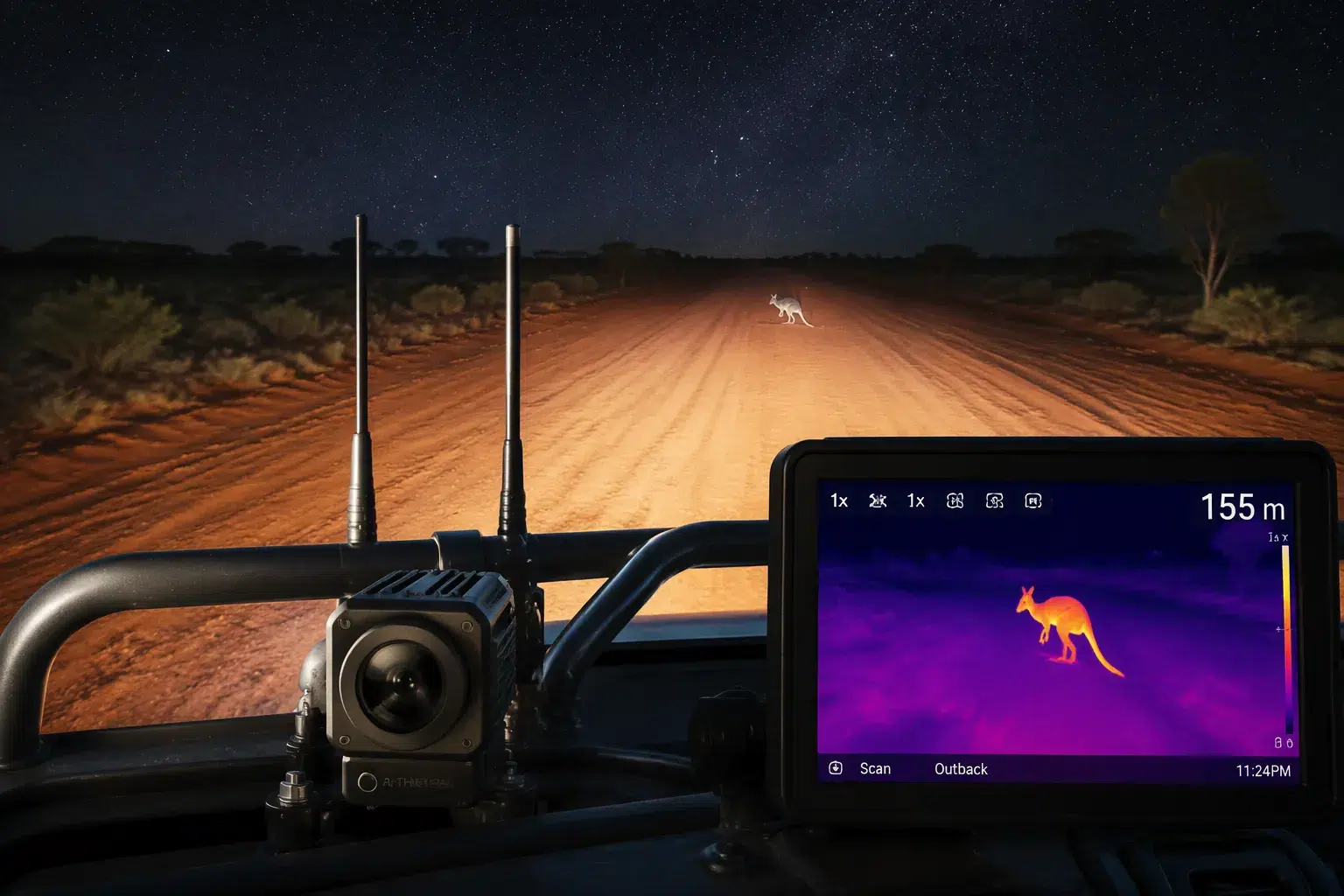
A thermal camera detects heat, not light. Every person, animal and engine radiates a heat signature, and the sensor turns that difference into a visible image. You get a picture on a moonless track where headlights reach only a short distance ahead.
Dust, glare and light rain barely affect thermal imaging. That matters on a dark rural road, where a kangaroo can stand beyond your high beams. Thermal imaging gives you extra seconds to react during unlit rural night driving. Treat it as a driver aid, not a substitute for braking or steering.
Thermal Dash Cam and Vehicle Optics
The thermal dash cam is an emerging on-the-move category. It sits alongside bonnet- and roof-mounted optics, and each format suits a different customer. A recording thermal dash cam appeals to tourers who want footage of night wildlife encounters. Remotely controlled pan/tilt units suit buyers who scan campsites and tracks from the cab.
A complete kit pairs the camera with a display, cable and mounting hardware. Sell the package, not the sensor alone. Pair any unit with complementary IR illuminators as an accessory add-on, and let the customer choose the brand.
For a 4×4 build, confirm lens, defrost and fitment for the chosen configuration before you list it. A recording thermal dash cam also helps your customers review night driving incidents afterwards. Position heat vision gear as a night-safety upgrade, and your range will make sense to buyers.
Performance in Australian Conditions
Resolution and Detection Range
Sensor class drives what your customer actually sees. Entry kits typically run a 256 × 192 thermal resolution. Mid-tier kits step up to 384 × 288. Premium kits reach 640 × 512. Higher resolution packs more pixels onto a wildlife-sized target, so a kangaroo at distance reads as a clear shape rather than a blur. That extra clarity extends detection range, which matters most on a rural road at night.
Frame rate shapes the viewing experience too. A smooth frame rate keeps the image stable on corrugated tracks. Screen clarity depends on the display as much as the sensor. A 5-inch screen suits a compact dash layout. A 7-inch screen gives older eyes an easier read. Judge the complete kit, because a car thermal camera package performs only as well as its weakest part.
Compare classes on these four points and keep your claims general. Quote the sensor figure, the display size and the mounting options. Let demo footage carry the rest. A thermal camera sold on honest specifications builds repeat customers.
Dust, Heat and Durability
Australian conditions test every component. Fine bulldust finds gaps that rain never reaches. High ambient heat stresses seals and electronics. Corrugations shake brackets loose. Water crossings and sudden storms add ingress risk. A kit built for the outback must survive all four.
Check the housing rating and the connector sealing before you list any kit. Ask suppliers for dust and water ingress test documentation. Confirm the operating temperature range suits your region. Look at bracket thickness and cable strain relief, because vibration kills weak mounts first.
Australian specialist retailers publish buying guides and demo footage. Use these resources to set real-world expectations. Watch how a unit performs in heat haze and dust. Study clips from typical Australian terrain. Share that footage with your trade customers, and they will trust your range.
Position heat vision as a driver aid. The system shows a heat signature and warns the driver. It does not brake or steer the vehicle. State this clearly in your listings. Honest positioning protects your brand and keeps expectations grounded.
Night driving in Australia rewards preparation. Stock kits that prove themselves in dust, heat and vibration. Your customers will notice the difference on their first unlit track.
Fitting Kits to 4WD Setups
5-Inch and 7-Inch Kits with AI
Display size shapes the buying decision more than any spec sheet. A 5-inch kit suits a compact dash and a driver who wants a quick glance. A 7-inch kit gives a wider, easier read for long outback stints. Neither wins outright. Match the screen to the cabin, and your customer stays happy.
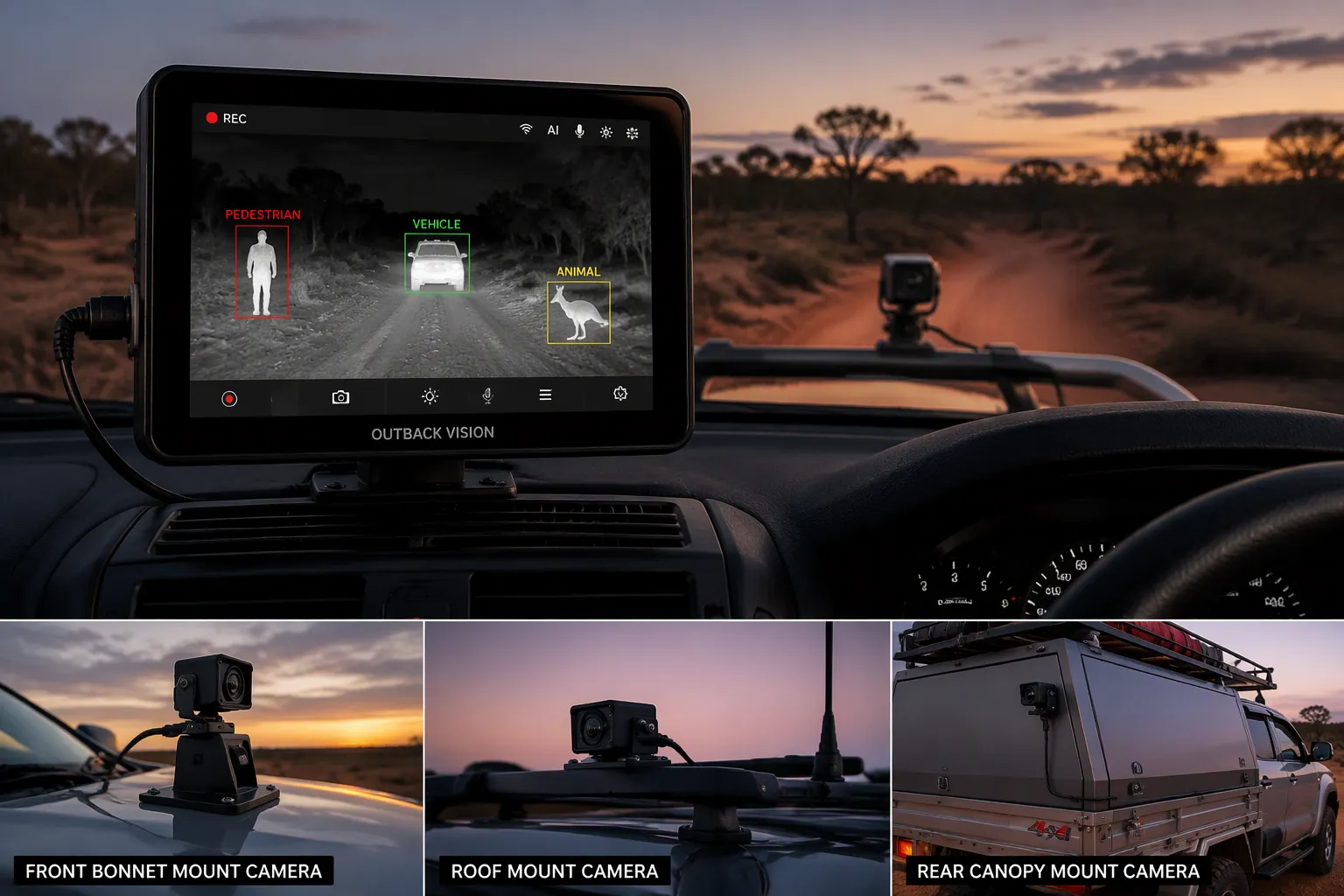
AI features now separate kit tiers. Target highlighting flags pedestrians, vehicles and animals in the frame. Adjustable warning zones let the driver set a distance band for alerts. Recording captures footage for later review, and app connectivity moves clips to a phone. A thermal dash cam with these features appeals to tourers and fleet buyers alike.
Consider the VERYTek aftermarket LWIR night-vision system as one strong option in this class. The buying unit is a complete package: thermal camera, display, cable and mounting. Camera resolution comes in 256×192, 384×288 or 640×512, paired with a 5-inch or 7-inch display. AI recognition covers pedestrians, vehicles and animals, with adjustable warning zones and recording built in. Confirm lens, defrost and vehicle fitment before you list it. State plainly that the system assists the driver and does not control braking or steering.
Bull Bar, Bonnet and Canopy Mounting
Mounting choice follows the customer’s build. A bull bar mount gives a forward view and protects the unit. A bonnet mount sits high and clear of brush. A roof mount scans further ahead on open track. Each position needs a bracket rated for vibration and a cable route away from heat and moving parts.
Canopy owners need their own solution. A 4×4 canopy accessory kit positions the camera at the rear for reversing and campsite checks. Sell a canopy accessory kit alongside every tray-back build. An accessory kit with sealed connectors survives dust and water crossings. Stock a 4×4 canopy accessory kit for the popular dual-cab models, and pair it with a second 4×4 canopy accessory kit option for canopy-only buyers. One accessory kit fits most trays; a second accessory kit covers the rest.
Display integration matters too. Some buyers mirror the feed to an existing in-dash screen. Others prefer a standalone monitor. A thermal-only kit keeps the install simple. A thermal-only system avoids touching factory wiring. Add a separate thermal camera for rear coverage, and the 4wd owner gets full perimeter awareness at night.
Route wiring along factory looms and fuse every circuit. Test the full setup before handover. A clean install sells the next unit.
Thermal Camera Field of View and Sample Footage
Choosing the Right FOV
Field of view decides how much ground your customer sees at once. A wide lens sweeps a broad arc across the track. It suits campsite scanning and slow going through tight bush. A narrow lens concentrates pixels on distant targets. It rewards highway drivers who need early warning of wildlife far down the road.
Neither choice wins outright. A wide view trades distance for coverage. A narrow view trades coverage for reach. Ask your customer where the vehicle spends most of its night hours. A tourer on open rural highways leans narrow. A camper who crawls into tight sites leans wide. Stock both options, and let the buyer’s routine pick the lens.
Reading Outdoor Sample Clips
Supplier footage tells you more than any spec sheet. Watch for night wildlife detection first. A good clip shows an animal resolving as a clear shape at working distance. Judge the thermal camera on that shape, not on the scenery.
Then study dust and heat haze. Fine dust softens contrast, and heat haze bends the image near the horizon. A thermal dash cam that holds detail through both will serve your customers well. Check the terrain too. Clips from typical Australian ground beat footage from a smooth test track.
Ask for unedited clips from a complete kit, not a sensor demo. Compare the car thermal camera package as a whole. A strong thermal imaging result on real ground earns a listing. A polished clip from ideal conditions earns nothing. Request raw footage, test it yourself, and let heat vision performance speak for the product.
Installation, Accessories and Branding
Fitting Popular 4WD Models
Installation difficulty varies by vehicle, and you should price each listing accordingly. Dual-cab utes from the major brands share similar dash layouts, so a bracket that suits one tray-back often suits its rivals. Wagons and older 4wd platforms demand more fitting time. Cable routes differ, and factory trim clips break easily. Quote labour honestly, and your trade customers will return.
Brackets and harnesses decide whether an install runs clean. Specify a heavy-duty magnet mount for buyers who move the camera between vehicles. Stock a 4×4 canopy accessory kit for tray-back builds, then add a second canopy accessory kit for canopy-only buyers. A third 4×4 canopy accessory kit option covers wagons and roof racks. Each accessory kit should include sealed connectors and a fused harness. Bundle a 4×4 canopy accessory kit with every dual-cab sale, and pair one more canopy accessory kit with your reversing camera range. One final accessory kit covers the remaining models, so your catalogue stays simple.
White-Label and Branding Options
Own-brand kits lift your margin and lock in repeat business. Start with the complete package: thermal camera, display, cable and mounting hardware. Buyers judge the whole unit, not the sensor alone. Brand the box, the manual and the on-screen menu, and the product feels like yours.
A PCBA partner such as VeryPCBA supports this route. VeryPCBA handles custom board assembly, functional testing and full product assembly. Send your PCB files, bill of materials and placement data, and the team reviews the build scope before quoting. Agree the test procedure early, and every unit leaves the line to the same standard. That discipline protects your brand at night, when a failed display costs you a customer.
Road-Use Compliance in Australia
Road Rules and Display Placement
Road rules differ across every state and territory in Australia. A display setup that passes in one jurisdiction may draw attention in another. You must confirm local requirements before you list any thermal camera package for road use. Check with the relevant transport authority in each market you serve.
Display placement decides whether a kit stays road-legal. The screen must never obstruct the driver’s view of the road. Mount it low and to the side, clear of the windscreen sweep and the airbag zone. A loose suction mount invites trouble. Sell a fixed bracket instead, and your customers avoid a roadside argument.
Advise buyers to treat the system as a driver aid. It shows a heat signature and warns the driver. It does not brake or steer the vehicle. State this in every listing, and you protect both your brand and your customer.
Safety Standards and Certification
Ask suppliers for certification and documentation before you list a kit. Request the compliance declaration for the display and the camera housing. Confirm the electrical components carry the markings required for sale in Australia. Check that the manual states the operating limits and the intended use.
Demand test reports for dust and water ingress. Ask for the electromagnetic compatibility evidence too. A supplier who hesitates on paperwork deserves a second look. A supplier who sends clean documents earns your listing.
Keep copies of every certificate on file. Your trade customers will ask for them, and a fast answer builds trust. Verify the documents match the model you stock, not a similar unit. One mismatched certificate can stall a whole shipment.
Compliance is not a box you tick once. Review it with each new 4×4 model and each firmware update. Build the checks into your purchasing routine, and your range stays clean.
Cost and ROI for 4WD Distributors
Unit Economics and Margins
Cost your stock by tier, not by sensor alone. Entry kits carry the lowest landed cost and the widest appeal. Mid-tier kits lift the ticket price and hold strong margin potential. Premium kits suit specialist buyers who want the sharpest image. Weigh each tier against the sell-through you expect in your region.
Retail channels behave differently. General accessory shops move entry kits quickly to casual buyers. Specialist outlets sell premium kits to tourers and fleet operators. A farm 4wd buyer often wants a rugged mid-tier unit with simple controls. Price the complete thermal camera, display, cable and mounting package as one buying unit. That approach protects your margin and matches how customers shop.
MOQ, After-Sales and Trial Pricing
Channel MOQ structures vary by supplier and by tier. Ask for the minimum order quantity at each level before you commit. Confirm the warranty terms in writing. Check who covers freight on a replacement unit. Strong after-sales support protects your reputation with 4×4 dealers and their customers.
Request a trial-order quotation to test demand in your area. Start small, measure sell-through, then scale the 4×4 range that works. A trial order lowers your risk and proves the product in local conditions. Ask your supplier for the channel MOQ details, the after-sales terms and a trial quotation today. Night-safety demand across the 4wd market keeps growing, and a smart first order puts your business ahead of rivals.
Match each kit to its best-fit buyer. A 5-inch thermal dash cam suits compact cabins and quick glances. A 7-inch unit with AI warning zones rewards long outback stints. Canopy and bull bar mounts serve tray-back builds, and wide or narrow lenses follow the customer’s routine. No single option wins every sale.
Now act. Request channel MOQ details, after-sales support terms and a trial-order quotation from your supplier. Test demand in your region with a small first order, then scale what sells.
Night-safety demand across the 4wd market keeps climbing. Stock the right 4×4 kit today, and your range leads tomorrow.
FAQ
What exactly should you stock as one buying unit?
Treat the complete thermal camera, display, cable and mounting package as one product. Your customers shop for a working night-safety system, not a bare sensor. Price and list the full kit, and you protect your margin while matching how buyers actually purchase.
Does the system brake or steer the vehicle?
No. The system assists the driver. It shows a heat signature and warns of pedestrians, vehicles and animals. It does not operate braking or steering. State this in every listing, and you keep expectations honest and your brand protected.
How do you confirm fitment before listing?
Confirm lens, defrost and vehicle fitment for the selected configuration with your supplier. Ask for bracket and harness details for each model you serve. Check the display size against the cabin layout. A confirmed fitment prevents returns and builds trust with trade buyers.
What should a first order look like?
Start with a small trial order and measure sell-through in your region. Request channel MOQ details, warranty terms and after-sales support in writing before you commit. Scale the range that sells. A cautious first order lowers your risk and proves demand locally.
See Also
UK Distributors Guide To Auto Thermal Cameras And OEM Kits
Wholesale Car Thermal Camera Guide For Distributors Explained Simply
Top AI Thermal Cameras For Vehicle Night Vision Systems Reviewed
Simple Guide To Car Thermal Camera Kits For India Buyers
Motorcycle Thermal Night Vision System For Safer Night Riding