
Australia’s landscape demands sensor performance at both temperature extremes: bushfire zones pushing ambient air to 45 °C or beyond, underground mine workings where equipment heat signatures must be distinguished from warm rock, and vast coastal EEZ waters monitored for unauthorised vessel activity. At the core of every effective monitoring solution in these environments is thermal imaging — non-contact capture of long-wave infrared (LWIR) radiation that reveals heat signatures invisible to any visible-light sensor, day or night, through smoke, haze, and dust.
The Asia-Pacific thermal imaging market reached USD 289 million in 2024 and continues to grow, with Australia driving substantial demand across bushfire management, precision agriculture, and mining safety. According to MarketsandMarkets, the integration of thermal imaging with drone platforms is accelerating fastest in regions with large, difficult-to-access terrain — precisely the conditions that define Australian operations.
Understanding Thermal Imaging Technology and Its Core Benefits
LWIR thermal imaging sensors operate in the 8–14 μm spectral band, capturing the blackbody radiation of objects near ambient temperature. Unlike near-infrared sensors, LWIR operates entirely passively — no illumination source required — making it effective through complete darkness, thick smoke, and light foliage. European detector specialist Lynred (formerly Sofradir and ULIS), a world-leading infrared focal plane array foundry, manufactures the Vanadium Oxide (VOx) readout circuits that underpin commercial LWIR modules globally. The four key parameters Australian integrators must specify are: NETD (thermal sensitivity), spatial resolution, pixel pitch, and operating temperature range.
Verytek UVR Series Specifications
| Model | Resolution | Pixel Pitch | NETD | Power (USB, 25 °C) | Weight (w/o lens) | Dimensions (w/o lens) |
|---|---|---|---|---|---|---|
| UVR2 (256) | 256 × 192 | 12 μm | ≤ 40 mK | < 0.35 W | < 7 g | 21 × 21 × 10.3 mm |
| UVR3 (384) | 384 × 288 | 12 μm | ≤ 40 mK | < 0.42 W | < 8.6 g | 21 × 21 × 10.3 mm |
| UVR6 (640) | 640 × 512 | 12 μm | ≤ 40 mK | < 0.7 W | — | 21 × 21 × 10.3 mm |
Thermal Imaging for Australian Bushfire Early Warning Drones
The 2019–2020 Black Summer bushfires burned over 18.6 million hectares, destroyed thousands of homes, and killed an estimated three billion animals. Since then, Australian state governments and the AFAC have invested substantially in drone-based early fire detection networks. UAV-mounted thermal imaging sensors provide the only reliable mechanism for detecting sub-canopy ignition sources and smouldering hot spots through the smoke and haze that render visible cameras ineffective. FLIR Systems (Teledyne FLIR) has documented LWIR thermal imaging as the standard sensor for wildfire perimeter mapping and night-time hotspot detection in operations equivalent to those conducted by Australian state fire services.
Why the Verytek UVR Suits Bushfire Patrol UAVs
- Shutterless NUC architecture — eliminates mechanical image blackouts during active fire perimeter transects where every frame matters; the software NUC algorithm adapts continuously to thermal drift.
- Ultra-low power consumption — < 0.42 W (UVR3) preserves battery endurance on multi-rotor patrol drones without compromising the 384 × 288 resolution needed for hotspot localisation from 100 m altitude.
- Operating range –40 °C to +80 °C — covers both cold pre-dawn patrol conditions and elevated ambient temperatures near active fire fronts.
- MIPI CSI-2 output — direct integration with Raspberry Pi CM and NVIDIA Jetson inference boards for on-board AI hotspot classification without ground-station latency.
Agricultural Pest and Disease Monitoring with Thermal Imaging Modules
Australia’s agricultural sector — encompassing wheat, cotton, sugarcane, viticulture, and extensive livestock operations — increasingly deploys thermal imaging drones to detect crop stress, fungal disease onset, irrigation irregularities, and pest infestations before they reach economically damaging thresholds. A NETD of ≤ 40 mK resolves the subtle canopy temperature differentials — as small as 0.5 °C — that distinguish stressed from healthy vegetation, enabling targeted intervention with significantly reduced chemical application. The global agricultural drone market is forecast to grow at over 30 % CAGR to 2030, according to Mordor Intelligence, with thermal imaging payloads representing the fastest-growing sensor category.
SWaP Advantages for Multi-Hour Agricultural Survey Missions
UVR Series Power Consumption (USB Output, 25 °C)
Source: Verytek product specification — USB output @25 °C
Mining Site Safety and Coastal Surveillance Using Thermal Imaging
Australia’s mining industry — the country’s largest export earner — operates some of the world’s most remote and hazardous worksites. Thermal imaging provides continuous monitoring of conveyor systems, electrical substations, and heavy mobile equipment for overheating components that predict imminent failure. For open-pit operations, drone-mounted thermal imaging sensors map spontaneous combustion risk in coal waste dumps and monitor tailings dam berm temperatures for early deformation indicators. Leading industrial thermal specialists such as InfraTec have documented LWIR-based predictive maintenance programmes that reduce mining machinery downtime by 30–40 % compared to time-based maintenance schedules.
Australia’s 36,000 km coastline and extensive Exclusive Economic Zone present a persistent maritime surveillance challenge. Thermal imaging enables detection of unlighted vessels at night and in poor visibility conditions. Defence-sector leaders including L3Harris Technologies have deployed compact LWIR modules in maritime patrol drone systems with the same SWaP-optimised architecture that the Verytek UVR series brings to commercial coastal monitoring platforms.
Key Deployment Use Cases for Mining and Coastal Operations
- Spontaneous combustion monitoring — fixed thermal imaging sensors on coal waste dumps provide 24/7 heat anomaly detection, giving mine operators advance warning of oxidation build-up before surface smoke appears.
- Tailings dam berm surveillance — drone-based thermal surveys map seepage and temperature anomalies along berm faces, supplementing geotechnical instrumentation with spatial thermal data.
- Maritime vessel detection — UAV-mounted UVR6 (640 × 512) delivers sufficient resolution to distinguish vessel silhouettes and crew heat signatures at stand-off distances.
- Port and offshore platform perimeter security — fixed-mast installations using the UVR3 with DVP/BT656 output integrate into existing maritime domain awareness networks for continuous perimeter monitoring.
Customised Thermal Imaging Modules for Australian Applications
Whether you are developing bushfire early-warning drone networks, agricultural precision monitoring systems, mining safety inspection platforms, or coastal UAV surveillance solutions, the Verytek UVR series provides the thermal sensitivity, SWaP optimisation, and interface flexibility that Australian OEMs demand — with full FAE support throughout integration and volume OEM pricing available on request.
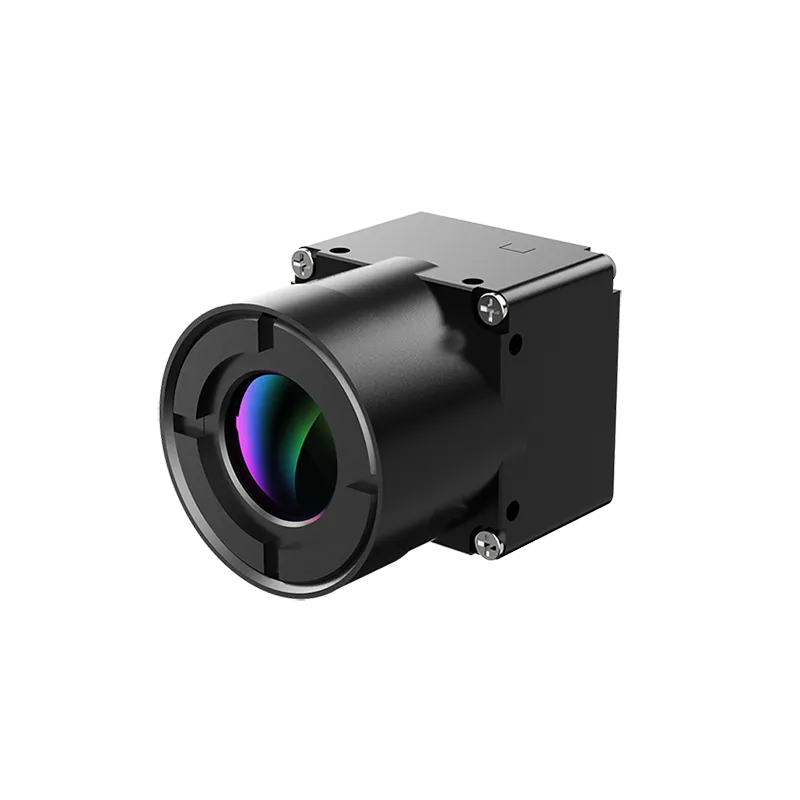
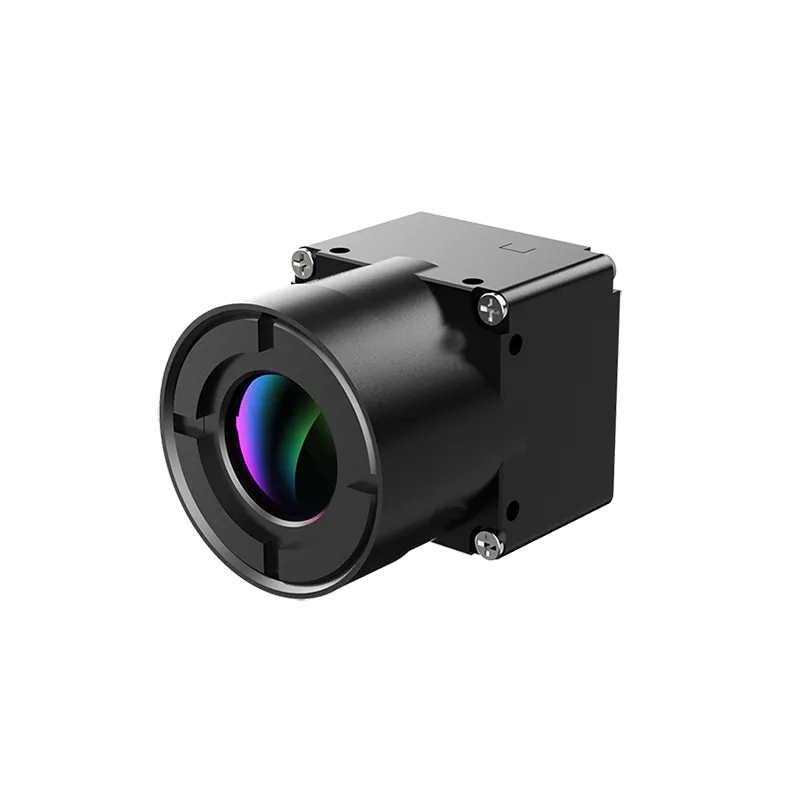
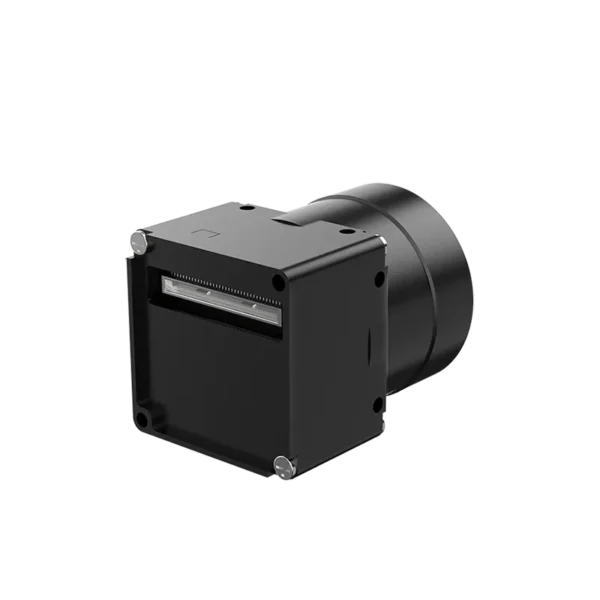
Verytek UVR thermal imaging module — NETD ≤ 40 mK, operating range –40 °C to +80 °C, starting from < 0.35 W and < 7 g.