
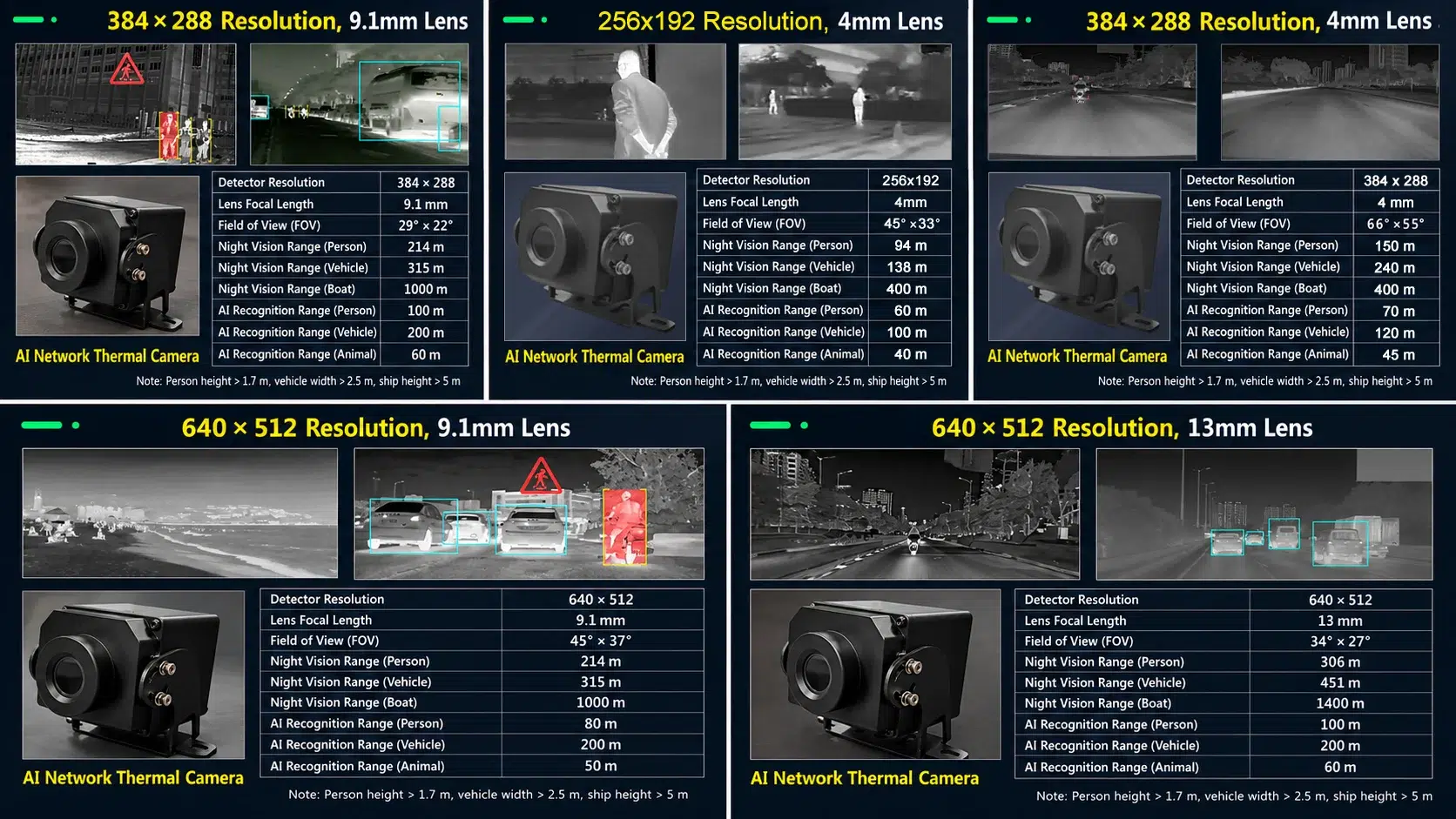
The safest motorcycle thermal night vision system has three key traits: long detection range, fast refresh, and a clear display. The VERYTEK 5-Inch Car Thermal Imaging Night Vision System meets all three with a proven thermal core and AI alerts.
Detection performance, durability in real riding conditions, and legal road use separate a true safety upgrade from a novelty. Riders who ride at night on bikes with weak lighting notice the difference.
This review compares options on detection, durability, ease of use, regulatory compliance, and cost. Motorcycle helmet and visor fit matter, whether a rider picks a night vision visor or a handlebar display. A recommendation by riding style and budget closes the article.
Key Takeaways
Pick a thermal system that can detect far away to help keep you safe when riding on the highway.
Check the road laws and certifications in your area before you buy or sell.
Put the camera on the outside of the windshield and plan the wiring the right way.
Pick the system that fits how you ride and your helmet for the best results.
Try out the system on real bikes with a demo ride at dusk.
Top Systems at a Glance
Comparison Table of Key Specs
The table below shows the options covered in this review. The numbers come from the makers. A dash means the maker does not publish that number.
System | Detection Range | Refresh Rate | Display | IP Rating | Power Input | Price | |
|---|---|---|---|---|---|---|---|
VERYTEK 5-Inch Car Thermal Imaging Night Vision System | Pedestrians ~80–100 m at 23 ± 5°C; animals up to 60 m (taller than 1.7 m) | 256×192 VOx, 12 μm, 10 mm lens, 18°×13° FOV | — | 5-inch 1024×600 IPS touchscreen | Camera IP67 | 9–32 V stabilizer | Mid-range |
Night Operators Jerry-C Pro COTI | — | — | — | Clip-on to analog night vision | — | — | $2,949 |
Night Thunder X1 4K binocular | — | 4K | — | Binocular | — | — | — |
DNT Thermnight 4K hybrid | — | 4K | — | — | — | — | — |
Predator Core Kit | — | — | — | Clip-on | — | — | $749 |
Nocpix Omni 8K binocular | — | 8K | — | Binocular | — | — | — |
Nocpix Micro 2 Ultra 1280 helmet-mounted | — | 1280 | — | Helmet-mounted | — | — | — |
REAP-IR-50 | — | — | — | — | — | — | — |
TOPDON TC002C Duo / TC005 | — | — | — | — | — | — | — |
How We Evaluated Each System
We scored each system on seven points. Detection range came first, because seeing a hazard early gives you time to react on dark roads. Refresh rate and display clarity came next, since lag or a dim screen ruins the point of any motorcycle thermal night vision system. Durability looked at IP ratings, operating temperature, and wiring protection. Ease of use weighed mounting effort and menu depth. Regulatory compliance checked road legality in the rider’s market. Cost closed the list.
Each option fits a different buyer. The Predator Core Kit suits riders on a budget at $749. The Jerry-C Pro COTI serves analog night vision owners at $2,949. Helmet-mounted units such as the Nocpix Micro 2 Ultra 1280 appeal to riders who want a visor-line view. For distributors, the VERYTEK unit stands out on branding customization and grille-mount installation. Every system here earns its place; the right pick depends on riding style, helmet type, and budget.
VERYTEK 5-Inch System Review
Thermal Imaging Performance and Display
This motorcycle thermal night vision system is built around a 256×192 VOx sensor with a 12 μm pixel pitch. A 10 mm lens gives an 18°×13° field of view. Together, they pick up infrared radiation and create a usable thermal picture in total darkness. It does not rely on headlights at all.
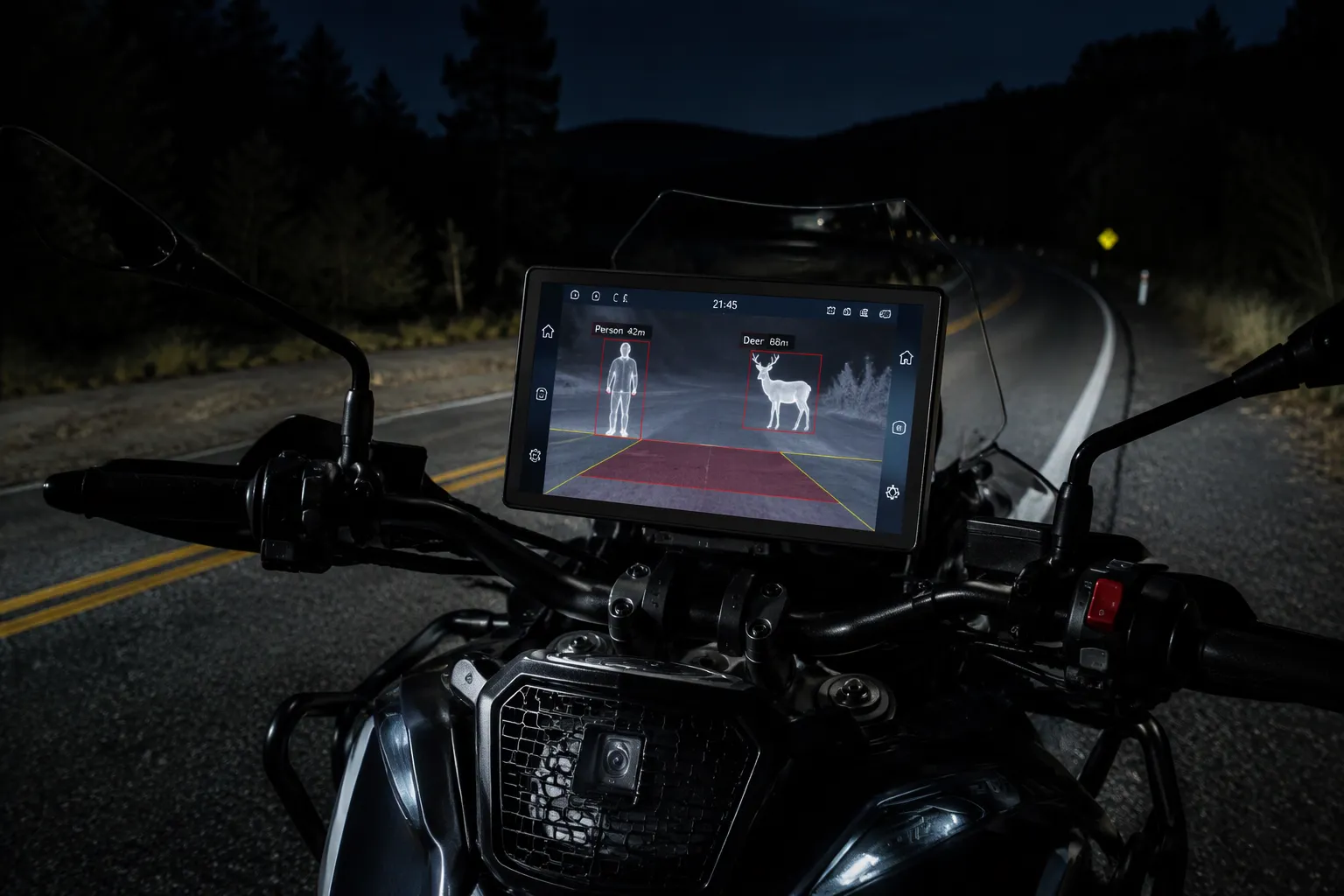
Riders can choose from seven palettes, such as White Hot and Black Hot. Brightness, contrast, and warning volume are all adjusted on the screen. The 5-inch IPS touchscreen runs at 1024×600, so hazard shapes stay easy to read at a glance. This imaging layer is what matters most on dark roads.
AI recognition marks pedestrians, animals, and vehicles. You can adjust the sensitivity, and three warning zones you can set off visual and audible alerts. The manual says pedestrian detection reaches about 80–100 m at 23 ± 5°C. It also says animal detection reaches up to 60 m for animals taller than 1.7 m. Real-world results change with conditions. A USB port handles recording, and on-screen playback lets riders review footage later. The interface supports ten languages.
Durability, Fit, and Cost
The camera has an IP67 rating and automatic defrost heating. It measures 40×30×26 mm and weighs 60 g. It has to be mounted outside, usually on the front grille, because a thermal view cannot pass through a standard windshield. A voltage stabilizer takes 9–32 V input and outputs 12 V, and the system works from −30°C to +70°C.
This unit is only a driver-assistance tool. It does not control steering or braking, and the driver is still fully responsible for running the vehicle. Professional installation is recommended. Compatibility depends on grille space, where the display goes, and wiring access. Buyers should test-fit the display against their handlebar layout. They should also check that the screen does not sit behind a motorcycle helmet’s line of sight or clash with a visor mount.
VERYTEK sells this kit as a mid-range aftermarket option. For distributors, the brand offers customization of the startup video, interface logo, and alert voice. That flexibility helps an accessory brand put its own name on a proven thermal platform. It also helps them target riders who want AI alerts without premium pricing. The package suits dealers serving touring and commuter bikes, where grille space and 12 V wiring are usually available.
Night Vision vs Thermal Imaging
How the Two Technologies Differ
Night vision makes the light that is already there brighter. Image intensification tubes and low-light digital sensors both take weak nearby light and turn it into a picture you can use. So a night vision device needs some light to work with, even if that light is only starlight. Products like the Night Thunder X1 4K binocular and the Nocpix Micro 2 Ultra 1280 helmet-mounted unit show how far this night vision technology has come.
Thermal imaging works in a different way. A thermal sensor reads infrared radiation and builds a picture from heat, not light. That is why thermal imaging works in complete darkness, and why a rider sees a warm body against a cold road. The Predator Core Kit and the REAP-IR-50 show this camp. The main difference is simple: night vision depends on available light, and thermal does not.
Which One Fits Night Riding
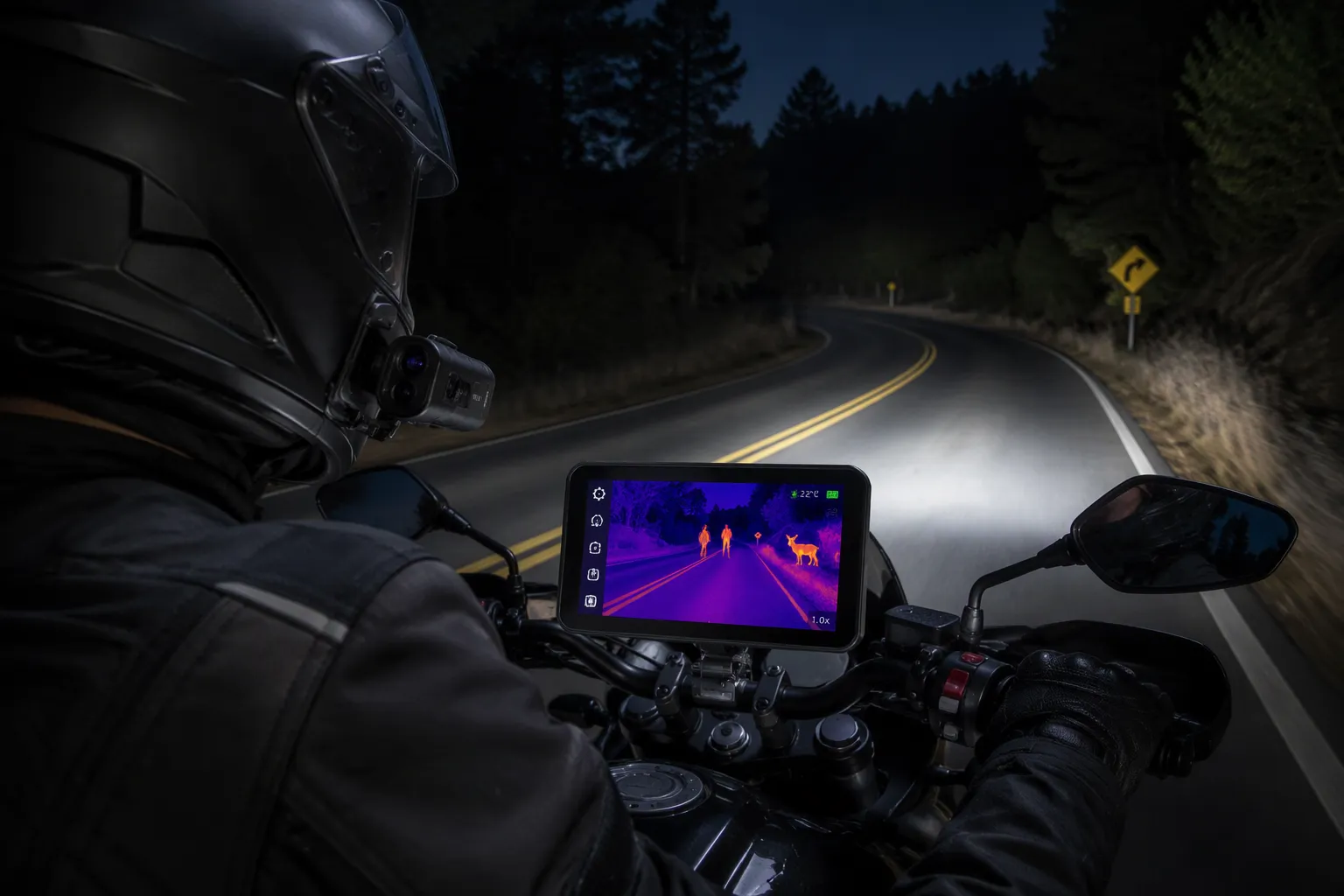
For a motorcycle rider on an unlit road, thermal imaging over night vision has a clear practical edge. A thermal camera picks up pedestrians and animals without any headlights and without nearby light. That matters on rural bikes and on dark commuter routes where hazards show up with little warning. The VERYTEK unit’s thermal core is built for exactly this job.
Night vision still has a best-fit use case. Riders who want a detailed, natural-looking scene, or who ride where some nearby light exists, may prefer a night vision visor or a helmet-mounted display. A night vision visor suits riders who want the view lined up with their line of sight. Distributors should note that the two categories serve different buyers, and a review of both helps dealers stock the right mix. Neither wins outright; the riding environment decides.
Helmet Fit and Night Vision Visor Options
Display Placement and Helmet Compatibility
Helmet-mounted and clip-on units change where the rider looks. The Nocpix Micro 2 Ultra 1280 mounts on the helmet, and the Night Operators Jerry-C Pro COTI clips onto analog night vision gear. Each option shifts the line of sight. The rider must adjust the mount before riding. A night vision visor or a helmet mount needs careful setup for this reason.
A night vision motorcycle helmet setup demands the same care. Riders who read motorcycle helmet reviews often ask about a night vision visor for motorcycle helmets. A motorcycle helmet visor adds weight at the front. That weight changes balance at speed. A helmet with some kind of vision enhancement system also needs a clear view path. Distributors should note that fit proof from real bikes drives sales.
The VERYTEK 5-inch touchscreen mounts on the handlebar instead. Glare from the sun or headlights can wash out a 1024×600 screen. The camera carries an IP67 rating. The screen rating is separate, so rain exposure needs its own plan. Route the wiring away from the steering lock.
Mounting and Weather Considerations
Compatibility depends on helmet type, grille space, and wiring access. A night vision visor suits riders who want the view lined up with the eye. A helmet visor of this kind must clear the chin bar and the mount. Test-fit every option before purchase.
Thermal imaging integrated into the visor remains rare. Most riders pair a thermal camera with a handlebar display. The VERYTEK thermal camera works from −30°C to +70°C. Its 9–32 V stabilizer suits most 12 V systems. A night vision visor must survive wind and rain at speed. Dealers can bundle a night vision visor with a thermal kit for touring riders.
Night vision technology keeps improving. A vision enhancement system sells on proof, not on claims. This review covers fit. A motorcycle rider should test both paths. Thermal performance varies with conditions, so set expectations. Night vision gear needs a dark test ride. A thermal demo at dusk shows the difference. Night vision buyers value a clear return policy. A fixed visor angle reduces glare at night. Check that the visor does not fog behind the display.
Choosing a Motorcycle Thermal Night Vision System
Match Detection Range and Refresh Rate to Your Riding
How far a system can detect should match how you ride, not just what the spec sheet says. Riding fast on the highway needs the longest reach, because you close the gap quickly and have less time to react. City riding and back-road riding can work with a shorter range. The VERYTEK unit’s stated pedestrian detection of about 80–100 m at 23 ± 5°C gives distributors a helpful reference point. Real performance changes with weather, temperature, and background heat.
The UK government’s 2025 motorcycle accident report points to higher accident risk on rural roads. That finding makes low-light rural riding a good test scenario for any motorcycle thermal night vision system. Distributors should treat it as a use case worth showing, not as proof that people will buy. Safety data is not the same as evidence that thermal products are being purchased. A demo ride at dusk answers more questions than a statistics slide.
Refresh rate and display clarity decide whether the rider spots a hazard in time. A faster refresh rate cuts the lag between the scene and the screen. Screen size and resolution matter too. A 5-inch 1024×600 panel keeps shapes easy to read at a glance, which counts on a motorcycle where your eyes leave the road for a moment. Ask suppliers for a live demo, not a still image.
Check Durability, Power, and Road Legality
Durability checks start with IP ratings, and the camera and screen need separate ratings. The VERYTEK camera carries IP67. The screen rating is separate, so you need your own plan for rain exposure. Confirm the voltage stabilizer input range covers the bike’s electrical system; the VERYTEK unit accepts 9–32 V. Check the operating temperature window (−30°C to +70°C) against the riding season. Wiring waterproofing deserves a close look, since a wet connector can end a ride.
Regulatory compliance varies by country. Distributors must verify road legality and any required certifications in each market before listing a product. Do not accept certification claims without paperwork. A visor-mounted display raises its own questions, and a helmet visor that blocks the rider’s view may break local rules. Confirm the visor position and the visor tint against national law. A clear visor and a compliant mount lower risk for the dealer and the rider.
Budget tiers help distributors position stock. The Predator Core Kit sits at the entry tier near $749. The VERYTEK 5-inch system occupies the mid-range. The Jerry-C Pro COTI and above form the premium tier at $2,949. Match each tier to a customer segment, and confirm helmet and visor compatibility before ordering.
The VERYTEK 5-Inch Car Thermal Imaging Night Vision System is still the best safety choice in this review of motorcycle thermal night vision systems. Detection range, refresh rate, and display clarity decide the winner, and this unit does well on all three.
Match the system to how you ride; highway riders need the longest reach.
Check road legality and certifications in each market before you list a product.
Plan for proper mounting and power wiring, not just the hardware.
Distributors should pick two systems, confirm they fit the helmet and bike, and check return policies. A night vision visor and a handlebar display suit different buyers. Test both on real bikes. Thermal imaging works best with a careful demo, and night vision gear needs a dark test ride. That step protects both the dealer and the rider.
FAQ
Does a thermal camera work through a motorcycle windshield?
No. A thermal sensor reads heat, and normal glass blocks that view. The VERYTEK camera has to be mounted outside, usually on the front grille. Distributors should check grille space and wiring access before they quote a kit to a dealer.
How does a rider mount a night vision visor safely?
A night vision visor changes where the rider looks, so the fit needs adjusting before riding. The visor must clear the chin bar and the mount. Dealers should test-fit the visor on real bikes and check local rules about visor tint.
Can distributors rebrand the VERYTEK system?
Yes. VERYTEK lets you customize the startup video, interface logo, and alert voice. That lets an accessory brand put its own name on a proven thermal imaging platform. Distributors should confirm order volumes and lead times with the supplier first.
What detection range should a distributor quote?
The manual says pedestrian detection is about 80–100 m at 23 ± 5°C, and animal detection reaches up to 60 m for animals taller than 1.7 m. Real performance changes with weather and background heat. Quote these figures as reference points, not guarantees.
Which helmet and visor setups suit this system?
The 5-inch touchscreen mounts on the handlebar, so helmet choice stays open. Riders who want a visor-line view may pair a helmet-mounted unit instead. Distributors should stock both paths and make sure the visor angle does not block the rider’s view.
See Also
Top AI Thermal Cameras for Car Night Vision Systems
Bulk Motorcycle Thermal Camera Systems 2026 Wholesale Deals Available
AI Thermal Cameras for Vehicles Ensure Clear Vision in Mines
Choosing the Right Marine Thermal Camera for Night Navigation
Testing Car Thermal Imaging Cameras: FOV and Night Road Performance