

You face big problems when you use drones for bushfire detection or mining safety in Australia. The uncooled infrared module is a strong answer for these jobs. You can count on the Verytek UVR series to give you live thermal images, even in tough Australian weather. This technology lets drones find heat changes quickly, which helps you act fast in emergencies.
The uncooled infrared module market in Australia is growing quickly because people need tough sensors for defense, mining, and watching the environment. You can trust these modules to work well and stay steady.
Here is what makes the Verytek UVR series special for your drones:
Feature | Description |
|---|---|
Resolution | 640×512, 384×288, and 256×192 choices for different needs |
Detector | Fast 12 μm WLP detector with smart ISP chip |
SWaP Compliance | Light and uses little power, so it fits drones easily |
Deployment | Used in many UAVs with strong, steady results |
Imaging | No shutter, so images are smooth and clear during flight |
Integration Flexibility | Many digital connections for smart drone systems |
You get a light, strong, and easy-to-use uncooled infrared module that works for bushfire, mining, and environment jobs in Australia.
Key Takeaways
Uncooled infrared modules give real-time thermal images. This helps find fires early and watch them in tough places in Australia.
The Verytek UVR series is light and uses little energy. This makes it great for drones that help with bushfire detection and mining safety.
These modules work well in rough places. They still perform in dust, heat, and shaking. This keeps workers safe and helps check equipment.
Drones with uncooled infrared modules can scan big areas fast. This lets people react quickly to dangers far away.
Adding these modules to current systems is simple. It makes watching easier and follows safety and environmental rules.
Uncooled Infrared Module Technology
Key Features and Microbolometer Design
You need sensors that are strong for remote sensing in Australia. The Verytek UVR series gives you advanced sensors for drones. These sensors use microbolometer technology. They use Vanadium Oxide materials with a high Temperature Coefficient of Resistance. This lowers thermal noise and boosts responsivity. You see clear thermal images, even in harsh places.
You can depend on shutter-less architecture. This uses spatial-temporal algorithms to keep your video smooth. You do not worry about interruptions during fire sensing or mapping. SWaP compliance makes these modules light and easy to fit on drones. You save power and weight, which helps for remote jobs and long flights.
Here is a table with the main features:
Feature | Description |
|---|---|
Microbolometer Technology | High sensitivity for thermal sensing and mapping |
Shutter-less Architecture | Continuous thermal imaging for airborne sensors |
SWaP Compliance | Lightweight and low-power for remote drone applications |
Application Needs in Australia
You face tough conditions in the Australian outback. Dust, heat, and vibration make things hard for sensors. The UVR series handles these challenges well. You get reliable performance for mining safety, bushfire detection, and mapping. You can use these modules for pest detection in farms and coastal surveillance. The small size and low power use help you put sensors in remote places.
You need modules that give accurate thermal data for sensing. You can trust the UVR series for mapping and monitoring. These sensors help you protect workers, spot dangers, and act fast in emergencies. You can contact VERYTEK to customize modules for Australia’s tough environments.
Tip: Pick sensors that are light and strong for your drone jobs. You get better thermal data and reliable sensing in harsh Australian conditions.
Bushfire Drones and Thermal Imaging
Fire Detection and Monitoring
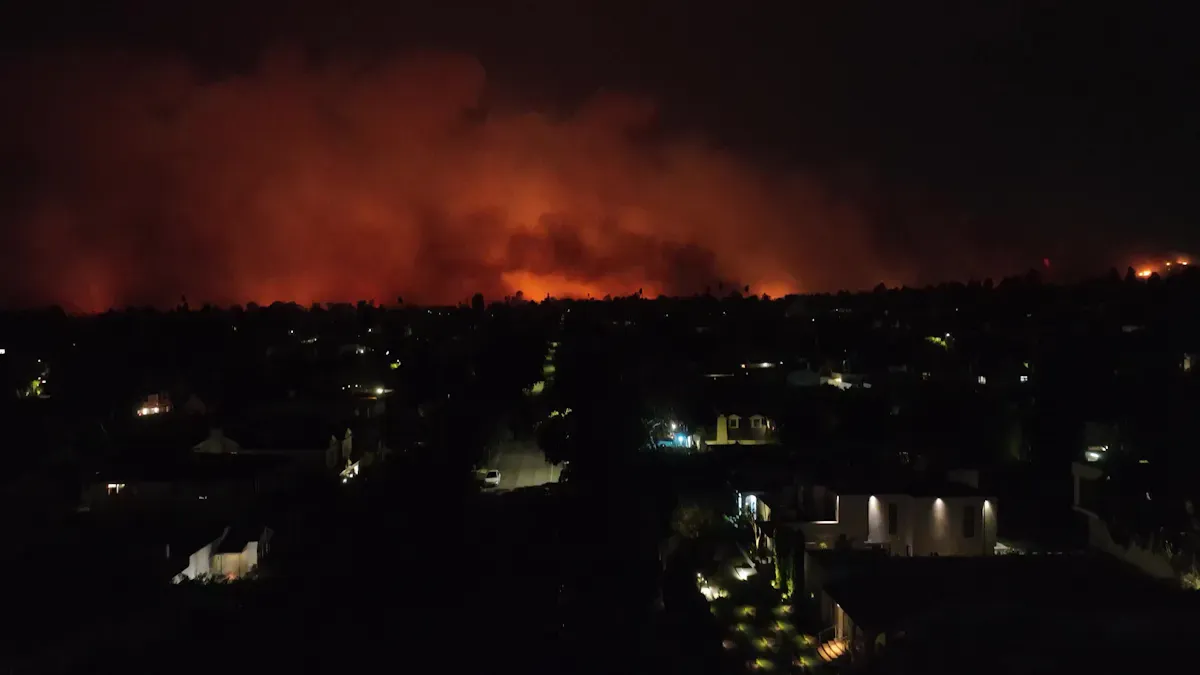
When you use unmanned aerial vehicles in Australia, you need good fire detection tools. The country is huge, and wildfires can start quickly. You want to find fires early and stop them from spreading. Uncooled infrared modules help you notice heat changes that show where a fire could begin. These modules are great for wildfire detection because they give you live thermal images from the sky.
You can trust these modules to find fires in hard places. They do not have to touch the ground. Drones can fly over forests, grasslands, and faraway spots. You see heat patterns that warn you about fire risks. Early detection helps you stop fires before they get bigger. These modules work both day and night. They can see through smoke, darkness, and even light rain. This makes them better than old fire detection systems that only use visible light.
Here are some reasons to use uncooled infrared modules for fire detection and monitoring:
You see temperature changes right away, so you find fire risks fast.
You can watch from far away, which keeps you out of danger.
You get clear images even if smoke or darkness blocks your view.
You can use drones to check for fires in places that are hard to reach.
These modules do more than just find fires. They help with pest detection on farms, mining safety, and watching the coast. The modules are light and strong, so you can use them in many ways.
Operational Impact and Case Examples
You might wonder how these modules work in real life. Many teams in Australia use unmanned aerial vehicles with uncooled infrared modules to find and watch fires. They fly drones over forests and bushland. The drones send live images to fire control centers. Teams see where fires start and how they move. This helps them plan how to fight fires and keep people safe.
You can see the impact in these ways:
Firefighters use drones to find small fires before they spread.
Teams use drones to watch fire lines and check if fires are out.
You can use drones to map burned areas after a fire.
Uncooled infrared modules help you work in tough Australian weather. You get good fire detection and monitoring, but there are some limits. High heat and humidity can make the sensors less sensitive. When the ground and air are the same temperature, it can be harder to spot fires. Fog and heavy rain can also make it tough to see fires.
Evidence Description | Impact on Uncooled Infrared Modules |
|---|---|
Reduced sensitivity in high temperatures and humidity | Performance drops in extreme weather, making detection harder |
Challenges during thermal crossover periods | Thermal cameras may not work as well, causing gaps in detection |
Atmospheric conditions like fog and rain | High humidity and rain can lower detection range and image quality |
You can still trust these modules for most fire detection and monitoring jobs. They help you find fires early and act fast. You help protect land, people, and property from wildfires. You also help keep mines and other places safe in Australia.
Tip: Use drones with uncooled infrared modules to find fires early. You get quick, safe, and reliable results, even in tough Australian weather.
Mining Safety with Infrared Modules
Hazard Detection and Worker Safety
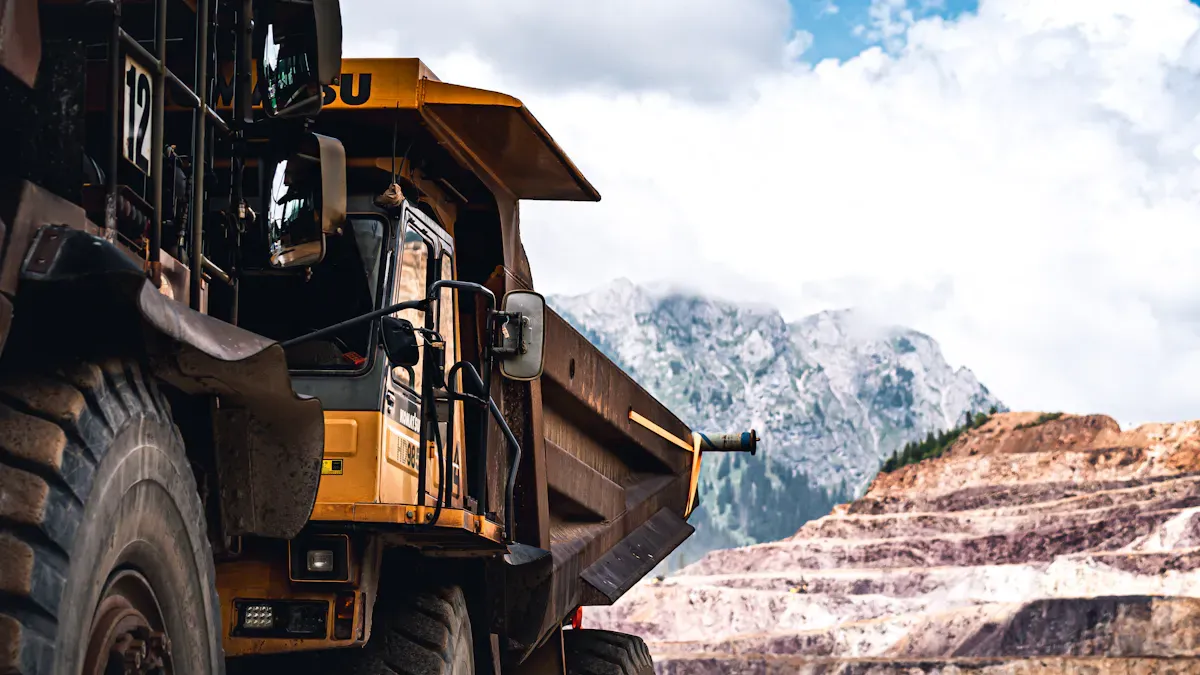
You work in mining, so you know that safety comes first. Mining sites in Australia face many dangers. You need strong tools to help you spot risks before they hurt anyone. Uncooled infrared modules give you a new way to watch over your site. These modules help you with detection of hot spots, equipment failures, and even early signs of fire. You can use them for detection patrols around the clock.
You mount these modules on unmanned vehicles or fixed points. They scan for heat changes that signal trouble. If a machine gets too hot, you see it right away. If a fire starts, you get an alert before it spreads. This early detection keeps your workers safe and your equipment running. You do not need to wait for someone to notice a problem. The system works all the time, even when people cannot see the danger.
Australian mines deal with dust, heat, and strong vibrations. The Verytek UVR series stands up to these tough conditions. You get clear images for detection, even when the air is thick with dust or the ground shakes. The modules use little power and weigh very little. You can put them on unmanned drones or robots that move through tight spaces. This makes detection patrols easy and safe.
Note: Early detection saves lives. You can stop accidents before they happen by using unmanned systems with thermal modules for detection patrols.
Australian Mining Use Cases
You see many ways to use uncooled infrared modules in Australian mines. Mining companies use unmanned drones for detection patrols over large areas. These drones fly over open pits and tunnels. They look for heat patterns that show equipment is overheating or a fire is starting. You can also use unmanned ground vehicles to check conveyor belts and storage areas. If you spot a problem, you can act fast.
Here are some real examples:
You send unmanned drones on detection patrols at night. They find hot spots on machines that need repairs.
You use unmanned robots to scan for fire risks in underground tunnels. The robots send images to your control room.
You set up fixed thermal modules at key points. They watch for sudden heat changes that signal a fire or equipment failure.
Mining sites in Australia often sit far from cities. You need tools that work without much power and do not need heavy support. The Verytek UVR series fits this need. You get reliable detection with modules that weigh less than 9 grams and use less than 1 watt of power. This makes them perfect for unmanned detection patrols in remote places.
You also help with fire management. If a fire starts, you use unmanned drones with thermal modules for fire mapping. You see where the fire spreads and plan your response. This helps you protect workers and equipment. You can also use these modules for detection of gas leaks or overheating in electrical panels. The same technology helps with fire management in nearby bushland, giving you a full view of risks.
Tip: Use unmanned detection patrols with thermal modules to cover more ground and keep your team safe. You get fast alerts and clear images, even in tough Australian mining sites.
You play a key role in fire management and detection patrols. You use unmanned systems to spot dangers early. You keep your workers safe and your mine running smoothly. The right thermal module gives you the edge you need for detection and fire management in Australia.
Advantages and Challenges
Comparison with Other Technologies
You have many choices for thermal imaging in bushfire and mining safety. Uncooled infrared modules, like the Verytek UVR series, are simple and dependable. Other options, like cooled infrared detectors and multispectral cameras, have different features. But each one has its own pros and cons.
Here is a quick comparison:
Aspect | Cooled Infrared Detectors | Uncooled Infrared Detectors |
|---|---|---|
Operating Temperature | Needs special cooling systems | Works at normal temperatures |
Sensitivity | Detects very small temperature changes | Good for most safety tasks |
Resolution | Shows more detail at longer distances | Clear enough for bushfire and mining jobs |
Speed | Responds very quickly | Fast enough for real-time monitoring |
Cost | Costs much more | More affordable and budget-friendly |
Maintenance | Needs regular upkeep for cooling | Low maintenance, easy to use |
Practicality | Bulky and complex | Compact, lightweight, and ready to use |
Uncooled modules give you a good mix of price, performance, and ease. You can set them up fast in the field. They use less power and fit well on drones or robots. This makes them great for Australia’s big spaces and rough weather.
Integration and Regulatory Considerations
When you add new tech to your safety work, you want it to fit with what you already use. Uncooled infrared modules have flexible digital connections. You can link them to drones, ground vehicles, or fixed stations. You do not need heavy cooling gear or extra power.
You also need to think about rules and long-term support. In Australia, safety and environmental laws need reliable tools for bushfire and mining jobs. You want a steady supply of modules you can trust for years. Long-term supply chain reliability is important for big jobs like security, mining, and watching the coast. You need modules that keep working, even in bad weather or faraway places.
Long-term supply chain reliability keeps your safety systems working all the time.
Cost savings and simple design make it easier to take care of your equipment.
High reliability and accuracy help you find dangers early in bushfires, mining, and coastal jobs.
Tip: Pick uncooled infrared modules that are proven to work well and are easy to add to your system. You get better results and feel safer in your work in Australia.
You use uncooled infrared modules to make bushfire drones and mining safer in Australia. These modules help you watch things better. They are tough and can handle rough weather. Government rules and help make these sensors easier to use:
Benefit | Description |
|---|---|
Uncooled infrared modules help you see and find problems in bushfires and mines. | |
Ruggedness for Harsh Environments | These sensors are built to last in hard places, so you can use them outside. |
Support from Government Policies | Government gives rewards and works with companies to build and improve these sensors locally. |
You notice that the Verytek UVR series has smart features. It gives you safe and cheap ways to protect people and places. Soon, you will see these modules in more safety tools, like cars, factories, and hospitals. You help make Australia safer by picking technology that works now and later.
More infrared sensors are used in everyday devices, so more people can use them.
Thermal cameras are added to cars to help drivers stay safe.
Factories use these sensors to find problems early and fix them fast.
Hospitals use medical infrared imaging to check for fevers and blood flow without touching patients.
The military and security teams use these sensors to watch and find targets.
FAQ
What makes uncooled infrared modules ideal for Australian bushfire detection?
You get quick thermal images in real time. These modules work well in heat and dust. You can find fires early, even far away. They are light, so drones can carry them. This helps you watch big areas from the sky.
Can you use these modules for mining safety in Australia?
Yes, you can use them for mining safety. These modules help you find hot spots and broken machines. You keep workers safe by finding danger early. They are tough and handle dust and shaking in mines.
How do uncooled infrared modules help with agricultural pest detection?
You use these modules to see heat changes in crops. Pests make special heat patterns. You can find problems early and fix them fast. This helps you protect crops and get better harvests in hard places.
Are these modules easy to add to drones or robots?
You can add these modules without trouble. They have digital connections that fit many systems. Their small size and low power use are good for drones, ground vehicles, and fixed stations in far places.
Do uncooled infrared modules work in coastal surveillance?
Yes, you can use them to watch the coast. They find heat from boats or people, even at night or in fog. They work well and help you watch long coastlines and act fast if there is a risk.
See Also
Vanadium Oxide Thermal Imaging Cameras Enhance Rescue Operations
Utilizing Thermal Imaging Cameras for Effective Rescue Missions
The Importance of Thermal Imaging Cameras in Modern Rescue
Best Reviewed AI Video Boxes for Cars This Year
Reliable CarPlay Adapters for RAV4 in Harsh Canadian Winters