
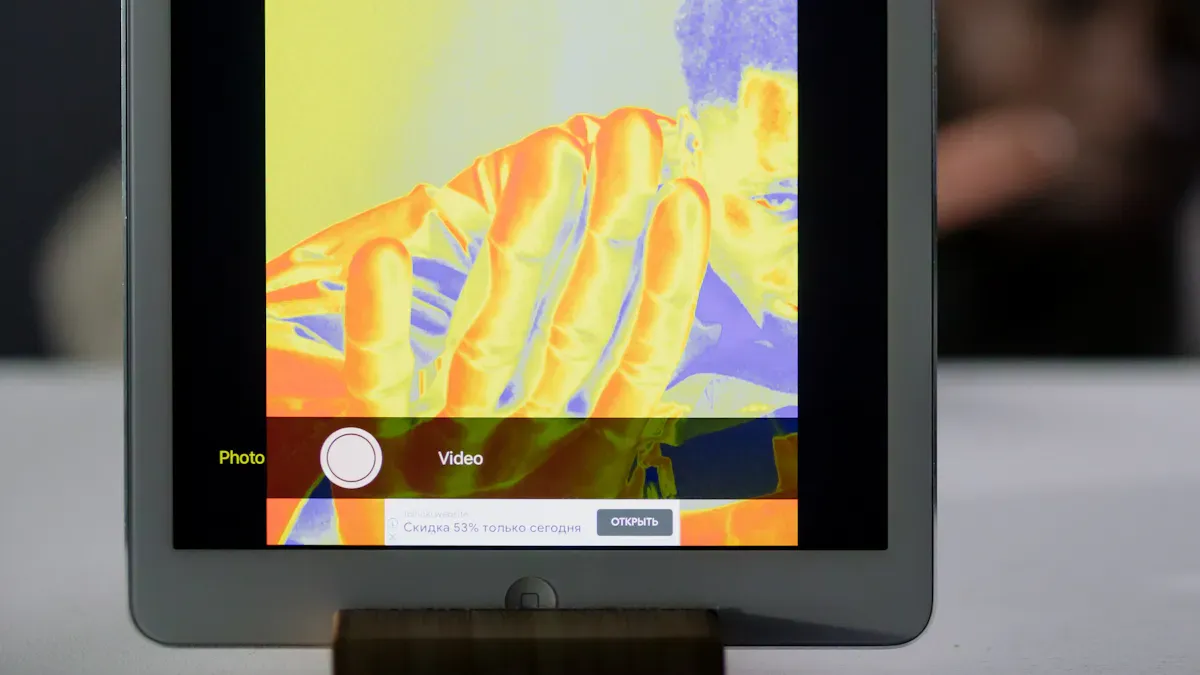
You want your UAVs to fly longer, carry less weight, and capture crisp images even at high altitudes. The demand for lightweight, low-power, and high-resolution solutions keeps growing, especially as battery life and payload limits challenge you daily. A thermal imaging module like the TL640, built with advanced uncooled VOx technology, answers these needs. Its compact build and power efficiency make it a top choice in the US UAV market, where SWaP-C optimization drives innovation.
Key Takeaways
The Verytek L640 thermal imaging module is lightweight and compact, weighing only 8g and measuring 21×21mm, making it ideal for various UAVs without exceeding payload limits.
SWaP-C optimization—Size, Weight, Power, and Cost—enhances UAV performance, allowing for longer flight times and improved operational efficiency.
High-resolution imaging (640×512) provides detailed thermal data, enabling quick detection of issues in search and rescue, industrial inspections, and environmental monitoring.
Integrating the L640 can reduce maintenance costs by up to 40% through early detection of thermal problems, improving your return on investment.
Ensure your UAV platform supports the L640 for seamless integration, and follow proper installation and calibration steps for optimal performance.
Thermal Imaging Module Overview
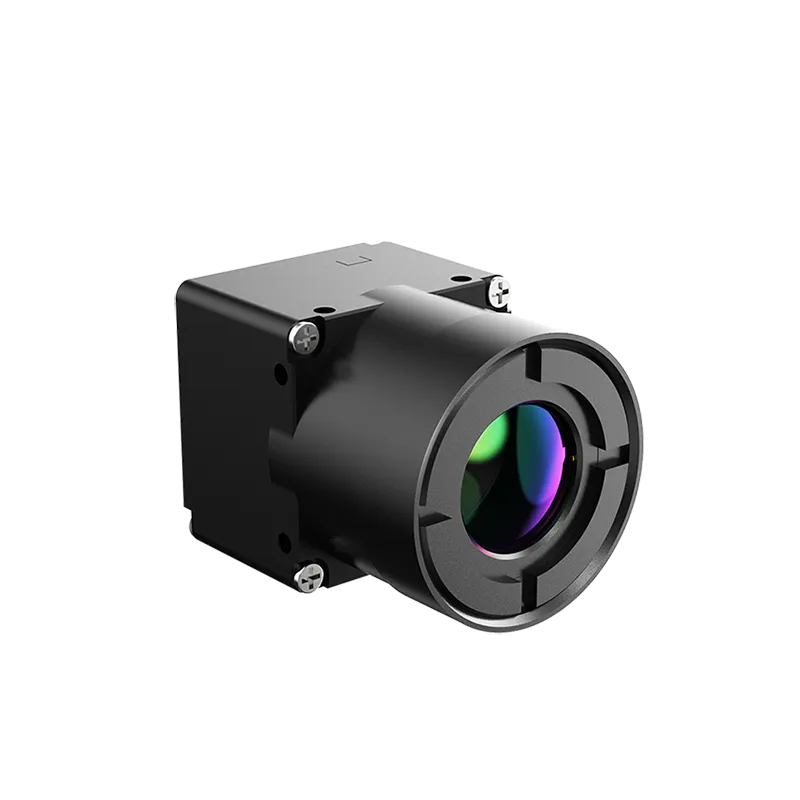
Thermal imaging modules help you see heat instead of light. You can use them to spot people, animals, or machines in darkness, smoke, or fog. These modules have become important for UAVs because they let you collect data in tough conditions. Many industries now use UAVs with thermal imaging modules for search and rescue, inspection, and security. The growing focus on SWaP-C—size, weight, power, and cost—shows how much you value solutions that do more with less.
640×512 Uncooled Technology
You want clear images and accurate temperature readings from your UAV. The 640×512 uncooled thermal imaging module gives you both. This technology uses 327,680 pixels to measure temperature, which means you get more detail than with lower-resolution modules like 320×240 or 160×120. You can detect smaller objects and cover larger areas. The thermal sensitivity (NETD) is ≤50mK, so you can spot tiny temperature changes. This level of detail helps you find faults in equipment or locate people quickly.
Here is a quick comparison:
Specification | Lower Resolutions (e.g., 320×240) | |
|---|---|---|
Resolution | 640 x 512 Pixels | Less detail |
Number of Pixels | 327,680 | Fewer pixels |
Thermal Sensitivity (NETD) | ≤ 50 mK | Higher NETD (less sensitive) |
Coverage Area | Wide | Narrower |
You can also use this technology with AI-based analytics, which makes your UAV smarter and ready for future upgrades.
Verytek L640 Key Features
The Verytek L640 stands out because of its uncooled VOx detector. You get a module that weighs only 8g and measures just 21×21mm. You can fit it on almost any UAV without worrying about payload limits. The low power use means your UAV can fly longer. You can choose from several interfaces like MIPI, USB, or analog video, so you can connect it to many systems. The module works in extreme temperatures, from -40°C to +80°C, and gives you accurate readings from -20°C to 650°C. You can trust it for industrial, security, and rescue missions. The advanced image processing lets you see clearly, even in smoke or darkness.
Tip: If you want a thermal imaging module that is lightweight, portable, and easy to integrate, the Verytek L640 is a smart choice for your UAV projects.
SWaP-C Benefits for UAVs
You want your UAV to perform at its best. SWaP-C stands for Size, Weight, Power, and Cost. These four factors shape how well your drone can fly, how long it stays in the air, and how much value you get from your investment. When you choose a thermal imaging module like the Verytek L640, you address the biggest challenges in UAV operations—battery life, payload limits, and image quality at high altitudes.
Size and Weight Optimization
Every gram counts when you build or upgrade a UAV. A lighter payload means your drone can carry more sensors or fly longer. The Verytek L640 weighs only 8 grams and measures just 21×21mm. You can add this module to almost any UAV without worrying about exceeding weight limits. This compact design helps you avoid battery life anxiety because your drone does not waste energy lifting heavy equipment. You also get more space for other mission-critical tools. The small size of the L640 means you can use it on fixed-wing, rotary, or even small quadcopters. You get flexibility for different missions, from search and rescue to industrial inspection.
Note: A lighter and smaller module reduces stress on motors and propellers, which helps your UAV last longer and perform better.
Power Efficiency and Flight Time
You want your UAV to stay in the air as long as possible. Power efficiency is key. The Verytek L640 uses very little power, which means your drone can fly longer on a single charge. Here is how power efficiency boosts your mission:
Extended flight times let you cover more ground without landing for battery swaps.
Streamlined missions mean you can finish large tasks with one charge, saving time and reducing costs.
Enhanced propulsion systems work better with lighter, low-power modules, giving you stable flight and clear images even at high altitudes.
You do not have to worry about missing important data because of short battery life. The L640 helps you get the job done in one flight, even in tough conditions.
Cost and ROI Advantages
You want to get the most value from your investment. Integrating a 640×512 thermal imaging module like the Verytek L640 helps you save money in several ways. Early detection of thermal problems, such as loose connections or overheating parts, prevents expensive breakdowns. You can reduce maintenance costs by up to 40%. This means less downtime and fewer repairs. The L640 also helps you use energy more efficiently, which lowers your operating costs. Over time, these savings add up and improve your return on investment.
Tip: Investing in advanced thermal imaging technology not only protects your equipment but also boosts your bottom line.
You can meet market demands for lightweight, low-power, and high-altitude clear imaging with the Verytek L640. You solve common pain points like battery life anxiety, payload weight limits, and image noise. SWaP-C optimization gives you a smarter, more efficient UAV that delivers results.
UAV Integration Process
Platform Compatibility
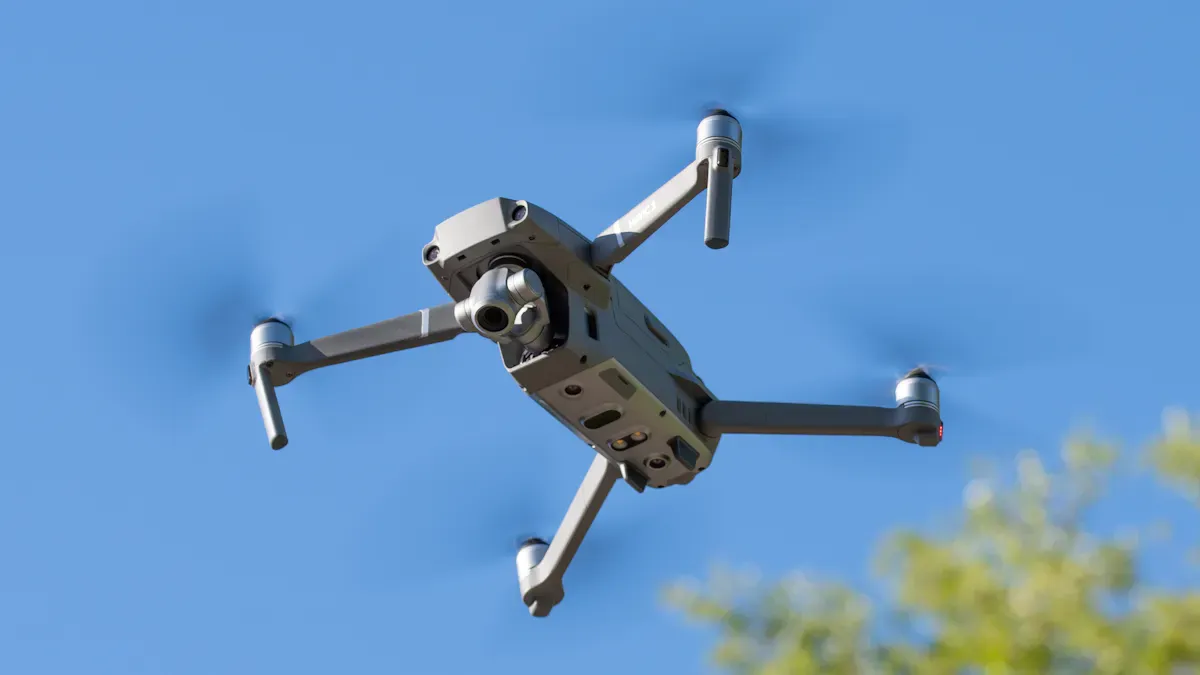
You want your UAV to handle different missions and payloads. Before you choose a thermal imaging module, check if your drone supports sensor upgrades and third-party software. Some UAVs work best for fast deployment, like in search and rescue. Others need radiometric sensors for firefighting or industrial inspection. The Verytek L640 fits a wide range of platforms because of its lightweight design and flexible interfaces. You can use it on fixed-wing, rotary, or small quadcopters. This flexibility helps you meet the growing demand for lightweight, low-power, and high-altitude clear imaging.
Mission type: Match the module to your job, such as rapid response or detailed inspection.
Payload compatibility: Make sure your drone can swap sensors and handle the L640’s 8g weight.
Operational needs: Pick a UAV that meets your mission without extra cost or complexity.
Installation and Calibration
You can integrate the Verytek L640 into your UAV by following a few practical steps:
Mount the module securely to avoid vibration and image blur.
Connect the module using supported interfaces like MIPI or USB.
Calibrate the sensor for accurate temperature readings and clear images.
Set up mission planning software and thermal analysis tools for smooth data workflow.
Test the system in real-world conditions to ensure reliability.
Tip: Always check local regulations before making hardware changes to your UAV.
Integration Challenges and Solutions
You may face some challenges during integration. Here is a quick guide to common issues and how to solve them:
Challenge | Solution |
|---|---|
High Initial Investment | Careful planning and budgeting |
Regulatory Restrictions | Awareness of local UAV regulations |
Data Interpretation Complexity | Skilled thermographers or software assistance |
Weather Sensitivity | Planning for environmental conditions |
Battery and Payload Limitations | Selecting high-end UAVs with better capacity |
The Verytek L640’s uncooled VOx technology and compact build help you overcome battery anxiety, payload limits, and image noise. You get a reliable thermal imaging module that meets the high standards of the US UAV market and supports your mission from installation to operation.
Applications and Performance Impact
Search and Rescue
You need to find people quickly in emergencies. UAVs with high-resolution thermal imaging modules like the Verytek L640 help you locate missing persons in wilderness areas, urban disasters, and hazardous sites. Mountain rescue teams in North America and Europe use drones to reduce search times by 60%. You can spot hypothermic individuals hidden by vegetation. During the 2018 Mexico City earthquake, drones found survivors trapped under debris by detecting heat signatures. You keep responders safe by using drones to assess chemical spills or gas leaks from a distance.
Rapid scanning helps you locate trapped individuals fast.
Detection accuracy reaches over 90% in complex environments.
You cover large areas quickly, finding casualties in minutes.
Note: The Verytek L640’s lightweight design and low power use let you fly longer and cover more ground, easing battery anxiety and payload limits.
Industrial Inspection
You want to inspect equipment without risking worker safety. UAVs with the Verytek L640 thermal imaging module detect temperature changes in hard-to-reach places. You can inspect power lines, solar panels, pipelines, and substations. You identify failing equipment and reduce downtime. Building inspections reveal structural flaws, water leaks, and HVAC issues. You improve efficiency and safety.
You spot heat anomalies for proactive maintenance.
You measure efficiency loss and cut costs.
Precise thermal data improves inspection quality.
Monthly revenues can reach $35,000 to $42,000 with high utilization.
Gross margins stay around 70%, boosting profits.
Tip: High-resolution imaging lets you detect small faults early, preventing expensive repairs and minimizing downtime.
Environmental Monitoring
You monitor the environment with accuracy and speed. UAVs equipped with the Verytek L640 thermal imaging module provide rapid, non-destructive measurements. You collect data faster than ground teams. The spatial resolution is much higher than satellite images, so you get more accurate results. You can hover at low altitudes and capture detailed images of plants, improving phenotyping assessments.
Application Type | Description |
|---|---|
Mid-range surveillance | Monitor over distances of 1–5 km for environmental assessments. |
Drone-based inspections | Conduct inspections in various contexts, enhancing data collection. |
Fire detection | Detect temperatures up to 1500°C for wildfire and heat source monitoring. |
Industrial process monitoring | Track industrial activities that impact the environment. |
Perimeter security | Secure sensitive areas with region intrusion logic. |
Callout: The TL640’s VOx technology gives you clear images at high altitudes, meeting market demand for lightweight, low-power, and far-distance imaging.
Imaging and Operational Efficiency
You improve operational efficiency with high-resolution thermal imaging. You capture detailed thermal data, which helps you identify issues invisible to the naked eye. You make better decisions and reduce risks. Solar operators find malfunctioning panels quickly. Construction teams detect insulation failures without removing materials. Farmers locate irrigation problems before they affect crops.
You get safer inspections and faster turnaround times.
You minimize costs and downtime by finding heat anomalies early.
You achieve more informed decision-making with precise thermal data.
Feature | 640×512 Module | Lower Resolution Alternatives |
|---|---|---|
Detects smaller components clearly | Limited detail in detection | |
Improved Measurement Accuracy | Better temperature reading precision | Less accurate readings |
Greater Coverage Area | Ideal for large industrial sites | Limited scanning capability |
Future-proofing | Compatible with AI analytics | Not suitable for advanced tech |
Superior Image Clarity | Over 327,000 pixels of data | Fewer pixels (e.g., 320×240) |
Greater Detection Range | Accurate measurements from distance | Shorter measurement distances |
Better ROI | Increased diagnostic accuracy | Higher false positives |
Scalable Integration | Works with cloud-based systems | Limited integration options |
Regulatory Compliance | Meets thermographic standards | May not meet all standards |
Tip: The Verytek L640 helps you overcome image noise and battery anxiety, giving you reliable results in the US UAV market where SWaP-C optimization is highly sought after.
You meet the needs for lightweight, low-power, and high-altitude clear imaging. You solve pain points like battery life, payload limits, and image noise. The Verytek L640 thermal imaging module delivers performance and value across search and rescue, industrial inspection, and environmental monitoring.
You want your UAVs to meet the demand for lightweight, low-power, and high-altitude clear imaging. The Verytek L640, with its uncooled VOx technology, helps you overcome battery anxiety, payload limits, and image noise. In the US UAV market, SWaP-C optimization remains a top priority. To maximize your ROI and performance:
Research your local market for strong thermal imaging needs.
Choose equipment that balances features and budget.
Get thermography certification to boost your credibility.
Educate clients with case studies and sample reports.
Plan for costs like calibration and insurance.
Verytek’s commitment to innovation and quality ensures you get reliable, advanced solutions. Consider the L640 for your next UAV upgrade and see the difference in operational efficiency.
FAQ
What makes the TL640 ideal for UAVs?
You get a module that weighs only 8g and measures 21×21mm. The uncooled VOx technology gives you clear images at high altitudes. You solve battery life worries and payload limits. The L640 fits the US market’s demand for SWaP-C optimization.
How does the L640 help with battery life anxiety?
You use less power with the L640. The lightweight design means your UAV flies longer. You finish more missions on a single charge. This helps you avoid battery swaps and keeps your workflow smooth.
Can I use the L640 for long-distance, high-altitude imaging?
Yes. The L640’s 640×512 resolution and advanced VOx sensor let you capture clear images from far away and high up. You meet market needs for lightweight, low-power, and high-altitude imaging.
What interfaces does the L640 support?
You can connect the L640 using MIPI, USB, BT.656, or analog video. This flexibility lets you integrate the module with many UAV platforms and systems.
Why is SWaP-C important for UAV professionals?
You want drones that fly longer, carry more, and cost less. SWaP-C—Size, Weight, Power, Cost—matters because it boosts efficiency and ROI. The L640 gives you a compact, powerful solution for today’s UAV market.
See Also
The Importance of Thermal Imaging Cameras in 2025
Utilizing Thermal Imaging Cameras for Rescue Operations in 2025
Vanadium Oxide Thermal Imaging Cameras for Effective Rescue
Best Reviewed AI Video Boxes for Vehicles in 2025
Key Trends Influencing Android Auto Wireless Adapter Development