
The United Kingdom’s industrial and energy sectors face mounting pressure to reduce costs, meet carbon-reduction targets, and maintain ageing infrastructure — all at once. Thermal imaging technology, which detects invisible heat signatures across the 8–14 μm infrared spectrum, has emerged as one of the most cost-effective tools for achieving these goals without shutting down operations. From predictive maintenance on offshore wind turbines to building energy audits aligned with UK net-zero strategy, thermal imaging modules are quietly transforming how British industry sees its own assets.
This guide explores the practical applications of thermal imaging for UK industrial inspection, the technology behind modern uncooled LWIR modules, and how procurement teams can select the right module for their platform — whether that is a drone, a handheld device, or a fixed inspection system.
Understanding Thermal Imaging Technology in UK Industrial Applications
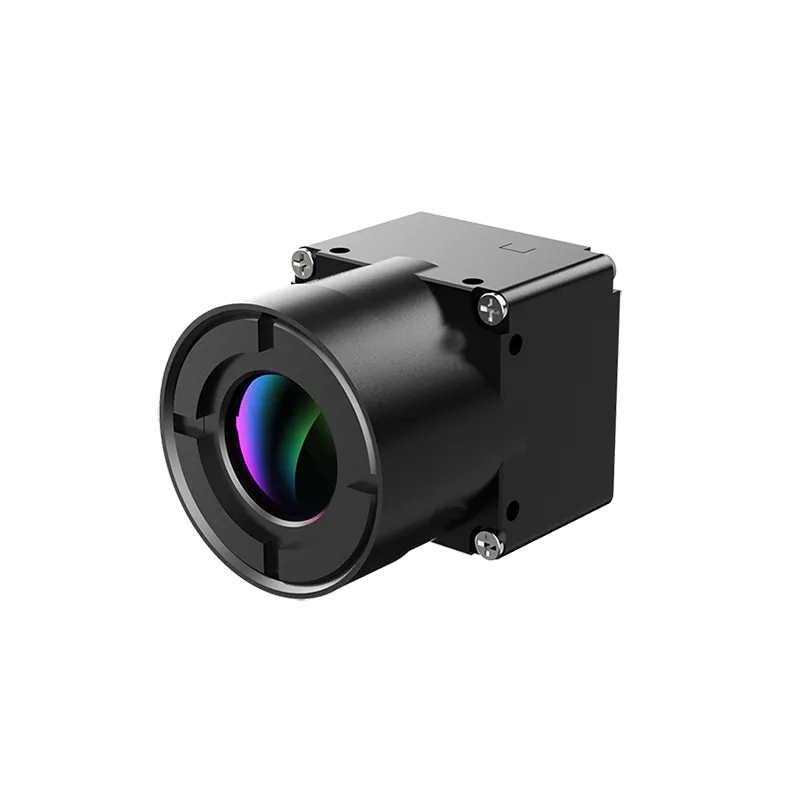
Modern thermal imaging relies on uncooled microbolometer detectors — semiconductor arrays that change electrical resistance in response to infrared radiation. Unlike earlier cooled detectors that required bulky cryogenic systems, today’s uncooled vanadium oxide (VOx) detectors operate at ambient temperature, making them small, light, and affordable enough for widespread industrial deployment.
How LWIR Sensors Work
A Long-Wave Infrared (LWIR) sensor captures radiation in the 8–14 μm band where most objects at ambient temperature radiate most strongly. The detector array converts this radiation into a digital signal, which an onboard image signal processor (ISP) translates into a temperature-mapped image. Modern ISP chips apply algorithms including adaptive temporal noise reduction (ATNR) and Digital Detail Enhancement (DDE) to produce crisp, actionable images — even in complete darkness, smoke, or fog.
- Spectral range: 8–14 μm — ideal for detecting heat anomalies in industrial equipment at ambient temperatures
- NETD ≤ 50 mK — noise-equivalent temperature difference; the smallest detectable temperature change — lower is better
- Pixel pitch 12 μm — smaller pixels allow higher resolution in a compact form factor
- Shutterless NUC-free — eliminates the periodic blackout frame caused by traditional mechanical shutter calibration
- Operating range −40 °C to +85 °C — suitable for harsh outdoor UK environments including offshore sites
How Thermal Imaging Enhances Building Energy Audits in the UK
The UK government’s commitment to achieving net-zero by 2050 has triggered a wave of building energy audits, particularly in the commercial real estate and public-sector estate. Building thermography using thermal imaging allows surveyors to identify heat loss through walls, roofs, windows, and poorly insulated pipework — without invasive or destructive investigation.
Typical Building Survey Workflow
A surveyor mounts a thermal imaging module on a drone or handheld unit and walks or flies the perimeter of the building after dark, when the temperature differential between interior and exterior is greatest. The thermal image immediately reveals: areas of missing or degraded insulation, water ingress (wet insulation shows as cooler patches), and leaking heating ducts. According to ISO 6781-3 standards for building thermography, surveys conducted at a minimum 10 °C indoor–outdoor temperature differential provide the most reliable results.
- Pre-survey planning: identify building orientation, heating schedule, and weather window (dry, low wind, night-time preferred)
- Baseline capture: fly or walk the envelope systematically, capturing overlapping thermal frames
- Anomaly flagging: ISP software highlights regions exceeding a configurable temperature threshold
- Report generation: GPS-tagged hotspot map exported alongside visible-light images for context
- Remediation prioritisation: rank anomalies by heat-loss severity and estimated annual energy cost
Industrial Predictive Maintenance with Thermal Imaging Modules
Unplanned downtime costs UK manufacturing an estimated billions of pounds annually. Predictive maintenance (PdM) using thermal imaging detects equipment degradation weeks before failure — enabling scheduled repairs during planned shutdowns rather than emergency stoppages. Key applications include electrical panel inspection, motor and bearing monitoring, heat exchanger fouling detection, and transformer hotspot surveillance.
Verytek UVR Series: Specifications for Industrial Modules
The Verytek UVR thermal imaging module family is engineered specifically for OEM and industrial integration. Three resolution variants allow system designers to match module performance to application requirements and payload weight budgets:
| Model | Resolution | Pixel Pitch | Weight | Power | Typical Application |
|---|---|---|---|---|---|
| UVR-640 | 640 × 512 | 12 μm | 38 g | 3.5 W | High-detail building surveys, offshore wind inspection |
| UVR-384 | 384 × 288 | 12 μm | 26 g | 2.2 W | Electrical panel inspection, drone patrol |
| UVR-256 | 256 × 192 | 12 μm | 18 g | 1.5 W | Lightweight handheld terminals, entry-level PdM |
All three variants share the same 2nd-generation in-house ISP chipset, WLP (Wafer-Level Package) detector technology, and a shutterless NUC-free architecture that eliminates the periodic image blackout that disrupts real-time monitoring on legacy thermal cameras.
Integrating Thermal Imaging into Police Drones and Offshore Wind Inspections
The UK leads Europe in offshore wind capacity, with over 14 GW installed as of 2024. Each turbine requires regular blade and nacelle inspection; thermal imaging-equipped drones can complete a full turbine inspection in under 20 minutes — versus several hours of rope-access work. The thermal camera identifies delamination in blades (delaminated fibreglass traps air, appearing cooler) and bearing overheating in the nacelle before catastrophic failure occurs.
Police and Public Safety UAV Applications
UK police forces have adopted thermal imaging drones for search and rescue, crowd monitoring, and suspect pursuit in low-light conditions. EASA and CAA regulatory frameworks govern thermal UAV operations in the UK, requiring operators to hold appropriate authorisations for night and beyond-visual-line-of-sight flights. For these platforms, SWaP constraints are critical: a police drone typically carries a 150–250 g payload budget, making the UVR series’ 18–38 g weight a decisive advantage over heavier alternatives.
- Search and rescue — detect body heat signatures in woodland, flood water, or urban debris within seconds
- Perimeter security — monitor airport, port, and critical infrastructure perimeters 24/7 without visible-light floodlighting
- Offshore wind inspection — identify blade delamination and bearing hotspots without rope-access risk
- Fire investigation — map residual hot spots to guide safe entry and prevent rekindling
Procurement Considerations: Selecting the Right Thermal Imaging Module
For UK system integrators and OEM manufacturers, selecting a thermal imaging module involves more than comparing pixel counts. Key criteria include interface compatibility, export-control status, support responsiveness, and total cost of ownership. Major vendors like FLIR publish core-selection guides that illustrate the trade-offs well; however, Western-origin products such as the FLIR Boson carry ITAR (International Traffic in Arms Regulations) restrictions that can complicate procurement for non-US defence integrators. Verytek UVR modules carry no ITAR restrictions, are CE/FCC/RoHS certified, and are available on a sample basis within five business days.
Interface Options for System Integration
- USB 2.0 (UVC-compliant) — plug-and-play on Windows, Linux, and macOS; ideal for rapid prototyping and handheld systems
- MIPI CSI-2 — direct connection to embedded SoCs including NVIDIA Jetson, Raspberry Pi CM, and custom ARM designs
- LVDS — robust long-cable transmission for fixed industrial installations
- UART control — full parameter access (colour palette, gain mode, NUC trigger) over a simple serial link
According to MarketsandMarkets research on the global thermal imaging market, the sector is expected to exceed $7 billion by 2027, driven primarily by drone integration and predictive maintenance adoption — exactly the segments where the UVR series is positioned. Volume pricing is available from 50 units MOQ, with a performance profile comparable to established European module suppliers at 30–50% lower unit cost.
Ready to Upgrade Your UK Inspection Platform?
Contact Verytek today to optimise your UK industrial inspections with advanced thermal imaging modules. Our engineering team provides full integration support — from initial datasheet review to production qualification.
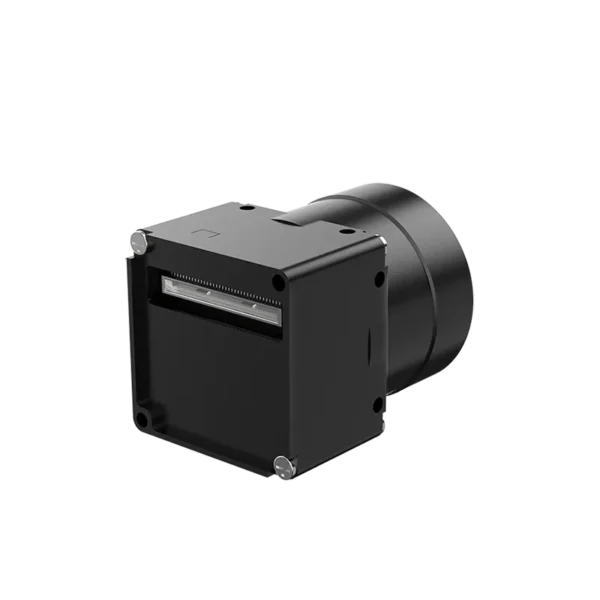
Verytek UVR thermal imaging module — lightweight, shutterless, CE/FCC certified, no ITAR restrictions. Sample units available within 5 business days.