

You should know that using a thermal monocular for hunting in Canada depends on where you hunt and what animal you want to hunt. Each province has different rules. Alberta lets people use thermal imaging devices for predator control, but British Columbia does not allow them.
Province / Territory | Legal Use for Predator Control | Notes & Restrictions |
|---|---|---|
Alberta | Allowed | Night hunting and shooting may be okay with a Damage Control Licence for certain wildlife management. |
British Columbia | Restricted | Using infrared optics or thermal imaging for hunting is not allowed. |
Saskatchewan | Allowed | Night predator control is okay for livestock protection; check the rules. |
Manitoba | Restricted | Night hunting on public Crown lands needs a free permit; you cannot hunt on private land. |
Ontario | Prohibited | Night hunting is not allowed; only daytime predator control is okay. |
Quebec | Prohibited | Night hunting of big game with thermal or night vision devices is not allowed. |
New Brunswick | Allowed | You need a hunting license; follow the hunting guide. |
Nova Scotia | Restricted | Night hunting is usually not allowed; check the rules. |
Newfoundland & Labrador | Restricted | Night predator hunting is not allowed; ask the Wildlife Division. |
Yukon | Allowed | Follow the Wildlife Act and report sightings if needed. |
Northwest Territories | Allowed | Night predator control is okay with a license. |
Nunavut | Allowed | Follow community hunting rules; get the right permits. |
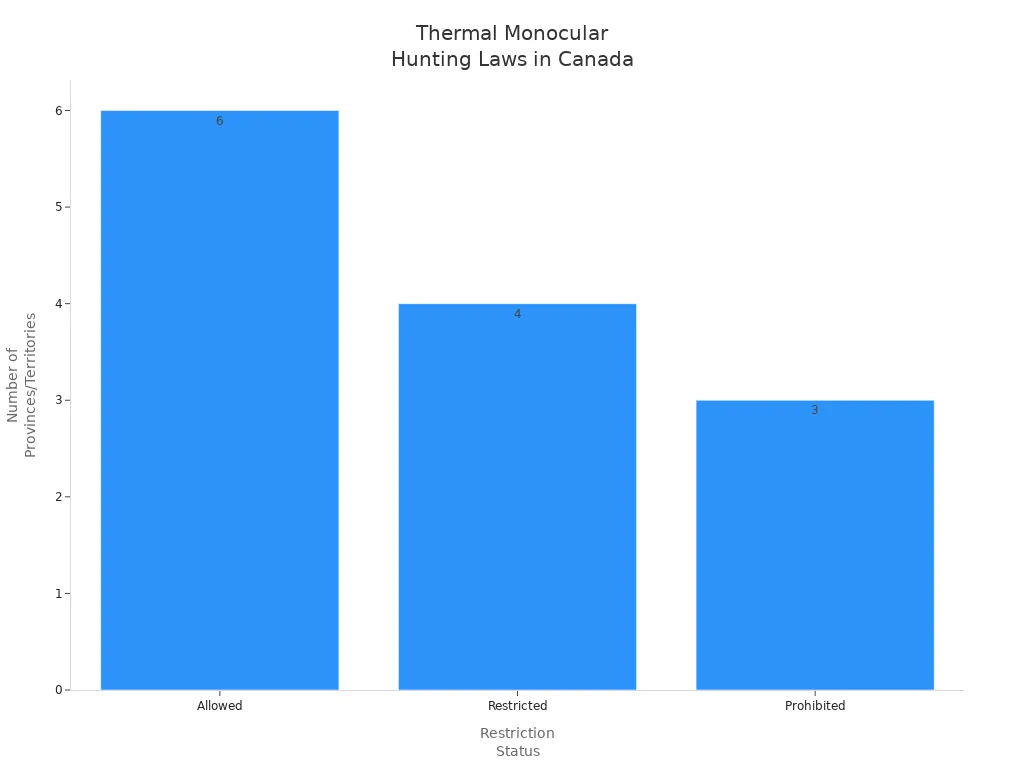
You must always check the newest rules before using any night vision or thermal imaging devices. Following the law keeps you safe and helps you hunt in a fair way. Advanced devices like the Verytek MV Series let you see heat in the dark. This makes hunting safer and more effective.
Key Takeaways
Always look at your province’s hunting laws before using thermal monoculars. Rules are different in each place and can change often.
Using thermal monoculars can make night hunts safer and easier. They help you see animals and stay away from danger.
Always carry your hunting license and any needed permits with you. This helps you follow the local rules.
Pick a thermal monocular that works well in cold weather. Look for long battery life and a good detection range to help you hunt better.
Practice with your thermal monocular before you go hunting. Knowing how to use it helps you find animals more easily.
Thermal Monoculars for Hunting: Legal Overview
Federal and Provincial Laws in Canada
Hunting rules in Canada are not the same everywhere. The federal government makes some rules. Most hunting rules come from provinces and territories. These rules tell you which animals you can hunt. They also say when you can hunt. They explain what equipment you can use.
Some provinces let people use thermal monoculars for hunting. This is mostly for predator control. Other provinces do not let hunters use any thermal imaging devices or night vision. Alberta lets hunters use thermal monoculars for predators like coyotes. You need the right permit. British Columbia does not let hunters use thermal monoculars at all. Always check the newest hunting and trapping rules before you hunt.
Here is a simple look at how provinces handle thermal monoculars for hunting:
Province / Territory | Allowed for Predator Control | Special Notes |
|---|---|---|
Alberta | Yes | Damage Control Licence needed for some species |
British Columbia | No | All thermal imaging devices banned for hunting |
Saskatchewan | Yes | Only for livestock protection |
Manitoba | No | Permit needed for night hunting on Crown land |
Ontario | No | Only daytime predator control allowed |
Quebec | No | Big game night hunting not allowed |
New Brunswick | Yes | Must follow hunting guide |
Nova Scotia | No | Night hunting usually not allowed |
Newfoundland & Labrador | No | Ask Wildlife Division for details |
Yukon | Yes | Must follow Wildlife Act |
Northwest Territories | Yes | License required |
Nunavut | Yes | Community rules and permits apply |
Tip: Always check your province’s website for hunting rules. The Canadian Wildlife Service and local agencies update rules often.
Some provinces make special rules for farmers. Farmers may get extra permissions to use thermal monoculars for hunting predators. These predators can hurt livestock. Recreational hunters must follow stricter rules. Always carry your hunting license. Know the hunting and trapping rules for your area.
Documentation and Compliance
You must keep your paperwork ready when you use thermal monoculars for hunting. You need a valid Canadian hunting license for your province or territory. Some provinces want extra permits for night hunting or advanced equipment. Always keep your permits and licenses with you when you hunt.
If you use thermal monoculars for hunting, follow all rules about safe use and transport. Some provinces ask hunters to report using thermal imaging devices. Keep records of your hunts and any special permissions you get. This helps you show you follow the law if a conservation officer checks your gear.
Note: Reviews and stories show hunters who follow rules have fewer problems with law enforcement. You can read these stories on forums like CanadianGunNutz and HuntingBC.
Hunting rules can change every year. Always check the newest hunting and trapping rules before each season. This keeps you safe and helps protect wildlife in Canada.
Choosing a Thermal Imaging Monocular
Key Features for Canadian Hunting
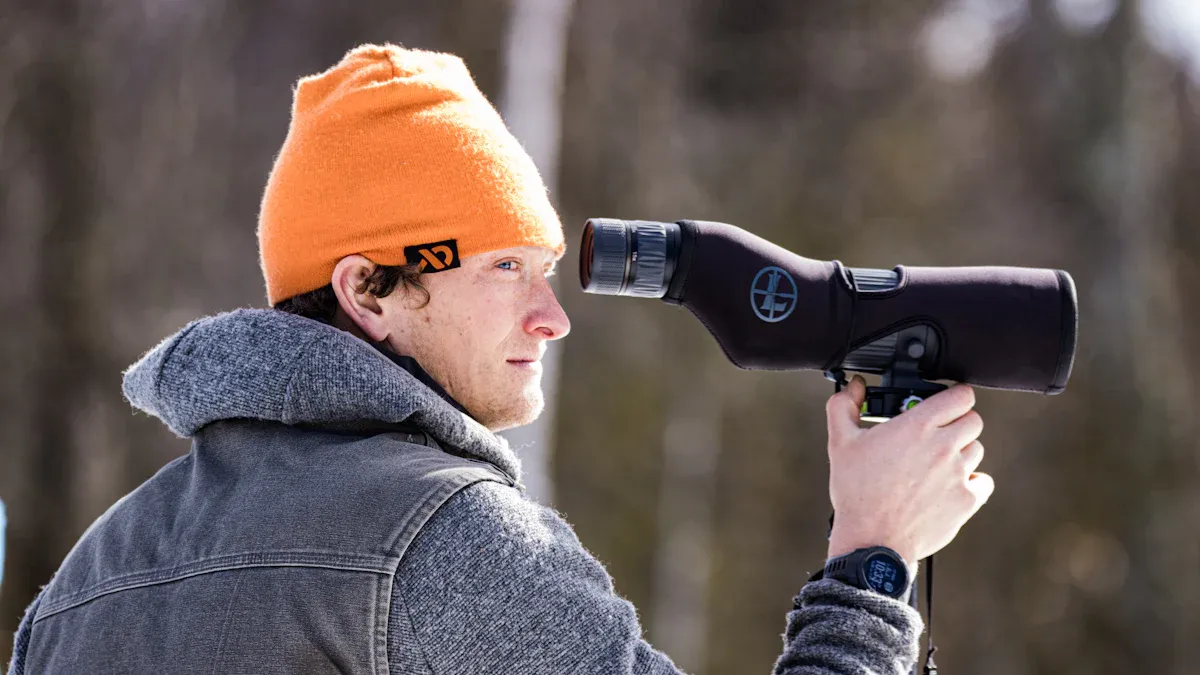
When picking a thermal imaging monocular for hunting, you should look at some important things. The best device helps you see animals in the dark, fog, or snow. You want one with a long detection range. This lets you spot predators from far away. Weather resistance matters a lot. Canada gets very cold, so your device must work in low temperatures, even as cold as -40°C. Battery life is important too. The best device should last many hours, even when it’s freezing outside. Easy controls and a comfortable grip are also good. These features make hunting safer and more fun.
Tip: Try to find a thermal imaging monocular with a built-in laser rangefinder. It helps you measure distance fast during night hunting.
Comparing Models and Brands
There are many brands and models to choose from when looking for the best thermal imaging monocular for hunting. Some devices have long battery life. Others give you clear images or extra features like Wi-Fi. The best device for you depends on how you hunt and the weather where you live. Here is a table to help you compare important features:
Feature | Verytek MV Series | Brand X Model A | Brand Y Model B |
|---|---|---|---|
Detection Range | Up to 1000m | 800m | 900m |
Weather Resistance | -40°C to +50°C | -20°C to +40°C | -30°C to +45°C |
Battery Life | 8 hours (cold) | 6 hours | 7 hours |
Laser Rangefinder | Yes | No | Yes |
Wi-Fi | Yes | Yes | No |
Ergonomic Design | Yes | No | Yes |
Legal Compliance (CA) | Yes | Check | Check |
French Support | Yes | No | No |
CAD Pricing | Yes | No | No |
North American Ship. | Yes | Yes | Yes |
Verytek MV Series: Addressing Canadian Hunters’ Needs
The Verytek MV Series is a great thermal imaging monocular for hunting in Canada. It works well in very cold weather. The device can spot animals up to 1000 meters away. You can use the built-in laser rangefinder to check distances quickly. The battery lasts up to 8 hours, even in freezing temperatures. You can connect it to your phone with Wi-Fi. The design is easy to hold for long hunts. Verytek gives French language support and CAD pricing, which helps Canadian hunters. You can get fast shipping in North America. Reviews say the device is reliable and simple to use. Many hunters think it is the best for night hunting and predator control. The MV Series follows Canadian legal rules for thermal imaging devices. Always check your local hunting rules before you go out.
Note: Canadian hunters like the Verytek MV Series because it works well in cold weather and is easy to use.
Benefits of Thermal Monoculars in Canada
Tracking and Safety Advantages
When you hunt in Canada, you want to be safe. A thermal monocular helps you find animals easily. You can see animals hiding in thick bushes or moving at night. It lets you spot heat from animals, even when it is very dark. You can use it to look for animal trails or places where animals sleep. You can check fields and forests before you start hunting.
Hunters in Canada say thermal monoculars help them stay away from danger. You can see cliffs, water, or fallen trees that are hard to see at night. Scouting for safe paths helps you not get lost. You can also see other hunters, cars, and property lines. This makes hunting at night safer.
You can track animals in fog, snow, or rain.
You can scout for predators near farm animals.
You can track wounded animals after you shoot.
You can scout for signs of animals before sunrise.
You can track your own path back to camp.
You can scout for things that could cause accidents.
You can track heat from far away.
You can scout for changes in animal patterns each season.
You can track groups of animals for better hunting plans.
You can scout for new hunting spots with less risk.
Many hunters say tracking and scouting with thermal monoculars is helpful. Outdoor Life and Field & Stream report these devices make hunting safer and more successful in Canada.
Ethical Hunting Practices
You want to hunt in a fair and respectful way. Using thermal monoculars helps you follow hunting rules. Tracking and scouting with clear vision means you can see your target before you shoot. You avoid mistakes that could hurt the wrong animal. Scouting with thermal imaging devices lets you plan your hunt and respect property lines. You can track predator animals that threaten farm animals without hurting other wildlife.
Night vision tools like thermal monoculars help you find wounded animals fast. Tracking and scouting after you shoot means you do not leave animals behind. You show respect for nature and other hunters. Many Canadian hunting guides say using these devices for tracking and scouting leads to better choices and safer hunts.
Tip: Always follow local laws and hunting guidelines. Responsible tracking and scouting protect wildlife and keep hunting safe for everyone.
Legal Transport and Use of Thermal Monoculars
Border Crossing and Documentation
You have to follow special rules when you bring thermal optics across the Canadian border. Customs officers will always ask you to tell them about your thermal monocular when you cross. You need to keep your proof of purchase and import permits with you. You should also have your hunting license and any export papers. If you come from the United States, you must follow ITAR and EAR rules for thermal optics. These rules control how night vision and thermal devices move between countries.
When you get to the border, tell the customs officer about your thermal monocular. Show all your papers. This helps you not get fined or lose your device. Each province in Canada has its own hunting laws. You need to check the rules before you use your device for night hunting or predator control. Always follow the customs steps for bringing thermal optics in and out of Canada. This keeps your hunting trip safe and legal.
Tip: Make a list of all your papers before you travel. This helps you stay ready at the border.
You always need to declare your device.
Import permits and proof of purchase are needed.
Export rules matter if you travel from the U.S.
Your hunting license must match where you hunt.
Rules can change, so check before you go.
Safe Handling and Storage
You need to be careful when you carry and store your thermal monocular. Use a padded case to keep your device safe from bumps and bad weather. Put your device in a locked spot when you are not using it. This keeps your thermal monocular safe and ready for hunting. Do not leave your device in a hot car or wet place. Customs officers might check how you store your device at the border. Good storage stops damage and helps your device work for night hunting and predator control.
Always keep your import papers with your device. If you travel between provinces, customs officers might ask for your papers. You should also keep a copy of your hunting license and any special permits. Safe handling and good storage show you follow the law and care about your gear.
Note: Many hunters in Canada say that storing their device carefully and having all their papers ready makes crossing the border much easier.
Best Practices for Hunting with Thermal Monoculars
Maintenance and Battery Care
You want your thermal monocular to work well every time you hunt. Cold weather can make batteries lose power quickly, especially at night. Always check your battery before you leave for a trip. Bring an extra battery if you plan to hunt for a long time. Most devices use Li-ion batteries that you can replace. These batteries last more than 8 hours on one charge. Some models let you charge them fast or even without wires.
Here is a simple table about battery features:
Feature | Details |
|---|---|
Operating Temperature Range | -25°C to +50°C |
Battery Life | |
Battery Type | Replaceable Li-ion battery |
Charging Options | Fast charging, wireless charging |
Design | Built for tough wilderness conditions |
Tip: Keep your batteries in your pocket when it is cold. This helps them stay warm and last longer. Clean the battery contacts with a dry cloth so you do not lose power.
Store your device in a padded case when you are not using it. Do not leave it in a hot car or wet place. Clean the lens and body often to keep your night vision clear.
Maximizing Field Performance
You may face problems when hunting in Canada. Heavy rain, thick fog, or snow can make it hard to see heat. Snow can hide tracks from predators. You can fix these problems by changing your device’s settings for better contrast. Clean the lens often to help you see better.
Here is a table with common problems and ways to fix them:
Challenge | Description | Solution |
|---|---|---|
Rain, fog, or snow can blur thermal images | Use a high-quality device | |
Scattering of infrared light | Rain and fog can scatter or absorb infrared radiation | Clean the lens and housing regularly |
Snow insulation | Snow can mask animal heat signatures | Adjust contrast and brightness |
Practice using your device before you hunt. Try scanning fields and woods to learn how animals look with thermal imaging. Many hunters say practicing helps them spot animals faster and make fewer mistakes. Read reviews on trusted sites like Outdoor Life for more tips.
Note: Always follow local laws and respect wildlife. Using your device the right way keeps hunting safe and fair for everyone.
You should learn the rules before using a thermal monocular for hunting in Canada. Always look up your province’s laws before you go hunting. Good hunters follow the rules and hunt safely. Make smart choices to help animals and keep your good name. Keep up with new hunting laws. If you want cool features, check out the Verytek MV Series for your next hunt.
Be safe, hunt wisely, and care for the land.
FAQ
Can I use a thermal monocular for moose or elk hunting in Canada?
Most provinces do not let you use thermal monoculars for big game like moose or elk. You should always check your province’s hunting rules. The Canadian Wildlife Service and local groups change these rules every year.
How does the Verytek MV Series perform in extreme cold?
The Verytek MV Series works in very cold weather, even down to -40°C. Reviews on Outdoor Life and HuntingBC say its battery lasts long and the pictures stay clear in tough Canadian winters.
Is the Verytek MV Series legal for hunting in Canada?
You need to follow your province’s hunting laws. The Verytek MV Series follows Canadian rules. Always bring your hunting license and permits. Ask your local wildlife agency before you hunt.
Does the Verytek MV Series support French and CAD pricing?
Yes, you can use French language and pay in CAD. This makes ordering and using the device easy anywhere in Canada.
What makes the Verytek MV Series better for Canadian hunters?
You get a battery that lasts long, fast shipping in North America, and a strong design for cold weather. Many Canadian hunters say it is good for predator control and outdoor fun.
Feature | Verytek MV Series |
|---|---|
Cold Resistance | -40°C |
Battery Life | 8 hours |
Legal Compliance | Yes |
French Support | Yes |
CAD Pricing | Yes |
North American Shipping | Yes |
Tip: Look at reviews on Field & Stream and CanadianGunNutz to see what other users think.
See Also
Utilizing Thermal Imaging Cameras for Effective Rescue Operations in 2025
The Importance of Thermal Imaging Cameras in 2025
Using Vanadium Oxide Thermal Imaging Cameras for Rescue Missions
Best Tested CarPlay Adapters for RAV4 in Cold Canadian Winters
Top Wireless CarPlay Adapter for Ford F-150 in Canada – Simple Installation!