
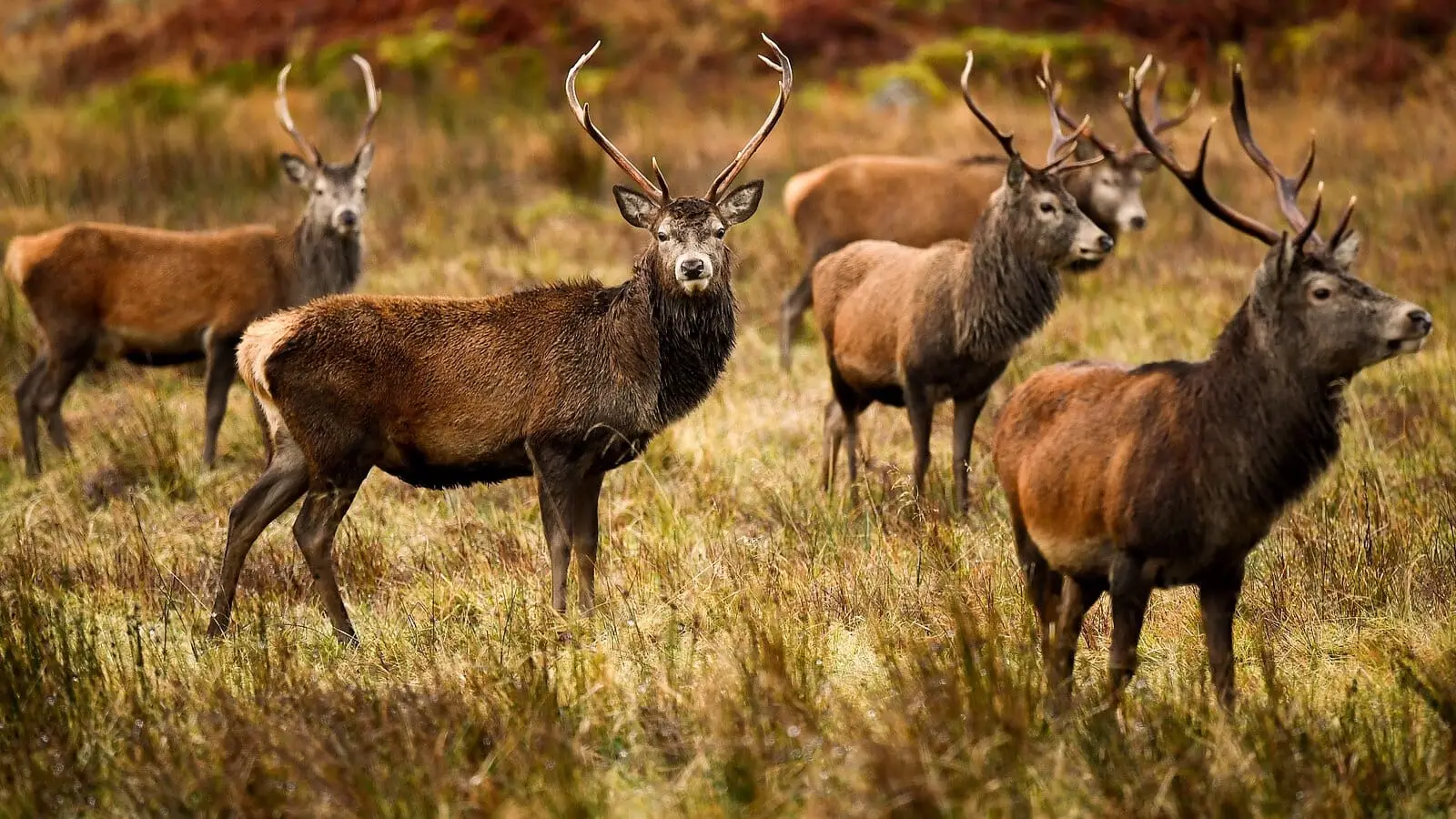
You can see a secret world when you use thermal imaging monoculars for watching wildlife. These devices let you find animals like foxes or deer in the dark or in thick mist. This makes every trip more exciting. It might be hard at first, especially if grass or leaves hide animals. Your eyes may also need time to get used to the eyepiece. With practice, you will feel more sure of yourself. The Verytek MV Series is a modern and simple choice for anyone who wants to explore nature in new ways.
Key Takeaways
Thermal imaging monoculars help you see animals at night or in fog. This makes watching wildlife more exciting and easier. – Try using your monocular at home first. This helps you feel sure before you go into the wild. – Always stay safe by keeping away from animals. You should also know the rules in your area. – Pick a monocular with a good sensor. This gives you clearer pictures and helps you spot animals far away. – Use features like Wi-Fi and recording to share what you see. These tools also help you learn more about wildlife.
What Are Thermal Imaging Monoculars?
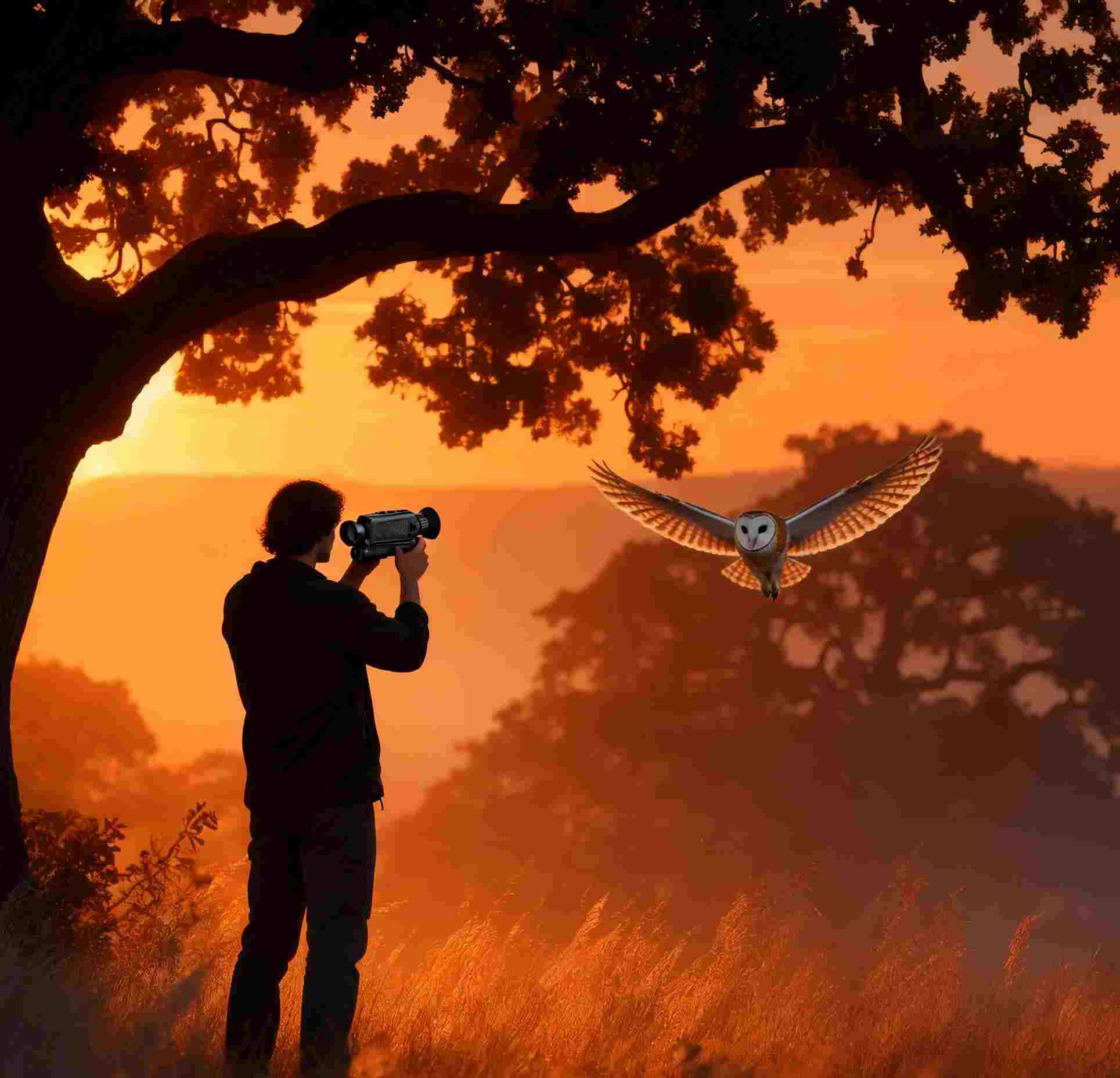
Thermal imaging monoculars help you see animals by picking up heat. They do not need light to work. These devices use infrared radiation to make pictures. You can find foxes, badgers, or deer even if it is very dark. They also work in fog or thick bushes. This makes them great for watching wildlife. They are helpful when animals hide or move at night.
Common Practices for Observing Wildlife
Here are some steps to use your monocular well:
Switch on your device and turn the focus ring. This helps you get a sharp picture.
Pick the ‘white hot’ mode. Turn up the contrast to spot animals better.
Make the screen less bright. This keeps your eyes safe and helps you see in the dark.
Move your view slowly from left to right. Look for shapes or bright spots that show heat.
Use only one eye to look through the monocular. This keeps your other eye ready for darkness.
Try to watch from far away, like from behind trees or on a hill. This way, you can see deer without scaring them.
Walk quietly and do not move fast. If you stay calm and quiet, animals will not notice you.
Thermal imaging helps you see animals hiding in grass or behind trees. You do not need a torch, so you will not bother the animals.
Safety Guidelines in the Field
You should always think about safety when watching wildlife:
Stay far from animals. Do not get too close to foxes or badgers.
Check the rules before you start. Some places have special laws about watching or filming animals.
Go with a friend, especially at night. This helps if you get lost or need help.
Bring a torch and a map. The weather can change fast, so be ready for rain or fog.
Tell someone where you are going and when you will come back.
Tip: Try using your monocular at home first. This helps you feel sure and ready for your first trip.
Feature | Night Vision Devices | |
|---|---|---|
Advantages | Makes things brighter so you can see in low light. | Finds heat from objects, so you can see in total darkness. |
Helps you stay safe by showing dangers more clearly. | Good for finding animals by their heat. | |
Lets you watch animals that are active at night. | Useful for learning about animal movement and rare species. | |
Disadvantages | Does not work well far away. | Usually costs more than night vision devices. |
Shows pictures in one colour, not real colours. | Hard to see small details on little birds. |
You can use thermal imaging monoculars to watch wildlife in fun new ways. You can stay safe and respect nature at the same time.
Thermal Imaging’s Impact on Wildlife Observation
Seeing in Darkness and Adverse Conditions
Thermal imaging helps you see animals at night or in fog. It shows warm bodies, even if they hide in grass or behind trees. You do not need a torch or moonlight to use it. Many people use the Verytek MV Series to find foxes and deer. They use it in woods or open fields. You can look over big areas fast and spot animals when they move. This helps you notice what is around you. It also makes your wildlife trips better.
You can watch animals in darkness, fog, or rain.
You can follow animals that are hard to see at night.
Non-Intrusive Wildlife Monitoring
Thermal imaging lets you watch animals without bothering them. You do not use bright lights or make loud sounds. This means you can see shy or rare animals without scaring them. You can also spot animals in thick bushes or shadows. You do not need to get close to them. This keeps you and the animals safe.
You can watch animal behaviour and health from far away.
You can see if an animal is ill by changes in body heat.
You can help protect animals by looking out for illegal acts like poaching.
Safety and Versatility in the Field
Thermal imaging makes wildlife watching safer for you. You can see where you walk, even in the dark. You can stay away from dangerous animals or rough ground. This technology is good for fun and for work. Rangers, scientists, and nature fans use it to learn about animals and where they live.
Tip: Try your device in different weather to see how it works.
Thermal imaging lets you enjoy wildlife in new ways. You can learn more about nature and keep everyone safe.
Key Features of Thermal Imaging Monoculars
Sensor Resolution and Image Quality
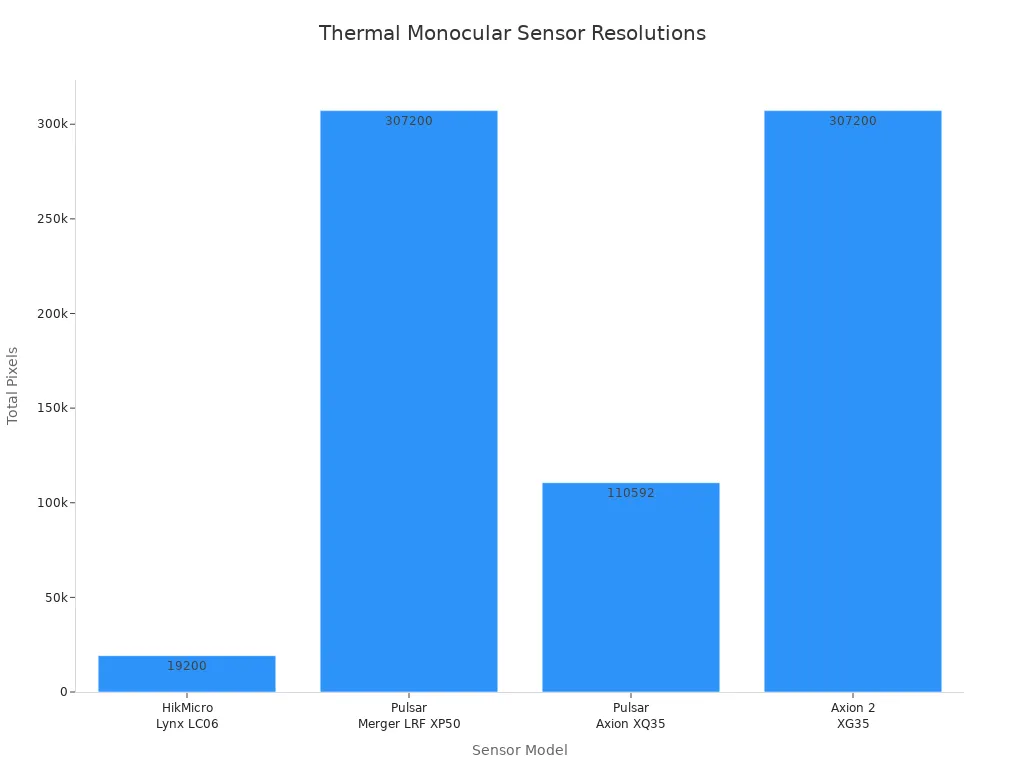
You need clear pictures to find animals in the wild. The sensor resolution in a thermal monocular shows how much detail you can see. If the resolution is high, the picture looks sharper. This helps you tell if you are looking at a fox or a badger, even from far away. If the resolution is low, you see less detail. This makes it harder to know what animal you are looking at.
Sensor Model | Resolution (pixels) | Total Pixels | Image Quality Impact |
|---|---|---|---|
HikMicro Lynx LC06 | 160×120 | 19,200 | Lower detail, less identification capability |
Pulsar Merger LRF XP50 | 640×480 | 307,200 | Higher detail, better identification of objects |
Pulsar Axion XQ35 | 384×288 | 110,592 | Moderate detail, can identify species at distance |
Axion 2 XG35 | 640×480 | 307,200 | High detail, can see hair and facial features |
You should pick a thermal monocular with high sensor resolution. This helps you see better when you are outside. High sensitivity sensors, like the ones in the Verytek MV Series, show clear pictures even in fog or rain. You can spot animals early in the morning or late in the evening, when normal binoculars do not work well. You do not have to worry about bright lights or glare.
Lower NETD values give you clearer pictures. You can see more detail and find animals in bad weather.
Higher screen resolution helps you see animal shapes and features.
High sensor resolution collects more information. This makes it easier to know what animal you are looking at.
Detection Range and Field of View
Detection range means how far you can see with your thermal monocular. Long-range detection is important if you want to look over big fields or forests. Some basic models can spot animals more than 1,000 metres away. Better models can see even further.
Model | Detection Range |
|---|---|
PULSAR AXION COMPACT | 1300m |
PULSAR AXION COMPACT XG35 | 1750m |
PULSAR AXION XQ30 PRO | 1050m |
The Verytek MV Series has a laser rangefinder that works up to 1,000 metres. You can measure how far away an animal is very quickly. This helps you know the size and movement of the animal, which is hard with normal binoculars. You do not have to guess how far away a deer or fox is. You get the right answer every time.
Field of view is important too. A wide field of view lets you see more at once. You can look for animals without moving your device a lot. If you use a small thermal monocular with a wide field of view, you will find it easier to spot animals running across open land. A narrow field of view helps you see details far away, but you see less area at one time.
Note: A wider field of view helps you find animals fast, but you might lose some detail if they are far away.
Battery Life and Portability
You want your thermal monocular to last for your whole trip. Most small thermal monoculars have batteries that last between 6 and 11 hours. Some, like the Pulsar Axion XG35, work for up to 7 hours. The Nocpix VISTA H35R can last up to 11 hours if you use two battery packs. If you can change the batteries, you can swap them outside and never miss anything.
Replaceable batteries are good for long nights outdoors.
Small designs make it easy to carry your device.
Light models, like the Verytek MV Series, fit in your hand or pocket.
Normal binoculars can feel heavy and big. Small thermal monoculars are light and simple to use. You can walk for hours and not get tired. The Verytek MV Series is weatherproof (IP65), so you do not have to worry about rain or dust.
Advanced Features: Laser Rangefinder, Wi-Fi, Recording
Modern thermal monoculars have smart features that make watching animals easier and more fun. The Verytek MV Series has a built-in laser rangefinder. You can measure distances up to 1,000 metres. This helps you plan what to do next and keeps you safe.
Many thermal monoculars now have Wi-Fi. You can connect your device to your phone or tablet. This lets you share what you see with friends or family right away. You can also record videos or take photos. You can keep pictures of rare animals or interesting things they do.
Feature | Benefit |
|---|---|
Laser Rangefinder | Measures distance to animals, helps with long-range detection |
Wi-Fi Connectivity | Shares live images and videos, supports group viewing |
Recording Capability | Saves photos and videos for later review |
Built-in Recorder | Makes it easy to keep a record of your sightings |
Multiple Device Link | Lets more than one person watch at the same time |
You do not scare animals with bright lights or loud sounds. You can watch quietly and safely. These features make the Verytek MV Series a great choice for beginners and experts.
Tip: Use the recording feature to make your own wildlife library. You can learn more about animal behaviour by watching your videos later.
Choosing the Right Monocular
Matching to Wildlife Observation Needs
Pick a monocular that matches what you want to do. Think about where you will use it most. Some people watch animals in fields. Others look for wildlife in woods or near water. Each place needs different features.
You can use this table to help you choose what is important:
Criteria | Description |
|---|---|
Optical Magnification | Lets you see animals far away, but a higher setting narrows your view. |
Detection Range | Shows how far you can spot animals. Pick a range that fits your area. |
Sensor Resolution | Higher numbers mean clearer pictures. This helps you tell animals apart. |
Refresh Rate | A faster rate gives you smoother images, which helps when animals move quickly. |
Environmental Considerations | Think about the weather and terrain. Some devices work better in rain, fog, or thick woods. |
Choose a monocular that works well where you go most. If you walk in woods, a wide view helps you spot animals fast. If you watch open land, a long range is best. The Verytek MV Series gives you both a wide view and a strong rangefinder. You can use it in many places.
Tip: Try using a monocular outside before you buy one. This helps you see if it suits you.
Thermal Monoculars for Hunting
If you hunt, you need a monocular with special features. Hunters walk on rough ground and face changing weather. You need a device that can handle these things.
Here is a table of features that matter for hunting:
Feature | Description |
|---|---|
Durability | Strong build keeps your device safe outdoors. Look for shockproof models. |
Lens Quality | Good lenses give you sharp, clear images. |
Thermal Resolution | High resolution helps you track animals in thick cover. |
Thermal Sensitivity | Better sensitivity means you see small changes in heat. This helps you spot animals in brush. |
Weather Resistance | Devices with IP ratings like IPX4 or higher work in rain or snow. |
Operating Temperatures | Wide ranges let you hunt in hot or cold weather. |
Shock/Drop-proof | You want a device that survives drops or bumps. |
Always check the IP rating and if it is shockproof. The Verytek MV Series is weatherproof and works in many places. Many hunters like a built-in rangefinder. It helps you know how far away animals are. This makes hunting safer and easier.
Note: Many hunters say a high refresh rate is good. It helps you follow moving animals without delay.
Budget and Value Considerations
Thermal monoculars come in many prices. Cheaper models have fewer features. Expensive ones have better pictures and more options.
Here is a table to compare some popular models:
Model | Price Comparison | Features Comparison |
|---|---|---|
HikMicro Lynx 2.0 | ~50% less | Entry-level, less detail, smaller field of view |
Pulsar Telos LRF | Higher | Better image performance, rotary magnification control |
HikMicro Condor CQ50 LRF | 25% less | Similar image performance, slightly less user-friendly |
Think about what you need most. If you want a simple device for short trips, a basic model may be enough. If you want to record videos or use Wi-Fi, pick a more advanced one. The Verytek MV Series has many features for a fair price. You get a rangefinder, Wi-Fi, and a strong battery. Many people say it is easy to use and good for beginners and experts.
Tip: Look for models with a good warranty and helpful support. This makes you feel safe about your choice.
Recommended Models for Beginners
It can be hard to pick your first thermal monocular. Many brands have good choices for new users. Look for models that are easy to use, have clear menus, and come with guides.
Here is a table of popular beginner models:
Monocular Model | Key Features | Pros | Cons |
|---|---|---|---|
PyroFlary Thermal Monocular | 50Hz imaging, 1920×1080 resolution, digital zoom, 5-hour battery | High sensitivity, waterproof, long warranty | Higher price, Wi-Fi range issues |
Bushnell Thermal Monocular | Built-in IR illuminator, 5X zoom, micro SD recording | Trusted brand, dual-mode, easy to use | Lower resolution, battery life could be better |
Vortex Thermal Monocular | 8x magnification, multi-coated lenses, lifetime warranty | High magnification, rugged, ergonomic | No built-in recording, smaller lens |
FLIR Thermal Monocular | Boson core, onboard recording, GPS | Great image, easy to use, compact | Limited storage, higher price, battery life |
The Verytek MV Series is easy to use and has smart features. You get a laser rangefinder, Wi-Fi, and a light body. Many people say it is simple to set up and works well in many places. Reviews from magazines and forums praise its clear pictures and long battery life. You can use it for wildlife watching and hunting. This makes it a good choice if you want one device for many things.
Tip: Read reviews and expert guides before you buy. This helps you find a model that fits your needs and budget.
You will enjoy being outside more when you pick the right monocular. You will see more animals, stay safe, and learn about nature in new ways.
Getting Started with Thermal Imaging
Setup and Calibration
You can start using your thermal imaging monocular with a few simple steps. Many beginners feel nervous the first time, but you will gain confidence quickly. The Verytek MV Series makes the process straightforward, even if you have never used a thermal device before.
Unpack your monocular. Open the box, check all parts, and make sure nothing is damaged or dirty.
Charge the battery. Use a 2A USB wall charger. Let it charge for about six hours before your first outing.
Update the firmware. Download the latest version from the manufacturer’s website. Insert a microSD card and follow the update instructions. After updating, perform a factory reset to ensure the device works smoothly.
Many users on outdoor forums say these steps help avoid problems in the field. You can find more tips in guides from the British Trust for Ornithology.
Tip: Always check the lens for dust or fingerprints before you go outside. A clean lens gives you the best image.
Field Tips for Beginners
You may face challenges when you use your monocular outdoors for the first time. Tall grass, fog, or rain can make it hard to spot animals. The MV Series helps you by offering clear images and a simple menu.
Start in your garden or a local park. Practice focusing and scanning slowly.
Use the brightness and contrast settings to match the weather.
Hold the monocular steady. Rest your elbows on a fence or tree if you need support.
Keep both eyes open for better awareness, but use only one eye for the device.
Move quietly and avoid sudden movements. Animals notice noise and fast actions.
Many wildlife watchers say that patience is key. You will spot more animals if you stay calm and take your time.
Recording and Sharing Observations
You can record and share your wildlife discoveries with the MV Series. This device lets you connect to your phone or tablet using Wi-Fi. You can also save photos and videos for later.
Feature | Description |
|---|---|
Screen Sharing | Connect up to four smart devices with the Pixfra app for group viewing. |
Audio Recording | Record sounds along with your video for a richer experience. |
Built-in Storage | Save your recordings and share them with friends or on social media. |
Many reviewers from Birdwatch Magazine praise the MV Series for its easy sharing features. You can show your family what you found or keep a record for your own study. This makes learning about wildlife more fun and helps you improve your skills.
Note: Always respect wildlife and local rules when you record or share your observations.
Quick Reference Checklist
Use this checklist to help you get ready for your wildlife trip with your thermal imaging monocular:
Essential Steps Before You Go
✅ Charge your monocular all the way. Check the battery before you leave.
✅ Wipe the lens with a soft cloth. Make sure there is no dust or fingerprints.
✅ Update the firmware if you need to. Follow the instructions from the manufacturer.
✅ Take extra batteries or a power bank with you.
✅ Bring your user manual. It can help you if you have questions.
In the Field
🔍 Change the focus and brightness. This helps you see clear pictures.
👁️ Look through the monocular with one eye. Keep your other eye open to stay safe.
🦊 Move your view slowly from side to side. Watch for shapes that show heat.
🤫 Walk quietly. Do not make quick movements.
📏 Use the rangefinder to check how far away animals are.
🌧️ Wear clothes for the weather. Carry a torch and a map.
Recording and Sharing
📱 Connect your monocular to your phone or tablet with Wi-Fi.
🎥 Take videos or photos of the animals you see.
👨👩👧 Show your findings to friends or family.
📝 Follow local rules when you record or share wildlife.
Tip: Many people on BirdForum and in Birdwatch Magazine say practising at home makes you feel more sure when you go outside.
Task | Why It Matters |
|---|---|
Charge and clean device | Helps your monocular work its best |
Update firmware | Fixes problems and adds new things |
Scan slowly | Makes it easier to spot hidden animals |
Record and share | Lets you build your own wildlife collection |
You can read more advice in guides from the British Trust for Ornithology and the Mammal Society. People on outdoor forums also share good tips.
Remember: Practice helps you get better. The more you use your monocular, the more animals you will find and learn about.
You have learned the main steps for using a thermal imaging monocular outdoors. Try practising at home first. Then visit parks or fields nearby. Thermal optics help you find animals that hide or come out at night. You can follow wildlife and watch big areas easily. As you use your monocular more, you understand animal behaviour better. You also stay safer and make your trips easier. The Verytek MV Series is a good choice for people just starting.
Take pictures in the dark
Find animals that blend in
Watch from far away without bothering wildlife
Check nests and dens without getting too close
Keep practising and tell others what you see. Each trip helps you feel braver and gives you new chances to see wildlife.
FAQ
What makes thermal imaging monoculars better for wildlife observation than night vision?
Thermal imaging monoculars spot animals by finding their heat. Night vision needs light, but thermal imaging does not. You can see animals in darkness, fog, or thick bushes. Experts like the Mammal Society say these devices are safer and more reliable.
How does the Verytek MV Series help with ethical hunting and tracking wounded game?
You can find game easily and see clear heat shapes. The MV Series helps hunters follow rules and recover wounded animals. People on BirdForum say it works well and helps you hunt responsibly.
Can I use a compact thermal imaging monocular for long-range detection and tracking blood trails?
Yes, you can use small models for seeing far away. The MV Series lets you track blood trails and spot animals from a distance. Hunters say these devices make tracking easier and safer.
How does thermal imaging improve safety and situational awareness during hunting?
Thermal imaging helps you see animals, people, and obstacles in low light. It keeps you aware of your surroundings and helps you avoid danger. The British Trust for Ornithology says these devices help you stay safe outdoors.
What features should I look for in performance-class monoculars for wildlife and hunting?
Look for high sensor quality, strong range, and good battery life. Check for infrared, small size, and long-range ability. The Verytek MV Series has these features and is good for wildlife and hunting.
See Also
Utilising Thermal Imaging Cameras for Effective Rescue Operations in 2025
The Importance of Thermal Imaging Cameras in 2025
Vanadium Oxide Thermal Imaging Cameras for Enhanced Rescue Efforts
Essential Tips for Using Apple CarPlay Adapters in Jaguars
Best Practices to Enhance F-150 CarPlay Adapter Efficiency During Winter