
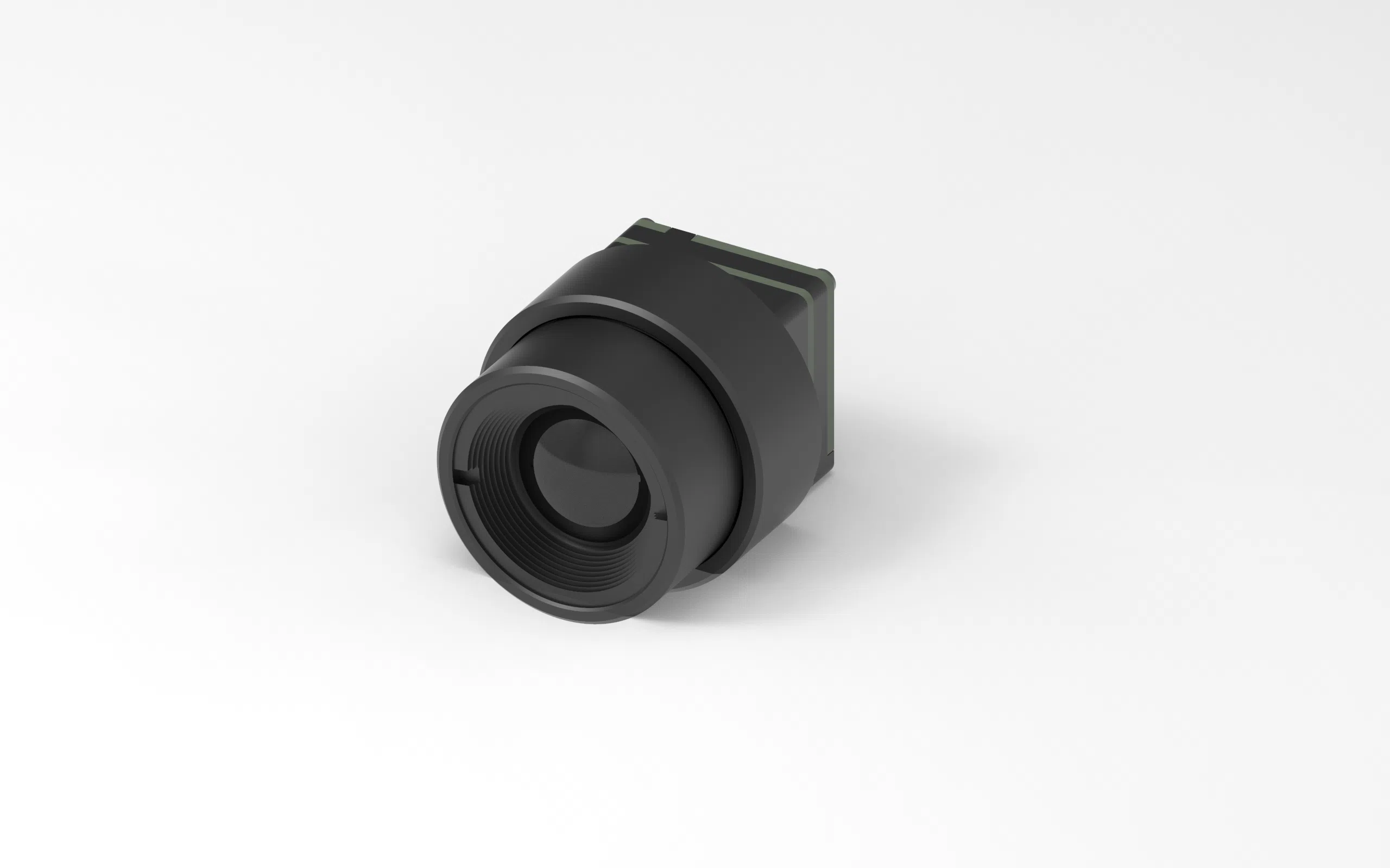
The United States is one of the world’s largest markets for thermal imaging technology, driven by escalating wildfire seasons across the Western states, continuous power grid modernisation, and expanding drone-based border surveillance programs. At the heart of every high-performance thermal monocular and UAV payload operating in these missions is a compact LWIR sensor module — and the quality of that module determines the system’s detection range, frame rate, and operational reliability. The thermographic imaging principle enabling these devices depends on a long-wave infrared focal plane array operating in the 8–14 μm band, where ambient-temperature targets emit their strongest thermal signatures.
According to MarketsandMarkets, the global infrared imaging market is projected to reach significant scale by 2030, with drone-based and handheld thermal imaging among the fastest-growing subsegments. For US drone manufacturers, tactical equipment distributors, and system integrators sourcing the core LWIR sensing module for a thermal monocular, Verytek’s UVR Series delivers the resolution, sensitivity, and SWaP profile the market demands.
Thermal Monocular Technology: The LWIR Module at the Core
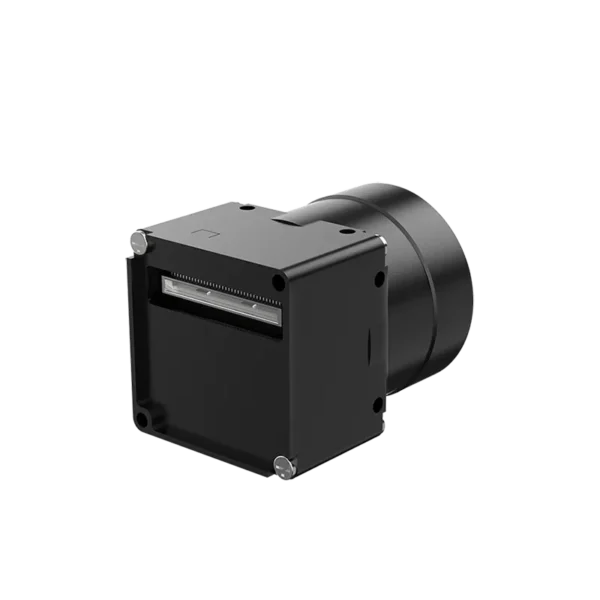
A thermal monocular derives its imaging capability entirely from the LWIR detector module at its heart. The module’s pixel pitch, resolution, NETD, and frame rate determine how well the end device performs in the field. The vanadium oxide microbolometer is the industry-standard uncooled LWIR detector architecture — chosen for its sensitivity, reliability, and compatibility with compact optical designs. Verytek’s UVR Series uses a 12 μm WLP detector, the most advanced pixel pitch in commercial-volume uncooled production, enabling smaller optical systems and lighter payloads without sacrificing image quality.
Why 12 μm Pixel Pitch Matters for US Thermal Monocular Applications
Earlier-generation detectors used 17 μm pixel pitch, requiring larger lenses and heavier housings for equivalent resolution. The shift to 12 μm allows drone payload designers and handheld device manufacturers to reduce lens diameter and overall system weight — directly extending flight endurance and reducing operator fatigue in field operations. For US OEMs building thermal monoculars for wildfire drones and border patrol UAVs, this translates to a meaningful competitive advantage in mission capability per kilogram of payload.
Key Thermal Monocular Applications in US Markets
Drone Wildfire Detection
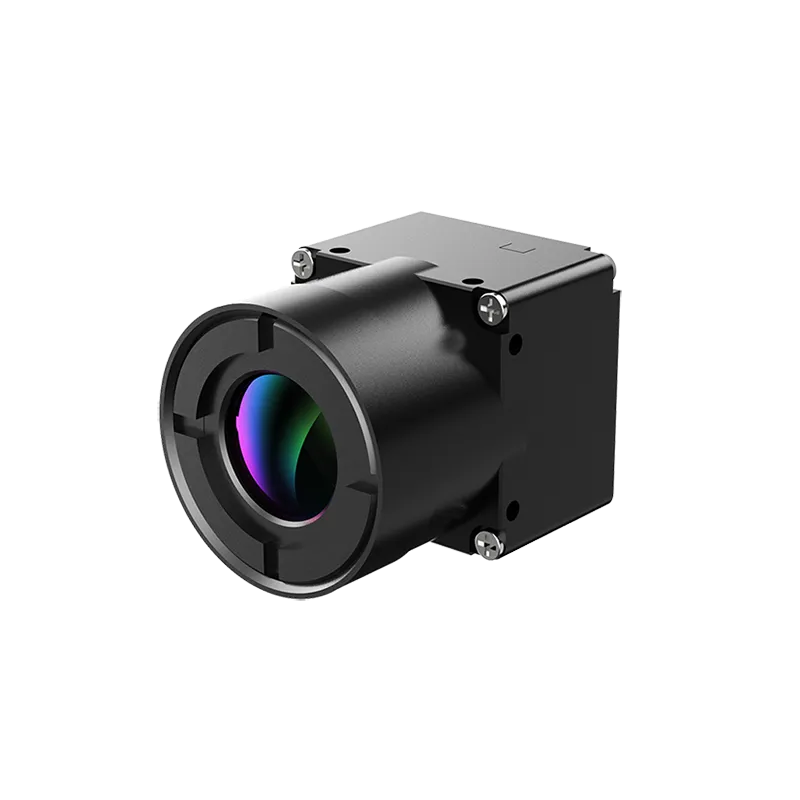
Wildfire detection drones equipped with thermal monoculars can identify ignition points through dense smoke that completely blinds optical cameras. A drone thermal payload based on the UVR6 (640×512, 30/60 Hz) can detect a smouldering spot fire from over 800 metres altitude, enabling early-stage suppression before a fire spreads. FLIR’s drone thermal resources outline the frame-rate and sensitivity requirements for effective airborne fire detection, which UVR Series modules meet across all three resolution variants. The shutterless algorithm correction is particularly important for wildfire UAVs — it eliminates imaging blackouts during continuous flight, ensuring no ignition point is missed between NUC correction cycles.
Power Grid Inspection
The US operates over 160,000 miles of high-voltage transmission lines requiring regular thermal inspection to identify overloaded conductors, faulty insulators, and connector degradation before outages occur. Helicopter- and drone-mounted thermal payloads built around UVR Series modules deliver the sensitivity (NETD ≤ 40 mK) needed to resolve small temperature differentials on energised conductors at safe standoff distances. The modules’ MIPI CSI-2 interface enables direct integration with NVIDIA Jetson and similar edge-AI platforms used in automated fault-classification systems deployed by US utilities.
Border Security and Law Enforcement UAV Surveillance
US Customs and Border Protection and state law enforcement agencies increasingly deploy thermal monocular payloads on mid-size UAVs for night-time border monitoring, search and rescue, and tactical surveillance. These platforms require LWIR modules that combine high resolution with low SWaP — exactly the profile of the UVR Series. Hikvision’s border security architecture reference illustrates how thermal cores are integrated into government drone surveillance systems, a pattern mirrored in US defence-adjacent commercial procurement. For drone systems requiring FAA compliance documentation, FAA’s UAS regulatory framework governs the operational requirements within which these thermal payloads must perform.
UVR Series Specifications for US Thermal Monocular Integration
The following specifications are sourced exclusively from Verytek’s official UVR Series product page and represent the authoritative technical baseline for integration planning.
| Model | Resolution | Frame Rate | Pixel Pitch | NETD | Power (USB @25°C) | Weight (w/o lens) | Dimensions (w/o lens) |
|---|---|---|---|---|---|---|---|
| UVR6 | 640×512 | 30/60 Hz | 12 μm | ≤40 mK | <0.7 W | — | 21×21×10.3 mm |
| UVR3 | 384×288 | 30/60 Hz | 12 μm | ≤40 mK | <0.42 W | <8.6 g | 21×21×10.3 mm |
| UVR2 | 256×192 | 25/50 Hz | 12 μm | ≤40 mK | <0.35 W | <7 g | 21×21×10.3 mm |
Recommended UVR Module by US Application
Integrating Thermal Monoculars into US Government and Commercial Operations
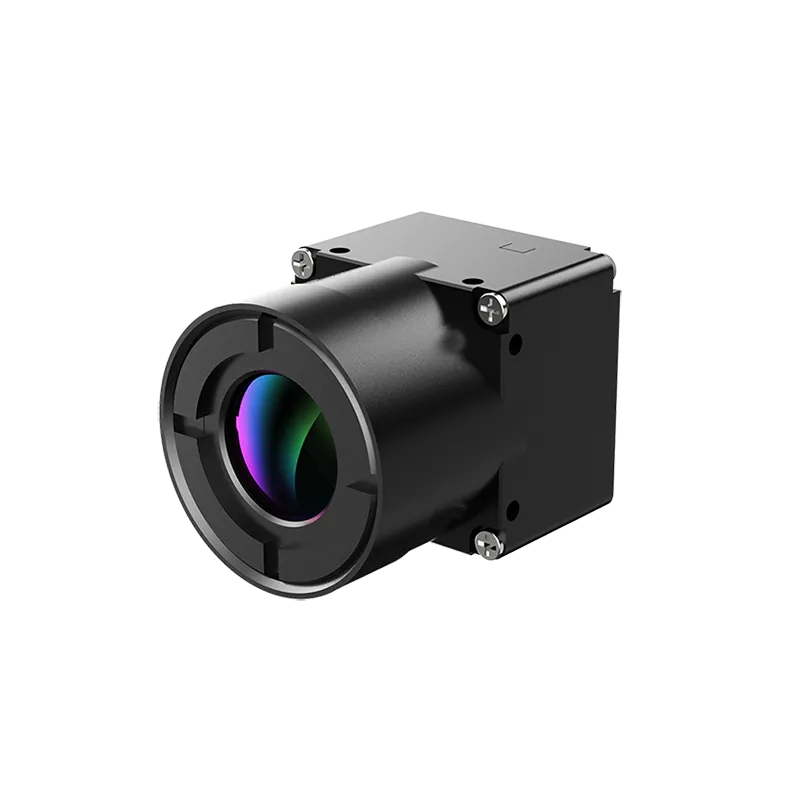
US government and commercial procurement processes increasingly require module-level traceability, volume production verification, and demonstrated batch-to-batch consistency. Selecting the right LWIR module variant for your specific thermal monocular application requires matching resolution and power consumption to the mission profile. The recommended selection path below covers the four primary US integration scenarios:
- Wildfire UAV payload: UVR6 (640×512, 30/60 Hz) via MIPI CSI-2 for maximum resolution at survey altitude; shutterless correction for uninterrupted overnight patrol logging.
- Power grid inspection drone: UVR6 with MIPI CSI-2 to NVIDIA Jetson for AI-powered automated fault classification; <0.7 W supports payload power budgets on medium-size UAVs.
- Border patrol UAV: UVR3 (384×288, <8.6 g) for balanced SWaP; DVP or USB 2.0 interface for integration with existing surveillance video management systems.
- Handheld thermal monocular: UVR2 (<7 g, <0.35 W) for compact battery-operated field units used by law enforcement and search-and-rescue teams.
Verytek UVR Series modules have been delivered in volume and deployed in mass-production UAV platforms globally, providing the supply chain reliability that simplifies vendor qualification for US OEMs entering government tender processes. Verytek UVR Series modules have been deployed in mass-production UAV platforms with batch-to-batch performance stability verified in real-world operations — a supply chain track record that simplifies vendor qualification for US OEMs entering government tender processes. The uncooled infrared imaging market’s growth trajectory confirms sustained demand from government and industrial buyers that rewards reliable, high-volume-capable suppliers.
For US thermal monocular manufacturers and drone payload integrators, the UVR Series provides interfaces that align with the embedded computing platforms common in American product development ecosystems: USB 2.0 for rapid prototyping with Raspberry Pi and similar SBCs, MIPI CSI-2 for production NVIDIA Jetson integrations, and DVP/BT656 for FPGA-based signal processing pipelines. Technical standards for infrared detector performance applicable to US commercial procurement are referenced by Guide Infrared’s thermal imaging technical library.
- USB 2.0 — plug-and-play for desktop test rigs, handheld thermal monocular prototypes, and portable inspection kits.
- MIPI CSI-2 — high-bandwidth serial interface for production drone SoC platforms and AI-enabled video analytics systems.
- DVP / BT656 — parallel video output for FPGA-based signal processing in custom payload electronics.
- UART / I2C — lightweight control bus for MCU-based configuration management in compact handheld designs.
Build Your US Thermal Monocular with Verytek UVR Modules
Whether you are designing wildfire detection UAV payloads, handheld thermal monoculars for border operations, or power grid inspection drones, Verytek’s engineering team supports your integration from module selection through volume supply.
Explore the full specifications at the Verytek UVR Series thermal imaging module page, or contact VERYTEK today to customise thermal monocular solutions for your US security or industrial needs.