

You want the best thermal monocular for you in Australia. First, think about how you will use it. Hunters, security teams, and wildlife watchers want different things. The table below shows what each group needs most:
Application Category | Key Considerations |
|---|---|
Hunting | Detection range, magnification, battery life, durability |
Security and Surveillance | Long detection ranges, long battery life, fast target finding, documentation features |
Wildlife Observation | Sensitivity, quiet use, recording abilities, easy to carry |
You should check sensor quality, a good rangefinder, Wi-Fi, and strong build for Australia’s tough weather. The MV Series Infrared Thermal Monocular by Verytek is special. It has advanced thermal imaging, a built-in rangefinder, and easy connections. More people in Australia use thermal monoculars for defense, work, and outdoor fun. Pick the device that fits your needs and compare features to get the best one.
Key Takeaways
Think about what you need before picking a thermal monocular. People like hunters and wildlife watchers need different things.
Look at the sensor resolution and battery life. A higher resolution gives you clearer pictures. A longer battery life lets you use it for more time outside.
Think about how easy it is to carry and use. Lighter designs and simple buttons make it easier to bring and use when you are outdoors.
Always check your local laws about using thermal monoculars. Rules are different in each state, especially for hunting and watching people.
Look at the features and prices. Know what you want and pick one that fits your money plan and has what you need.
Uses for Thermal Monoculars in Australia
Hunting and Game Tracking
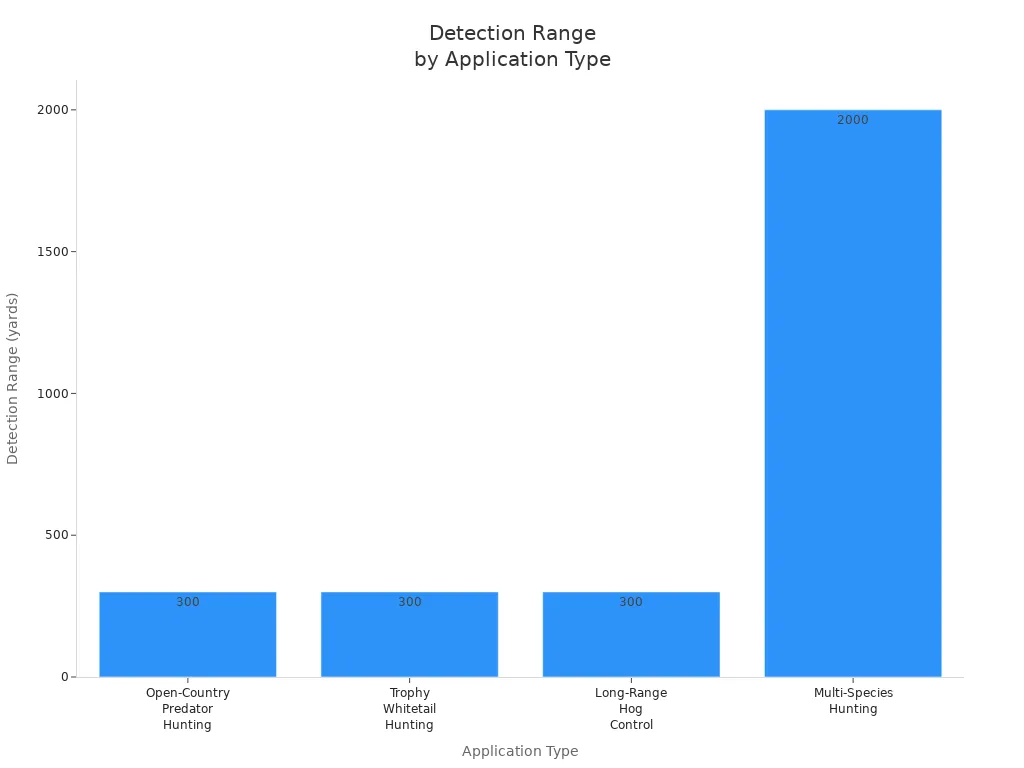
Thermal monoculars help hunters in many places in Australia. They let you find animals in fields, woods, or thick bushes. You can see heat, so you do not need a flashlight. This is good for hunting at night or when it is foggy. Hunters use thermal monoculars to follow deer, hogs, and other animals. The table below shows how far you can see and what is helpful for each hunting type:
Application Type | Detection Range (yards) | Key Benefits |
|---|---|---|
Open-Country Predator Hunting | 300+ | Helps you spot animals that are far away |
Trophy Whitetail Hunting | 200-400 | Lets you check antlers before you hunt |
Long-Range Hog Control | 300-500 | Makes it easier to plan for farm protection |
Multi-Species Hunting | 2000+ | Lets you find many animals in different places |
You must know the hunting rules for thermal devices in your state. Some places do not allow them. Always check the laws before you go hunting.
Wildlife Observation
Thermal monoculars let you watch animals without scaring them. They are simple to use and easy to carry. You can hold one while you walk or hike. The buttons and focus are easy to change. You look with one eye, so your other eye stays used to the dark. This helps you see better at night and keeps your eyes from getting tired. Many people in Australia use thermal monoculars to watch birds, see kangaroos, or find rare animals at night.
Thermal monoculars are light and fit in your pocket.
They work longer on one charge than bigger tools.
You can use them in rain, fog, or dusty weather.
Security and Surveillance
Thermal monoculars help keep homes, farms, and faraway places safe. They let you see people or animals even when it is very dark. This is good for checking fences, watching animals, or guarding your things. Security teams in Australia use thermal monoculars because they work in any weather. You can use them during fires, storms, or at night. Always follow privacy rules when you use thermal monoculars for security.
Key Features of Thermal Monoculars
Sensor Resolution and Image Quality
You want to see clear pictures with a thermal monocular in Australia. Sensor resolution is important for seeing details. Some common sensor resolutions are:
256×192
384×288
640×512
1280×1024
A higher resolution lets you see smaller things. This helps you find animals or people from far away. The MV Series Infrared Thermal Monocular by Verytek uses good sensors for sharp pictures, even when it is hot or dusty. Guide models also give strong image quality for outside use.
Rangefinder and Distance Measurement
It is helpful to know how far away something is. Many top thermal monoculars have rangefinders built in. These tools tell you the distance very well. For example, the MV Series by Verytek can measure up to 1000 meters. Here is a table showing how some top models compare:
Model | |
|---|---|
PARD TA32-19-LRF | +/-1 meter |
FALCON 2.0 FQ50 | +/-1 meter |
You can trust these numbers for hunting, security, or rescue jobs.
Wi-Fi and Connectivity
New thermal monoculars can connect to your phone or tablet. This makes it easy to share pictures or videos. Some common features are:
Feature | Description |
|---|---|
Connects with smartphone apps | |
Bluetooth connectivity | Works with wireless accessories |
Cloud storage | Backs up images and videos |
Social sharing | Lets you post content online |
The MV Series has Wi-Fi, so you can send pictures to your group or save them.
Battery Life and Durability
You need a device that works for many hours and in bad weather. Most thermal monoculars last 4 to 10 hours. Using Wi-Fi or video can use more battery. The MV Series and Guide models have strong batteries and tough cases. These devices work well in heat, rain, or dust. You can trust them for long trips in the Australian outback.
Ergonomics and Portability
It is important to feel comfortable when you carry a monocular. Light and small designs fit in your hand or pocket. The MV Series is shaped to be easy to hold. USB charging and simple buttons make it easier to use. You can walk, patrol, or explore without feeling tired.
Comparing Top Thermal Monocular Models
Verytek MV Series Overview
You want a device that works in many places. The Verytek MV Series is known for strong thermal imaging. It is built tough for hard use. You can use it for hunting, security, or watching wildlife. This monocular lets you see clearly in dark, fog, or smoke. It has a laser rangefinder that measures up to 1000 meters. This helps you find targets easily and correctly. The MV Series has Wi-Fi, so you can send pictures and videos to your phone. The shape fits well in your hand. You can carry it for hours and not get tired. The hard case keeps it safe from dust, rain, and drops. It is a good tool for rough weather in Australia.
Guide TE421 Features
The Guide TE421 has special features for people in Australia. It is small and very light. You can take it on long trips or use it at work. The thermal imaging helps you see animals or people in many places. You can use the TE421 in forests, fields, or near water. The table below shows why these features help:
Feature | Benefit for Australian Users |
|---|---|
Easy to carry for long trips and outdoor activities | |
Thermal imaging capabilities | Useful for wildlife observation and search operations everywhere |
You can trust the TE421 to work well in many parts of Australia.
Guide TD433L and TD653L Comparison
You might wonder how the Guide TD433L and TD653L are different. Both have strong thermal power. They offer many imaging modes like White Hot, Black Hot, Red Hot, and Iron Bow. These modes help you see better in different places. The cases are IP67-rated, so they keep out water and dust. The rubber armor makes them easy to hold. You can change the battery and use the monocular for a long time. Both can spot people up to 1,000 meters away. This is good for hunting and searching. The refresh rate is 50Hz, so moving things look smooth. You can zoom in up to 8x and still see clearly. The table below shows the main points:
Feature | Description |
|---|---|
Imaging Modes | White Hot, Black Hot, Red Hot, Iron Bow/Rainbow |
Durability | IP67 water resistance, non-slip rubber armor |
Battery | Replaceable 18650 lithium-ion for long use |
Detection Range | Up to 1,000 meters for human targets |
Refresh Rate | 50Hz for smooth tracking |
Digital Zoom | 1x, 2x, 4x, 8x options with clear images |
You can pick either model for hard jobs outside in Australia.
Price and Value Analysis
You want to know the cost and what you get for it. Prices for thermal monoculars in Australia change by brand and features. Starter models like the Topdon TC004 cost less than $400. Fancy models like the Trijicon REAP-IR can cost $5,000 to $7,000 or more. Most regular monoculars cost about $3,000. The table below shows the price for each type:
Model | Price Range |
|---|---|
Entry-level (e.g., Topdon TC004) | Under $400 |
High-end (e.g., Trijicon REAP-IR) | $5,000 – $7,000+ |
Average quality monocular | Around $3,000 |
You can also see prices by product type:
Product Type | Price Range |
|---|---|
Entry-level products | $400 – $650 |
Higher-end thermal viewers | $650 – $2,500 |
Think about what you need and how much you want to spend. If you need a device for work or long trips, a better model gives you more features and lasts longer. For easy jobs, a starter device may be fine.
Tip: Always pick features that match your needs. A pricier device is not always best for you.
You can find a thermal monocular that fits your needs and budget in Australia. Check the specs, rangefinder, Wi-Fi, and how tough it is before you buy.
Choosing the Right Thermal Monocular
For Hunters
You need a thermal monocular to see animals at night. Hunters in Australia go to fields, bush, or farms. You want to find game and track hurt animals. It helps you stay safe from predators. The device should be easy to carry and quiet. Many hunters pick models with quick-detach mounts. This lets you use it on different gear. Silent modes help you not scare animals.
Here is a table showing what hunters need most:
Feature | Description |
|---|---|
Spot game in complete darkness | Hunt at night without using lights |
Track wounded animals | Find hurt animals by their heat |
Identify predators | Stay safe while hunting |
Handheld for portability | Carry easily during hunts |
Quick-detach mounting systems | Switch gear fast |
Silent operation modes | Do not scare animals |
Look for advanced features too. Higher resolution means clearer pictures. A long detection range helps you see far. Good battery life lets you hunt longer. Magnification helps you see details. Wi-Fi lets you share pictures with your group.
Advanced Feature | Description |
|---|---|
Higher resolution | Clearer pictures for better spotting |
Detection range | See heat from far away |
Battery life | Hunt for hours without charging |
Magnification | See things up close |
WiFi connectivity | Share images with your phone |
For farm wildlife control, the Verytek MV Series is a top pick. It has a strong detection range, a rangefinder, and Wi-Fi. You can use it to protect crops or watch animals at night. The Guide TD653L is good for Outback trips. It has long battery life and is tough. These models cost $2,500 to $4,000 AUD.
Tip: Always check hunting laws in your state before using a thermal monocular.
For Outdoor Enthusiasts
If you like hiking or camping, you need a light and easy device. People in Australia want a long detection range and weather resistance. You want to see animals without scaring them. A quiet device helps you enjoy nature more.
Here is a table of features for outdoor fun:
Feature | Description |
|---|---|
Detection Range | See animals or things from far away |
Carry easily on hikes or trips | |
Long Battery Life | Watch for hours without stopping |
Quiet Operation | See wildlife without making noise |
User-Friendly Interface | Simple controls for easy use |
Smartphone Connectivity | Share pictures with friends |
Compact Size | Fits in your pocket or bag |
Weather Resistance | Works in rain, dust, or heat |
The Guide TE421 is great for outdoor use. It is small, light, and easy to carry. The Verytek MV Series is also good if you want more features. Outdoor models cost from $1,200 AUD to $3,500 AUD.
Note: Pick a model with weather resistance if you explore the Outback or wet places.
For Security Professionals
You need a thermal monocular that works anywhere. Security teams in Australia use these to protect homes and farms. You want pro features, recording, and a tough case. A long detection range helps you spot people or animals early. Recording helps you keep proof for reports.
Here is a table to help you choose:
Use Case | Key Features |
|---|---|
Security Work | Pro features, recording, strong build |
Good range, quiet, small, long battery life | |
Recreational Use | Low price, easy to use, phone sharing |
The Verytek MV Series has a rangefinder, Wi-Fi, and a strong case. It is good for patrols, farm safety, and emergencies. The Guide TD433L is also good for long shifts and bad weather. Security models cost $2,000 to $4,500 AUD.
Tip: Always follow privacy laws when using thermal monoculars for security.
Budget-Friendly Picks
You may want a thermal monocular that does not cost much. Entry models in Australia cost $400 to $800 AUD. These help with camping, close hunting, or watching animals near camp. They show heat well but may not work far or in bad weather.
Here are things to look for in a budget model:
Price: Make sure it fits your budget.
Basic Functionality: Look for clear heat detection.
Durability: Pick a model that can handle drops and rain.
Ease of Use: Simple controls help if you are new to thermal technology.
You can follow these steps to pick a budget monocular:
Decide how you will use it. Is it for close watching, hunting, or security?
Check the specs. Look for sensor resolution, sensitivity, and range.
Read reviews. See what users say about battery and performance.
Think about the warranty. A longer warranty means it lasts longer.
Budget models work well for short distances. Better models give you more range and clearer pictures, especially in tough weather. If you want to try thermal tech, a budget monocular is a good start.
Note: Entry models are best for camping and short hunting. For farm control or Outback trips, get a mid-range or pro device.
Australian Considerations for Thermal Devices

Climate and Weather Challenges
You face many weather challenges when you use thermal devices in Australia. High temperatures and dry air can affect how your device works. Dust and rain are common in the outback and bush. You need a device that can handle heat, water, and dirt. Look for models with strong cases and weatherproof ratings. Long battery life is important because you may spend hours outdoors. Always charge your device before a trip. Carry a spare battery if you plan to stay outside for a long time.
Tip: Clean your lens after each use. Dust and dirt can block the sensor and make images less clear.
Legal Regulations
You must know the laws before you use a thermal monocular. In Australia, you can own and use thermal devices for hunting, but each state has its own rules. For example, New South Wales does not allow thermal or night vision devices during hunting in state forests. You cannot even keep these devices in your car or camp while hunting there. Other states may have different rules. Always check local laws before you hunt or use your device.
Note: Laws can change. Stay updated by checking government websites or talking to local authorities.
Terrain and Practical Tips
Australia has many types of land, like forests, deserts, and mountains. You need to pick a thermal monocular that fits your area. In thick bush, a compact and light device helps you move easily. In open fields, a long detection range is useful. Always keep your device in a case when you travel. This protects it from bumps and dust. Use a soft cloth to clean the lens. Store your device in a cool, dry place when you are not using it.
Make a checklist before each trip:
Charge your device
Pack extra batteries
Clean the lens
Check the weather forecast
Review local laws
You can enjoy better results and keep your device working longer by following these tips.
Thermal Scope vs. Monoculars
Key Differences
You might wonder how a thermal scope is different from a thermal monocular. Both tools let you see heat, but they are used in different ways. A thermal scope goes on your rifle and helps you aim at things. A thermal monocular is something you hold in your hand. It lets you look around for animals or people.
Here is a table that shows the main differences:
Feature | Thermal Scopes | Thermal Monoculars |
|---|---|---|
Can detect human-sized targets at 2,800 m | Typically shorter range than scopes | |
Optics | Large optics for better clarity | Smaller optics, less detail at distance |
Use Case | Aimed for precision shooting and targeting | General observation and spotting |
Portability | Heavier and bulkier, needs support | Highly portable and easy to carry |
Ease of Use | More complex for precision | Simple controls, user-friendly |
Cost | Higher cost, especially premium thermal scope | More affordable |
Image Quality | Superior for long-range identification | Good for general identification |
Additional Features | Customizable reticles, advanced options | Limited features |
A thermal scope gives you clearer pictures and can see farther. It is good for aiming and knowing exactly what you see. A thermal monocular is lighter and easier to use. It is great for finding things quickly and looking around.
When to Choose Each
Pick a thermal scope if you need to shoot from far away. It is also best if you want to see details when hunting. This tool is good for pest control and for people who shoot for work. A high-end thermal scope has extra features and works really well.
Pick a thermal monocular if you want to find animals, look for lost pets, or watch wildlife. It fits in your pocket and helps you spot things fast. Many people who like the outdoors and security teams use monoculars for patrols and watching.
Tip: If you want to both spot and aim, use a thermal monocular to scan and a thermal scope to shoot. This way, you get the best of both.
You should choose what fits your main activity. Think about what you need for seeing things, how far you want to see, and what feels comfortable before you pick.
You can pick the right thermal monocular by thinking about what you need and where you will use it in Australia. Look at different models and always check the rules in your area before buying. For the best results, follow these steps:
Decide what you will use it for, like hunting or security
Choose how much money you want to spend, including extras
Look up brands and read what other people say
Go to stores near you or ask experts for help
Doing these things helps you get a device that works well and lasts a long time.
FAQ
What is the difference between a thermal monocular and a thermal scope?
A thermal monocular helps you spot heat sources. You hold it in your hand. A thermal scope attaches to your rifle. You use a scope for aiming. Both show heat, but a scope gives you more detail for shooting at a longer range.
How far can a thermal monocular detect heat in Australia?
You can detect heat at different distances. The detection range depends on the model. Some monoculars see up to 1,000 meters. A scope often has a longer range. Always check the range before you buy a scope or monocular.
Can I use a thermal scope for wildlife observation?
You can use a scope for wildlife observation. A scope gives you a clear view at a long range. Many people use a scope to watch animals from far away. You can spot birds, kangaroos, or other wildlife with a scope.
Are thermal scopes legal for hunting in Australia?
You must check local laws before using a scope for hunting. Some states do not allow scopes or night vision devices. Always read the rules about scopes and range before you hunt. Ask local authorities if you are not sure.
What features should I look for in a thermal scope or monocular?
You should look for a good detection range, clear image quality, and strong battery life. A scope with a built-in rangefinder helps you measure distance. Wi-Fi lets you share images. Pick a scope that fits your needs and works in tough weather.
See Also
The Importance of Thermal Imaging Cameras in 2025
Utilizing Thermal Imaging Cameras for Rescue Operations in 2025
Vanadium Oxide Thermal Imaging Cameras for Effective Rescues