
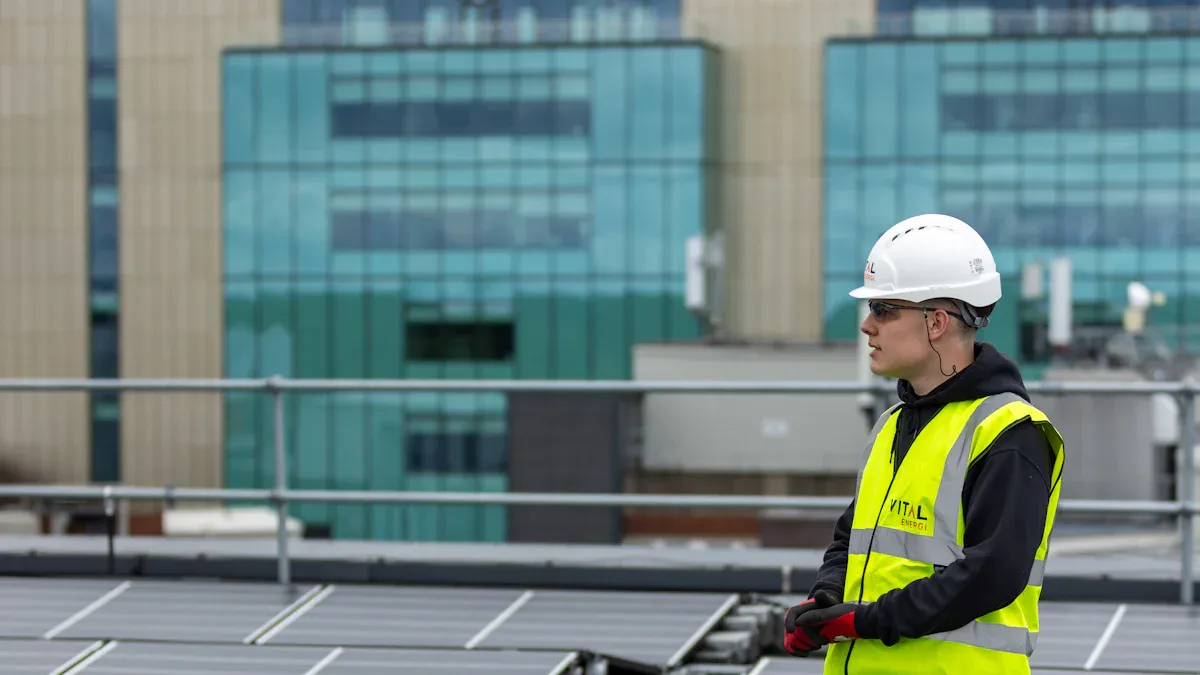
You notice a big change when you use a thermal imaging drone for solar panels. Solar operators can now find faults fast and with good accuracy. This helps keep the solar plants working well. Five years ago, only large companies used thermal imaging drones for solar panels. Now, many people in the solar industry use them. The price for thermal imaging drones for solar panels has gone down by 60%. You can get great results without spending a lot of money. Old ways of checking solar panels take lots of time and hard work. You have to pay more for workers, worry about safety, and it is hard to find faults in big solar fields. With a thermal imaging drone for solar panels, you fix these problems and protect your solar investment.
Key Takeaways
Thermal imaging drones make inspections much faster. Checks take hours, not days. This helps workers do their jobs better.
Drones find more faults than people do. They spot almost all defects. Manual checks miss many problems.
Using drones costs less money for labor. It saves about 45% of the cost. This makes checking solar panels cheaper.
Drones help keep workers safe. Workers stay away from dangerous places. This lowers the chance of accidents.
Regular drone checks find faults early. This stops expensive repairs. Solar plants work better and last longer.
Challenges of Traditional Solar Plant Maintenance
Labor-Intensive and Time-Consuming Processes
Manual solar inspections are hard and take a long time. Workers have to walk through big solar fields. They check each panel by hand. This uses up a lot of energy and time. There are not enough skilled workers for these jobs. It is tough to do regular solar inspections. You need to spend more money on hiring and training workers. Costs keep going up every year. A survey by GTM Research says most solar maintenance workers want to lower costs. You also need to learn new technology. It is important to find better ways to handle data for preventive maintenance.
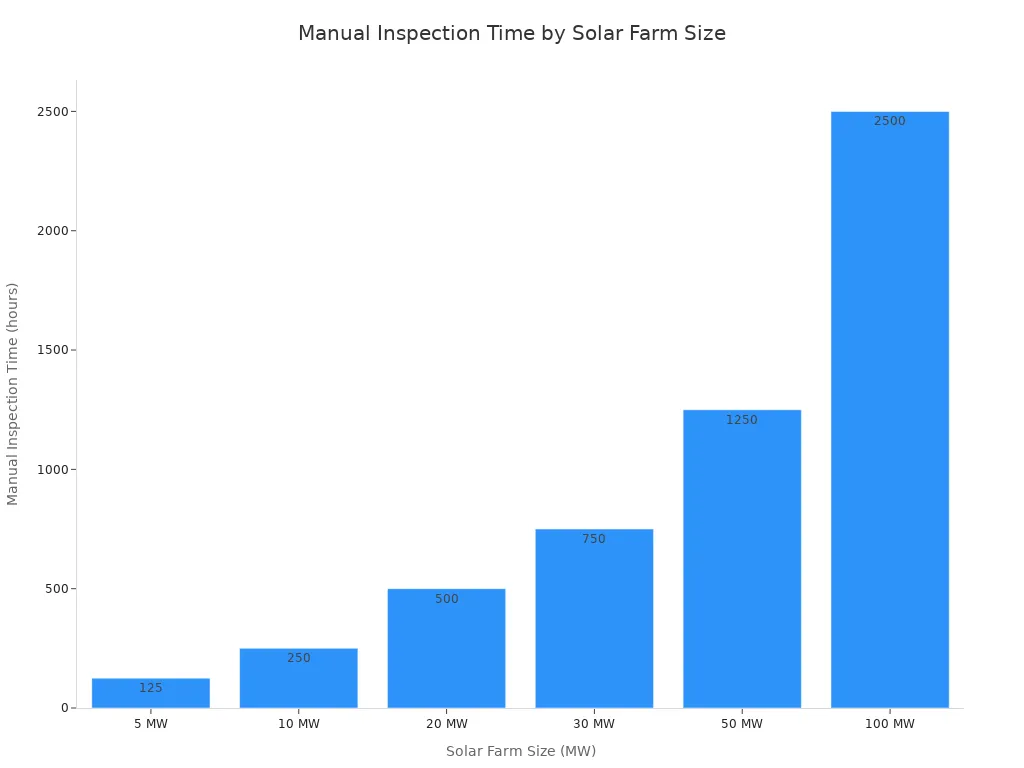
Here is a table that compares how long manual and drone inspections take:
Solar Farm Size | Manual Inspection Time | Drone Inspection Time |
|---|---|---|
5 MW | 125 hours (5 days) | 0.5-1.0 hours |
10 MW | 250 hours (10 days) | 1-2 hours |
20 MW | 500 hours (20 days) | 2-4 hours |
30 MW | 750 hours (30 days) | 3-6 hours |
50 MW | 1,250 hours (50 days) | 5-10 hours |
100 MW | 2,500 hours (100 days) | 10-20 hours |
Limited Fault Detection Accuracy
Manual solar inspections can miss small faults. You might not see problems early with just your eyes. Some faults, like microcracks or hotspots, need special sensors. Humidity sensors can find water that causes rust. Acoustic sensors help find tiny cracks. Electroluminescence can show hidden problems in solar cells. Soiling sensors check for dirt, and temperature gradient sensors find hotspots. Without these tools, you might miss faults that hurt your solar plant. Inspections are important to stop breakdowns and keep your system working well.
Safety Risks for Inspection Personnel
Manual solar inspections can be dangerous for workers. Sometimes, you need to climb high places or walk on rough ground. Heat, sharp edges, and electricity make it risky. Long inspections mean more time in danger. You might need to shut down parts of your solar plant for safety. This can cause problems with how the plant works. You want to keep your team safe and stop accidents. Regular inspections matter, but you need safer ways to work and less downtime.
Common challenges in traditional solar inspections:
Not enough skilled workers
Costs keep rising
Keeping up with new technology
Need for better data and preventive maintenance
Thermal Imaging Drone Fault Detection
How Thermal Imaging Drones Work
Drones help you check solar panels for problems. They use cameras to take normal and infrared pictures. The infrared camera shows where panels are hotter. Hot spots mean there might be a fault. You can see these spots in the thermal images. Your eyes cannot always see these problems. Using both types of images helps you find broken cells or wiring issues early. Thermal imaging and solar panel defect detection work together. You get a clear view of your solar plant’s health.
Thermal imaging drones have sensors that measure tiny temperature changes. You can find faults even if the temperature difference is small. This makes inspections more accurate. You can fix problems before they get worse. Drones check every panel quickly. You do not miss hidden faults.
Tip: Use both regular and infrared images when you inspect. This helps you find every problem in your solar panels.
Faults Detected in Solar Panels
Drones for solar panel inspections can find many faults. Here are some common problems you can detect:
Hot spots: Some cells get much hotter than others. This can happen from shading, dirt, or defects inside the panel.
Potential Induced Degradation (PID): This causes big power losses. You see it as strange temperature patterns on the panels.
String open circuits: If a group of panels stops working, you see a warm area in the thermal image. This can mean a blown fuse or broken wire.
Bypass diode failures: These safety parts can fail. You will see odd heat patterns.
Microcracks and snail trails: Small cracks or marks can become bigger problems. They show up as faint lines or spots in the thermal image.
Delamination and back sheet degradation: If layers inside the panel separate, you see uneven heat.
Soiling effects: Dirt or bird droppings make some parts hotter. You can spot these with thermal images.
Thermal imaging drones are great at finding early faults. You can catch hot spots and diode failures before they cause big damage. Some problems, like PID or corrosion, are harder to see. Regular inspections help you track changes over time. Drones let you check every panel in large solar plants. You do not miss any faults.
Benefits Over Manual Inspections
Using drones for solar panel inspections has many benefits. Drones save time and money. You do not need workers to walk through the whole solar field. This lowers labor costs and keeps your team safe.
Here are some key advantages:
Drones for solar panel inspections finish much faster than manual checks. For example, inspecting a 20 MW solar plant takes only 2-4 hours with drones. Manual inspections take 500 hours.
Drones do inspections up to 400% faster. You can check a big solar farm in one day. Manual inspections might take months.
Drones for solar panel inspections lower costs by about 45% compared to handheld tools.
You get better results. Drones find about 98.5% of defects. Manual inspections only find 70% to 80%.
Drones can check every panel, even in hard-to-reach places. You do not miss hidden faults.
You improve safety. Your team spends less time in risky areas. You do not need to shut down the plant for long.
Method | Inspection Time | Detection Accuracy |
|---|---|---|
Drones for solar panel inspections | 2-4 hours (20 MW) | 98.5% |
Manual Inspections | 500 hours (20 days) | 70-80% |
Drones for solar panel inspections help meet today’s solar industry needs. You can do regular checks, find faults early, and keep your solar plant working well. This helps you avoid expensive repairs and power losses. You also make inspections safer and more efficient.
Drones for Solar Panel Inspections: Technology and Workflow
Flight Planning and Data Capture
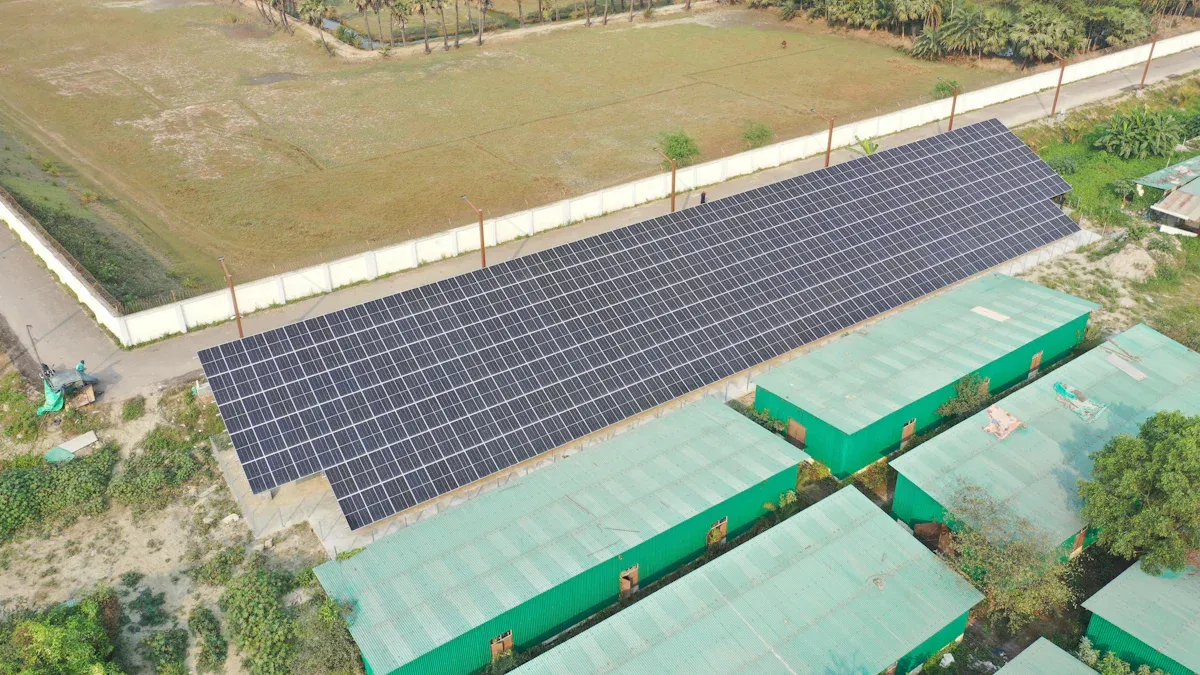
You begin by making a plan for the drone flight. Good planning helps you get better results. You look at the map of the solar site and set safe areas. You check the weather and pick a sunny day with little wind. The best time is when the sun is strong, between 10 AM and 2 PM. You use a grid pattern for flying and set the right height for the drone. This makes sure you see every panel and get pictures that overlap.
Best Practice Category | Details |
|---|---|
Minimum 600 W/m² solar irradiance, peak hours, clear skies | |
Weather Conditions | Wind below 10 m/s, low humidity, little rain |
Pre-Flight Planning Requirements | Site layout, safety zones, rules, equipment check |
Flight Pattern Optimization | Grid patterns, overlap images, adjust altitude and speed |
Data Verification and Upload | Check data in the field, 80/20 overlap, upload for review |
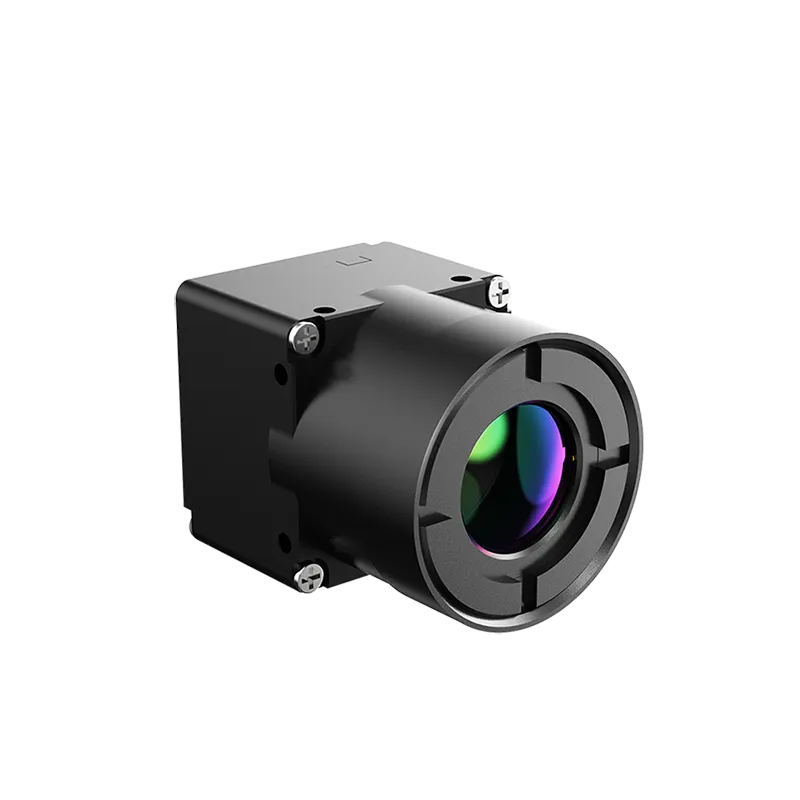
You use commercial thermal drones with special sensors for aerial thermography. The TL640 Uncooled Infrared Module by Verytek works well on infrared drones. It scans big solar fields fast and finds hot spots with its 640×512 resolution. You do not need to touch the panels, so you stay safe. You get clear pictures, even when it is hard to see, and you can find every fault for later repairs.
Thermography Standards in Solar Inspections
You follow rules for aerial thermography from around the world. The IEC 62446-3:2017 standard tells you how to do solar inspections with drones. This rule helps you get good and repeatable results. It explains how to find hot spots and measure heat. You need the right tools and trained people for careful checks.
Aspect | Details |
|---|---|
Standard Name | IEC 62446-3:2017 |
Applicable Use | Thermal inspections of photovoltaic systems using drones |
Inspection Types | Simplified and Detailed |
Simplified Inspection | Finds energy patterns and hot/cold spots |
Detailed Inspection | Needs temperature readings and skilled thermographers |
Equipment Requirements | Listed in the standard |
Personnel Training | Defined for quality inspections |
You use commercial thermal drones and infrared drones to follow these rules. The TL640 module gives you good data for both simple and careful checks.
Data Analysis and Reporting
After you collect thermal data from the air, you look at the results. You use software to put the pictures together into a map of your solar plant. AI tools help you find hot spots, string outages, and other problems. Each problem gets a GPS spot, a panel number, and a score for how bad it is. You make reports that show where to fix things.
Step | Description |
|---|---|
Orthomosaic Stitching | Makes a map from thermal images, links panels to GPS |
AI-Driven Segmentation | Finds hot spots and outages automatically |
Geo-Referenced Report | Lists faults by panel, shows location and images |
Maintenance Ticketing | Helps teams plan repairs and follow-up scans |
You use commercial thermal drones and infrared drones to get fast and correct results. The TL640 module helps you find problems early and plan repairs before things get worse. You save time, spend less money, and keep your solar plant working well.
Key Benefits of Drones for Solar
Speed and Coverage in Solar Inspections
You want your solar panel inspections to be fast and complete. Drones for solar help you do this. Drones reduce inspection time by scanning large solar fields in a short period. You can cover up to 10 MW of panels in just one hour with drones. Manual inspections only cover 0.1 MW per hour. This means you finish your inspections much faster and do not miss any panels.
Method | Area Covered per Hour |
|---|---|
Drone Inspections | 10 MW |
Manual Inspections | 0.1 MW |
Drones give you high-resolution images and thermal data. You can find faults in minutes instead of days. Automated flight paths make sure you check every panel. You get a full report of your solar plant’s health without walking through the whole site.
Cost Savings and ROI
Switching to drones for solar panel inspections saves you money. You spend less on labor and get better results. On average, you save about $1,717 for every megawatt you inspect with drones. Over five years, a 100 MW solar field can save more than $19,000 in labor costs if you do two inspections each year. Drones also help you avoid losing money from underperforming panels. In 2022, solar operators lost about $3,350 per MW because of missed faults. Regular drone inspections help you catch problems early and keep your solar plant running well.
Drones increase efficiency by 97% compared to manual methods.
Cost savings range from $1,074 to $1,717 per MW, with an average of $1,254 per MW.
Safety and Compliance
You want your team to stay safe during solar panel inspections. Drones keep people away from dangerous areas like high places or hot panels. You do not need to send workers into risky spots. This reduces accidents and keeps everyone safe.
Drones also help you follow important rules. The IEC 62446-1:2016 standard covers electrical testing for solar systems. The IEC 62446-3:2017 standard explains how to do thermal inspections. These rules make sure your inspections are safe and your data is correct. When you use drones for solar, you meet these standards and protect your investment.
Note: Drones can reach places that are hard or unsafe for people. You get a complete inspection without putting anyone at risk.
Best Practices for Solar Panel Inspections with Drones
Pre-Inspection Planning
You need to plan before every solar inspection. Good planning helps you get the right results and keeps everyone safe. Here are some steps for drone inspections:
Make a flight plan. Draw a map of the solar site and pick where the drone will go.
Set how high and fast the drone will fly. This helps you get clear pictures of each panel.
Look at the weather. Choose a day with sun and little wind for the best images.
Check safety zones and local rules. Always follow the rules for drone inspection services.
Look over your equipment. Make sure batteries are full and settings are correct before starting.
Tip: Planning well helps you avoid mistakes and finish inspections faster.
On-Site Execution
When you get to the solar site, follow these steps for a good inspection:
Look at the site. Measure how big it is and see if there are any special needs.
Set up your equipment. Pick the right temperature range and emissivity for good thermal readings.
Plan your flight path. Use a grid so you see every panel without missing spots.
Check everything before flying. Make sure the drone works and all systems are ready.
Pick the best time and weather. This helps you get clear pictures.
Use drones to take both thermal and RGB pictures. Save the pictures with location data for later.
Use software to look at the pictures. Find hot spots, broken panels, and other problems fast.
Actionable Reporting and Follow-Up
After you finish, turn what you found into easy reports. Good reports help you fix problems and plan for the future.
Use tools like MapperX to make simple reports. Show where the hot spots are and which panels have problems.
Figure out how well the panels work. Find weak spots and guess how much power is lost.
Make sure your reports follow world rules for solar inspections.
Add QR codes and maps you can click. These help workers find and fix problems quickly.
Keep old reports. Watch for changes and plan more checks to stop new problems.
Note: Good reports help you make smart choices and keep your solar plant working well.
You can make solar inspections better by using thermal imaging drones. These drones help you find faults early. They scan big solar fields fast. Your team stays safe when using drones. Here are the main benefits:
Advantage | Explanation |
|---|---|
Solar Panel Efficiency | Finds panels that do not work well, so they run their best. |
Heat Signature Detection | Spots heat changes that show electrical faults or damage. |
Early Detection of Failures | Stops bigger problems by finding issues early. |
Quick Scanning of Large Areas | Makes it easy to check big solar sites often. |
Pinpointing Problematic Panels | Repairs only where needed, so you save money and time. |
When you pick a drone or thermal module for solar inspections, follow these steps:
Check panels when the sun is bright and wind is low.
Use trained people for solar inspections.
Take both thermal and regular pictures for clear reports.
You can keep your solar panels safe and make inspections faster, safer, and cheaper.
FAQ
How do thermal imaging drones improve solar panel inspections?
You use thermal imaging drones to scan solar panels quickly. Drones help you find faults that are hard to see with your eyes. You get fast results and keep your team safe during solar inspections.
What faults can drones detect in solar plants?
Drones spot hot spots, broken cells, and wiring issues in solar panels. You can also find dirt, cracks, and other problems that lower solar power output. Drones help you catch faults early.
Why should you choose drones over manual solar inspections?
You save time and money with drones. Drones cover large solar fields fast and reduce labor costs. You avoid safety risks from climbing or working in hot areas. Drones make regular inspections easier.
How often should you inspect solar panels with drones?
You should inspect solar panels at least twice a year. Regular checks help you find faults early and keep your solar plant working well. Preventive maintenance stops big problems before they start.
What equipment do you need for drone-based solar inspections?
You need a drone with a thermal camera, like the TL640 module. You also need mapping software and a flight plan. Good equipment helps you get clear images and accurate results.
See Also
Using Vanadium Oxide Thermal Cameras for Effective Rescue Operations
Guide to Utilizing Thermal Imaging Cameras for Rescue Missions in 2025
The Importance of Thermal Imaging Cameras in 2025
Solutions for Android Auto Disconnections in Land Rover Cars