
SWaP-C thermal camera modules help drones overcome major barriers in commercial inspection and search operations. Many industries seek compact, lightweight, and power-efficient solutions as demand rises for small UAVs that deliver high-quality imaging and longer flight times. The ongoing advancement in sensor technology and the need for robust performance in tough environments make the Thermal Camera Module essential for reliable aerial missions. Brands such as verytek, with their innovative VN2 series, set new standards in SWaP-C optimization and operational efficiency.
Key Takeaways
SWaP-C stands for Size, Weight, Power, and Cost. Optimizing these factors enhances drone performance and extends flight time.
Choosing lightweight thermal camera modules, like the verytek VN2 series, can increase UAV endurance by up to 20%, allowing for longer missions.
High-resolution imaging from the VN2 series improves detection capabilities in inspections and search operations, leading to better decision-making.
The VN2 series offers integration flexibility, enabling quick changes between different payloads for various missions without complex setups.
Investing in SWaP-C optimized modules ensures drones achieve greater operational efficiency, enhancing mission success across diverse applications.
SWaP-C and Drone Payload Optimization
What is SWaP-C?
SWaP-C stands for Size, Weight, Power, and Cost. These four factors play a critical role in the design and operation of drones and their payloads. Each component directly impacts how commercial drones perform in real-world missions.
Size: This refers to the physical dimensions of both the drone and its payload. Smaller modules allow for more streamlined designs and easier integration.
Weight: Lower weight means drones can carry more equipment or fly longer without sacrificing stability.
Power: Efficient power systems and advanced planar magnetics reduce energy consumption, which helps extend battery life.
Cost: Every design choice affects the overall cost, so balancing performance with budget remains essential.
Note: SWaP-C optimization has become a top priority for engineers who want to maximize drone endurance and mission success.
Why SWaP-C Matters for Drone Payloads
Optimizing SWaP-C gives drones a significant advantage in the field. When payloads weigh less, drones maintain better stability and maneuverability. Heavier payloads often require more powerful motors and larger propellers, which can drain energy quickly and shorten flight times. By focusing on lightweight and efficient payloads, operators can increase endurance and cover larger areas during a single mission.
Lightweight payloads help maintain flight stability.
Lower weight reduces the demand on power systems and battery.
Efficient planar magnetics and advanced magnetics technology conserve energy, supporting longer flights.
High-efficiency components, such as power amplifiers, improve communication without draining the battery.
Many UAVs rely on SWaP-C principles to achieve operational flexibility. For example, a thermal camera module with optimized SWaP-C allows commercial drones to switch between inspection, search, and survey missions without hardware changes. This flexibility saves time and resources, making SWaP-C a key driver for innovation in the drone industry.
Evaluations from industry experts highlight that SWaP-C optimization leads to longer flight times and greater payload versatility. Operators consistently report improved mission outcomes when they choose payloads designed with SWaP-C in mind.
Thermal Camera Module Features for UAVs
Compact Design and Lightweight Build
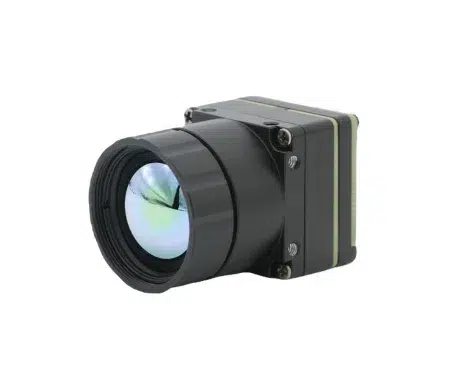
Thermal camera module selection plays a critical role in drone performance. Many commercial drones face challenges with overweight cores that limit flight time and reduce payload flexibility. The verytek VN2 640/384/256/ LWIR thermal camera module addresses these issues with a compact, lightweight design. The module weighs significantly less than typical industry models, which often range from 325g to 640g. The VN2 series, with its bare PCB option, can weigh under 10 grams, making it one of the lightest choices for UAV integration.
This reduction in weight allows drones to carry additional sensors or extend their operational range. Users report that the VN2 series enables longer missions without sacrificing stability or maneuverability. The compact size also simplifies integration, especially for UAVs with strict SWaP-C requirements. According to a recent study in the Journal of Field Robotics, minimizing payload weight directly improves drone endurance and mission success .
Power Efficiency and Flight Time Benefits
Power efficiency remains a top concern for UAV operators. Many users express frustration with thermal camera modules that drain battery life quickly, forcing early mission termination. The VN2 series addresses this pain point with a typical power consumption of less than 0.7W. This low draw means more battery capacity is available for propulsion and other power systems, directly extending flight time.
Uncooled thermal sensors, like those in the VN2 series, consume less energy and weigh less than cooled alternatives. This efficiency allows drones to operate longer, even when carrying multiple payloads. Operators have noted that switching to the VN2 module increased their UAV endurance by up to 20%. The module’s design, which eliminates bulky housings and optimizes planar magnetics, further reduces weight and energy consumption. These improvements support longer surveillance, inspection, and search missions—key needs for commercial drones in urban air mobility and industrial applications.
Advanced camera modules under 100 grams and consuming less than 3W enable longer UAV flight times.
Optimized optics and sensors for SWaP-C efficiency reduce battery size requirements.
Lower power consumption allows UAVs to carry additional payloads or extend mission duration.
Lightweight, low-power thermal modules enable longer UAV operational periods in missions such as search and rescue and inspections.
High-Resolution Imaging for Drones
High-resolution imaging is essential for detecting small thermal anomalies at high altitudes. Many operators struggle with blurry images from older or lower-resolution thermal camera modules, especially during critical inspections or search and rescue operations. The verytek VN2 series offers multiple resolutions—640×512, 384×288, and 256×192—using a 12μm WLP package detector and a second-generation infrared ISP chip. This technology delivers clear, detailed images, even in challenging environments.
Application Area | Benefits of High-Resolution Imaging |
|---|---|
Agricultural Inspections | Supports precise pest and disease detection, crop stress monitoring, and yield estimation by capturing fine-scale anomalies. |
Engineering Surveying | Allows for millimeter-level modeling and damage assessment, improving accuracy and efficiency over traditional methods. |
Search and Rescue (SAR) | Enhances environmental mapping, obstacle detection, and victim localization, especially in low-visibility environments. |
Thermal Imaging in SAR | Detects body heat in disaster areas, aiding in the rapid location of missing persons. |
The VN2’s shutter-less algorithm ensures smooth, stutter-free imaging, which is vital for real-time monitoring. Users consistently praise the module’s ability to deliver sharp images that reveal heat signatures and structural details, even from high altitudes. This clarity supports faster, more accurate decision-making in the field.
Integration Flexibility with Payloads
Integration flexibility remains a top priority for UAV manufacturers and operators. Many thermal camera modules present challenges with limited interfaces or complex installation requirements. The verytek VN2 series solves these issues by supporting multiple digital interfaces and offering a modular design. This flexibility allows seamless integration with a wide range of intelligent processing platforms, including those used in AI, robotics, and urban air mobility.
Feedback from system integrators highlights the VN2’s ease of installation and compatibility with advanced planar magnetics and magnetics-based systems. The module’s robust design ensures reliable operation across a wide temperature range, from -40℃ to +80℃. This durability meets the demands of both industrial and commercial drones operating in harsh environments.
The VN2 series stands out for its combination of lightweight construction, low power consumption, high-resolution imaging, and integration flexibility. These features address common user pain points and support the evolving needs of UAV applications. As noted in the IEEE Transactions on Aerospace and Electronic Systems, SWaP-C optimization remains a critical factor in advancing UAV payload technology (source).
Tip: Choosing a thermal camera module with advanced SWaP-C features, like the verytek VN2 series, ensures drones achieve longer flight time, greater payload versatility, and superior mission outcomes.
Enhancing UAV Operations with SWaP-C Modules
Maximizing Flight Time
Operators of commercial drones consistently seek ways to extend flight time and improve mission outcomes. SWaP-C modules, such as the verytek VN2 series, play a pivotal role in achieving these goals. The drive for SWaP-C reductions in thermal imaging technology has led to smaller, lighter, and more efficient camera modules. These advancements allow drones to carry less weight and consume less energy, which directly translates to longer flight durations.
The VN2 series leverages advanced planar magnetics and high power density to minimize energy loss. This design reduces the demand on battery and power systems, enabling UAVs to remain airborne for extended periods. Users report that missions previously limited by battery constraints now benefit from up to 20% longer flight time when equipped with SWaP-C optimized modules. The integration of digital readout integrated circuits with built-in analog-to-digital converters eliminates the need for bulky cooling systems, further decreasing size and power consumption. These improvements ensure reliable operation in challenging environments, which is crucial for extended endurance missions.
Operators have noted that the VN2 series allows for more efficient use of energy, supporting longer surveillance and inspection tasks without sacrificing image quality or operational reliability.
Payload Versatility for Diverse Missions
SWaP-C modules provide unmatched flexibility for drones tasked with a variety of missions. The lightweight and compact design of the VN2 series enables operators to switch payloads quickly, adapting to different operational needs. This versatility proves essential for commercial drones that must perform inspections, search and rescue, and industrial surveys within a single deployment.
The SwitchBlade-Elite, designed for firefighting and rescue, uses a high-resolution thermal camera to deliver critical visuals in emergencies.
The Yuneec Typhoon H520E-RTK features hot-swappable payloads and dual thermal and RGB cameras, making it suitable for both safety operations and infrastructure inspections.
The VN2 series supports multiple digital interfaces and modular integration, allowing seamless compatibility with advanced magnetics-based systems. Users appreciate the ability to add or change sensors without complex reconfiguration. This adaptability enhances mission capabilities and reduces downtime between tasks. Feedback from field teams highlights the value of SWaP-C modules in supporting urban air mobility and industrial applications, where rapid response and flexible payload options are essential.
Real-World Applications in Drone Inspections
Drones equipped with SWaP-C thermal camera modules have transformed inspection workflows across industries. In solar panel and power grid inspections, the VN2 series detects heat anomalies and electrical faults with high-resolution imaging. Operators can identify issues quickly, reducing maintenance costs and preventing energy loss. The lightweight module ensures that drones cover larger areas in a single flight, maximizing operational efficiency.
Search and rescue teams rely on the VN2 series for its ability to detect body heat in disaster zones. The module’s shutter-less algorithm provides smooth, real-time visuals, which are critical for locating missing persons in low-visibility conditions. Industrial surveyors use the VN2 to assess infrastructure integrity, leveraging its high-resolution imaging and robust planar magnetics for accurate data collection.
A recent case study compared mission outcomes for two UAV teams—one using traditional thermal cameras and the other equipped with SWaP-C optimized modules. The team with the VN2 series completed 30% more inspection points per flight and reported fewer battery-related interruptions. User evaluations consistently highlight improved flight time, greater payload versatility, and enhanced mission capabilities when deploying SWaP-C modules.
Field engineers emphasize that the VN2 series addresses key pain points, including limited endurance and integration challenges, by delivering reliable performance and flexible payload options.
The adoption of SWaP-C thermal camera modules like the verytek VN2 series continues to set new standards for operational efficiency and mission success in the UAV industry.
Choosing the Right Thermal Camera Module
Essential Features for Drone Payloads
Selecting the right thermal camera module for drones requires careful evaluation of several critical features. Operators often look for modules that maximize payload capacity while maintaining a high power-to-weight ratio. The following features stand out as essential for optimal performance:
Field of view (FOV): A wide FOV allows drones to capture more area in a single flight, improving inspection efficiency.
Weather resistance: Modules with strong ingress protection ratings withstand harsh environments, reducing operational costs.
Spectral band: The ability to detect a broad electromagnetic range ensures accurate thermal imaging in diverse conditions.
Thermal sensitivity: High sensitivity enables the detection of subtle temperature differences, which is vital for energy audits and maintenance.
Image resolution: High pixel counts deliver detailed images, supporting precise analysis in military and aerospace applications.
Low latency: Real-time data transmission is crucial for unmanned aerial vehicles during search and rescue or industrial inspection.
SWaP-C optimization: Lightweight and efficient modules preserve flight time and enhance the power chain.
Feedback from field engineers highlights the value of dual camera payload options and user-customized isothermal settings. Next-generation thermal imaging software further improves image interpretation, making these modules suitable for both commercial and military and aerospace applications.
Integration and Reliability Considerations
Successful integration of a thermal camera module into UAVs depends on robust design and reliable performance. Operators should assess how well the module fits with existing power electronics and magnetics in drone power systems. The VN2 series from verytek excels in this area, offering seamless compatibility with advanced magnetics and power module architectures.
Factor | Description |
|---|---|
Effective methods for gathering thermal data, ensuring accurate inspections and maintenance. | |
Palette Bias | The choice of pseudo-color palettes can impact the reliability of thermal imaging results. |
Data Processing Challenges | Efficient handling of large volumes of thermal and RGB data is essential for timely analysis. |
Corrosion Detection | Early identification of material degradation supports proactive maintenance strategies. |
Non-invasive Assessment | UAVs equipped with thermal imaging and deep learning enable efficient, non-destructive testing. |
Operators report that modules with low power consumption and high thermal resistance maintain stable operation across a wide temperature range. The VN2 series demonstrates strong reliability, even in demanding environments, due to its robust magnetics and efficient power conversion. This reliability reduces downtime and supports consistent mission success. Evaluations from industry users confirm that choosing a module with strong integration capabilities and proven reliability leads to better outcomes in both routine and critical missions.
Tip: Prioritize modules that offer SWaP-C efficiency, robust magnetics, and seamless integration with your drone’s power chain to maximize operational effectiveness.
SWaP-C thermal camera modules deliver clear advantages for drones by extending flight time, increasing payload flexibility, and improving mission outcomes. Users highlight that these modules are smaller, lighter, and more affordable than traditional options, while advanced image processing enhances navigation in challenging conditions.
The verytek VN2 series stands out for enabling real-time data transmission and modular payloads, which boost operational efficiency and mission success for uavs.
Future Trend | Industry Direction |
|---|---|
Miniaturization of power and charging systems | More efficient, compact UAV solutions |
Broader adoption and safer BVLOS operations |
SWaP-C technology will continue to shape the future of aerial operations, driving innovation and expanding the capabilities of next-generation UAV platforms.
FAQ
How can operators extend drone endurance with SWaP-C thermal camera modules?
Operators report that lightweight modules like the verytek VN2 series reduce power consumption. This design allows drones to fly longer. Many users see up to 20% more flight time after switching to SWaP-C optimized modules.
What makes the VN2 series ideal for high-altitude thermal imaging?
The VN2 series uses advanced 12μm detectors and a second-generation ISP chip. Users praise the module for delivering clear, detailed images at high altitudes. The shutter-less algorithm ensures smooth, real-time visuals.
Can the VN2 thermal camera module handle harsh environments?
Field engineers confirm that the VN2 series operates reliably from -40℃ to +80℃. The robust design withstands tough conditions. Many teams choose this module for industrial and outdoor missions.
How does the VN2 series simplify integration with different UAV platforms?
The VN2 series supports multiple digital interfaces. Integrators highlight the module’s plug-and-play compatibility. This flexibility reduces setup time and supports a wide range of intelligent processing platforms.
What feedback do users give about the VN2’s power efficiency?
Users consistently note the VN2’s low power draw—less than 0.7W. This efficiency means drones can carry more sensors or extend mission duration. Operators value the cost savings and improved operational performance.
See Also
Utilizing Vanadium Oxide Thermal Cameras for Effective Rescues
The Importance of Thermal Imaging Cameras in 2025
Effective Techniques for Using Thermal Cameras in 2025 Rescues