
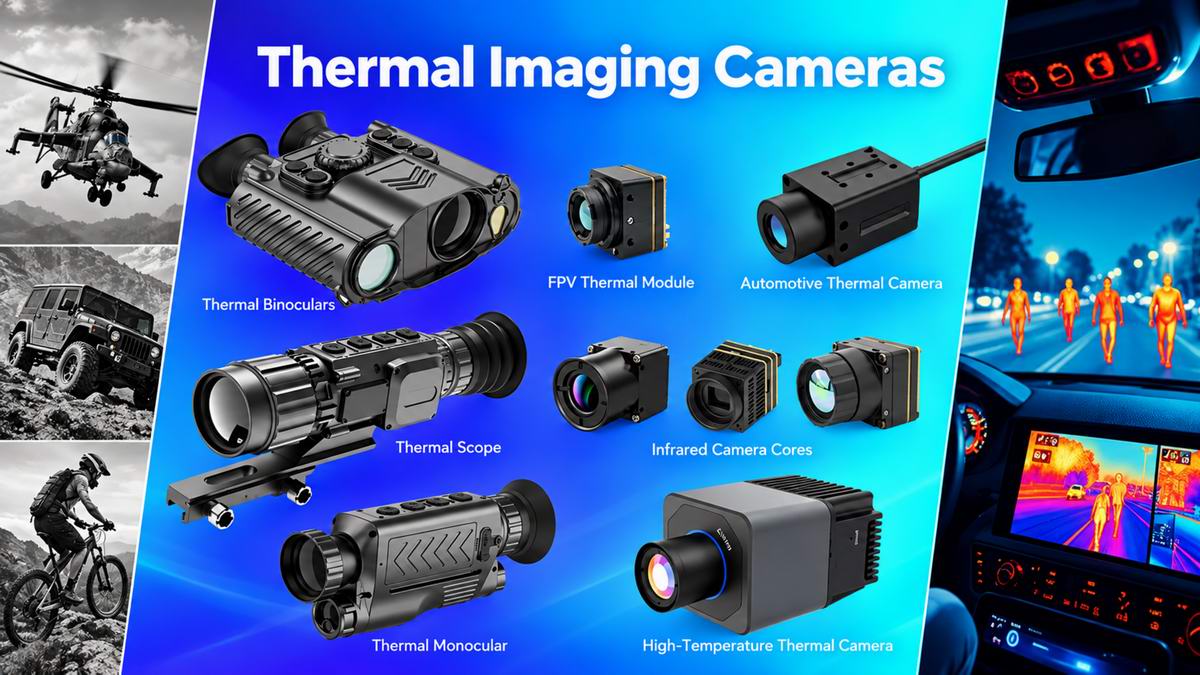
Teledyne FLIR, Lynred, Seek Thermal, Guide Infrared/Guide Sensmart, InfiRay, L3Harris, Leonardo DRS, Opgal, Honeywell, and VERYTEK lead the list of thermal imaging manufacturers for OEM projects. This comparison judges them on technical performance, application fit, regulatory compliance, and cost. Readers here face a common task: choosing a thermal core or thermal camera module to embed in their own product. That decision depends on project constraints, not on a single best brand. A car thermal camera program, a Security & Night Vision build, and a handheld device each call for different trade-offs. So the question “What are the best thermal imaging manufacturers?” has no single answer. The right supplier is the one that matches your resolution, power, interface, and budget targets.
Key Takeaways
No single manufacturer is the best fit for every OEM project. Pick a supplier that fits your project’s resolution, power, interface, and budget.
Judge manufacturers by technical performance, application fit, regulatory compliance, and cost. These criteria matter more for OEM work than for buying off-the-shelf products.
Pick the thermal module that fits your exact use. For example, low-power designs need small cores, while tough industrial jobs need strong, lasting cases.
Always check export classifications and ask for compliance documents. Clear answers from a supplier help you qualify them faster.
More pixels is not always better. Think about power, data speed, and cost before you pick a bigger array.
How to Judge the Best Thermal Imaging Manufacturers
Evaluation Criteria
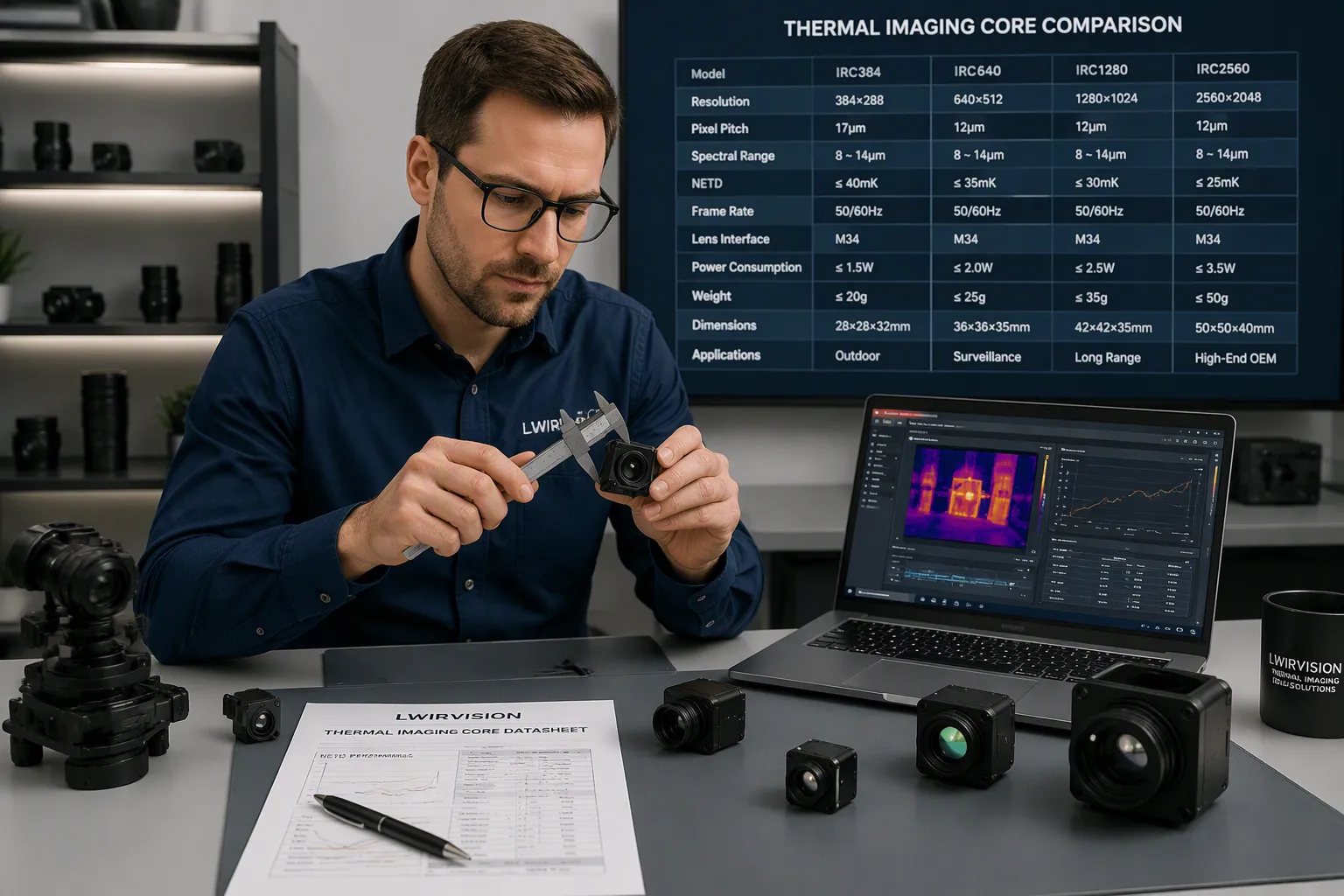
Technical performance covers resolution, thermal sensitivity (NETD), and frame rate. NETD deserves close attention. Teledyne FLIR advises integrators to compare NETD at the industry-standard 30 °C reference point. Lower mK values mean better sensitivity. Values below 30 mK rate as excellent, 40–49 mK as great, and 50–59 mK as good. A 1280×1024 array delivers over 1.31 million pixels, which suits perimeter surveillance and machine vision. A 640×512 core fits UAV gimbals and mobile robotics.
Application fit covers size, power draw, interface options, and ruggedness. A 21 mm × 21 mm core opens handheld and ADAS designs. A heavy-duty industrial enclosure serves substation monitoring instead. Interface choice matters too: Ethernet, ONVIF, RTSP, or analog outputs each shape the host architecture.
Regulatory compliance covers export controls such as ITAR and EAR, plus relevant certifications. OEM buyers ship finished products across borders. The export classification of the specific part therefore affects the whole program, not just the purchase order.
Cost covers unit price, development and NRE cost, and scalability at volume. OEM integration adds SDK work, tooling, and qualification testing. A low unit price can hide high engineering overhead. Volume pricing and long-term supply stability carry equal weight.
These criteria matter more for OEM work than for off-the-shelf buying. An integrator commits to a core for a product lifecycle. Changing suppliers later means redesigning hardware and firmware.
Comparison Table
Manufacturer | Technical Performance | Application Fit | Regulatory Compliance | Cost | Best Fit |
|---|---|---|---|---|---|
Teledyne FLIR | Broad core portfolio, strong NETD documentation | Wide interface and lens range | US export controls apply | Premium positioning | Established Western OEM programs |
Lynred | High-volume VOx detector supply | Compact cores for defense and commercial | European export framework | Mid-to-high | European defense and industrial |
Seek Thermal | Compact, low-power cores | Small handheld and mobile designs | US-based supply | Accessible entry pricing | Consumer and prosumer devices |
Guide Infrared | Full resolution range | Broad module selection | China-based export support | Competitive | Cost-sensitive volume programs |
InfiRay | Strong 640 and 1280 options | Compact modules, multiple interfaces | China-based export support | Competitive | UAV and security payloads |
L3Harris | Defense-grade performance | Ruggedized defense modules | ITAR-controlled | High | Defense prime programs |
Leonardo DRS | Defense-grade performance | Military-qualified hardware | ITAR-controlled | High | Defense and aerospace |
Opgal | Industrial and security cores | Rugged industrial housings | Israeli export framework | Mid-to-high | Industrial monitoring |
Honeywell | Sensing and sensor integration | Embedded sensing applications | US export controls apply | Mid-range | Embedded sensing systems |
VERYTEK | 1280×1024 and 640×512 module range | Compact modules, Ethernet and analog options | Export support provided | Competitive | OEM/ODM customization projects |
What Are the Best Thermal Imaging Manufacturers for OEM Integration?
Teledyne FLIR, Lynred, and Seek Thermal
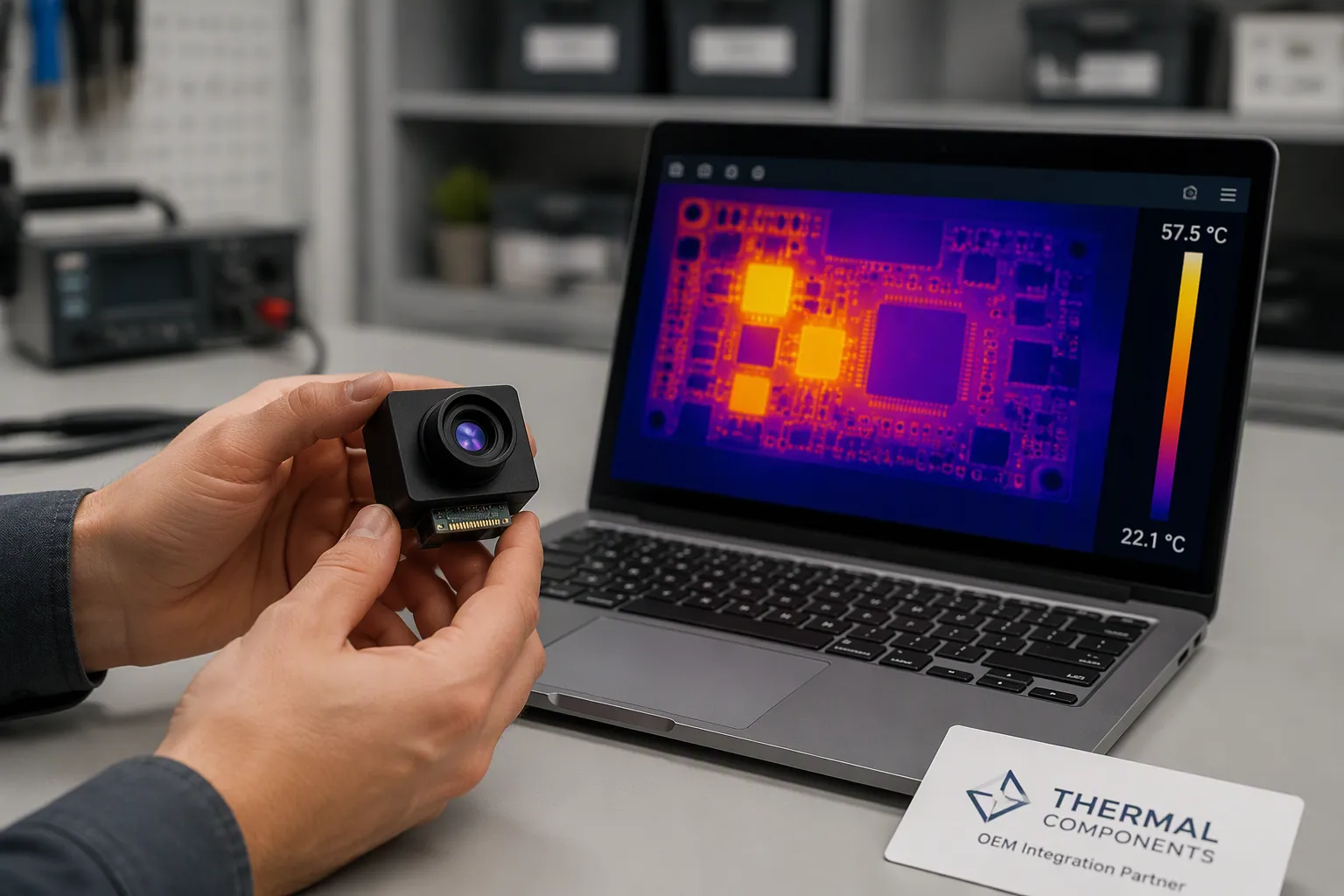
Teledyne FLIR sells OEM cores under the Teledyne FLIR name. FLIR is the brand, and Teledyne Technologies owns it. Buyers who source components sign contracts with Teledyne FLIR. The Lepton 3.5 gives 160×120 resolution, under 50 mK NETD, and SPI or I²C output. The Boson 320 gives 320×256 resolution, under 50 mK NETD, and USB or MIPI CSI-2 output. Handheld imagers, drones, and embedded sensing are common uses. US export controls apply. Pricing is at the premium end.
Lynred makes VOx detectors in high volume. The PICO 640 provides 640×512 resolution and under 30 mK NETD through MIPI CSI-2. European export rules control shipments. Defense and industrial programs make up the core market. Cost lands mid-to-high.
Seek Thermal aims at compact, low-power designs. The ShotPro OEM offers 320×240 resolution, under 70 mK NETD, and USB 2.0 output. Consumer and prosumer devices fit best. Supply is based in the US. Entry pricing is easy to reach. In this class of compact uncooled modules, power draw runs from under 500 mW at idle to about 1.5 W at full frame rate with image processing on.
Guide Infrared, InfiRay, L3Harris, Leonardo DRS, Opgal, and Honeywell
Guide Infrared covers a full resolution range with competitive pricing for volume programs. InfiRay offers strong 640 and 1280 options in compact modules for UAV and security payloads. L3Harris and Leonardo DRS build defense-grade, ITAR-controlled hardware for prime contractors. Opgal supplies rugged industrial and security cores under an Israeli export framework. Honeywell serves embedded sensing applications under US export rules.
VERYTEK is a China-based maker of thermal imaging, automotive electronics, and embedded hardware OEM solutions. The company offers OEM/ODM customization and export support for OEM brands, distributors, system integrators, and project customers. Its uncooled LWIR lineup covers 256×192, 384×288, 640×512, and higher resolutions, with options for imaging, temperature measurement, compact integration, low power, and varied output interfaces.
The UE12L pairs a 1280×1024 VOx detector with ONVIF, RTSP, and H.264/H.265 encoding, drawing no more than 2.5 W steady-state at 25 °C. The UVG6 packs a 640×512 core into a 17×17 mm body for handheld imagers and ADAS. The UVL12 adds analog and digital outputs, Ethernet, and auto-focus. The UVT makes the 640×512 smaller. The UVH pairs 1280×1024 imaging with a dedicated ASIC for cost-performance. The UVE network modules span three resolutions with TCP/IP, HTTP, and RTSP support. The UVS series provides complete thermal cores with rich interfaces. The UVB series improves SWaP at 384×288 and 640×512. The UVA adds temperature measurement and an open API. The UVR series, in 640×512, 384×288, and 256×192, uses a shutter-less design for UAV payloads. The TL640i and TL640T suit handheld and helmet-mounted devices, and the TL640T adds temperature measurement.
Typical applications include UAV payloads, industrial inspection, security monitoring, automotive night vision, and embedded vision systems. VERYTEK supports custom development and provides full technical documentation. OEM customers contact the company with their specific requirements.
Matching Thermal Imaging Manufacturers to Project Needs
Scenario Matching
High-resolution imaging programs need more pixels and longer detection range. Cooled MWIR systems reach 1280 × 1024 with a 10 µm pixel pitch. The Infiniti Optics 915CTZ-HD pairs that array with a 12X germanium zoom and a 55+ km detection range. The SPI/X26 gimbal offers the same 1280 × 1024 option with a 200–1200 mm athermalized zoom. Teledyne FLIR, Lynred, Guide Infrared, InfiRay, and VERYTEK also publish 1280-class uncooled modules. Defense and long-range surveillance programs favor the cooled options. Commercial integrators often choose uncooled 1280 cores instead.
Low-power embedded systems depend on small size and low current draw. Seek Thermal fits small handheld and mobile designs. VERYTEK’s UVG6 puts a 640×512 core in a 17×17 mm body, and the UVB series targets SWaP-constrained builds. The TL640i suits helmet-mounted devices. These modules keep the host battery small and the enclosure thin.
Rugged industrial deployment demands stable imaging in heat, vibration, and weather. Opgal supplies rugged industrial and security cores. Lynred serves European industrial programs. VERYTEK’s UVS and UVE series provide complete cores with rich interfaces for monitoring installations. Buyers here should weigh enclosure rating and lens protection as heavily as NETD.
Cost-sensitive high-volume products need predictable unit pricing and scalable supply. Guide Infrared and InfiRay compete hard on volume pricing. VERYTEK’s UVH pairs 1280×1024 imaging with a dedicated ASIC for cost-performance, and the UVR series covers 256×192 through 640×512 for UAV payloads. No single brand wins every scenario. The question “What are the best thermal imaging manufacturers?” resolves differently for each project.
Due Diligence Checklist
Interface and SDK support shape development time. Teledyne FLIR’s Thermal by FLIR program offers engineering support plus the FLIR Mobile SDK for iOS and Android apps. Its Boson accessory boards add MIPI, USB, and analog video options. One industry estimate puts the gain plainly:
“A module that adapts quickly to existing system architectures can shorten development time by 30–50%.”
Ask any supplier, VERYTEK included, these questions before signing:
Which interfaces does the module expose, and is a documented SDK or API provided?
How do minimum order quantities tie to production run sizes?
What are the quoted lead times, and what penalties apply for missed dates?
Is this specific part classified as military, dual-use, or strategic technology under export law?
Does ownership, re-export, or resale require government authorization?
What is the long-term availability commitment, including repair centers and spare parts?
Treat a datasheet or Certificate of Conformance as insufficient proof of lawful export. Request separate compliance documentation and provenance records. A supplier that answers all six questions clearly is easier to qualify, whichever brand name sits on the core.
If your work needs high resolution, look at Teledyne FLIR, Lynred, and VERYTEK’s 1280×1024 modules. For low-power embedded designs, Seek Thermal and VERYTEK’s UVG6 or UVB series are good fits. Rugged industrial jobs work well with Opgal and Lynred. If you need low cost at high volume, Guide Infrared, InfiRay, and VERYTEK’s UVH are strong choices. So what are the best thermal imaging manufacturers? The answer depends on your limits, not on a ranking. Pick two or three suppliers for your shortlist. Then score each one on performance, fit, compliance, and cost using your own goals. That step answers the question faster than any brand list.
FAQ
What does NETD tell me about a thermal module?
NETD shows how sensitive a thermal module is. Teledyne FLIR suggests comparing values at the 30 °C reference point. Lower millikelvin numbers mean finer detail in low-contrast scenes. Values below 30 mK count as excellent. A module with poor NETD looks noisy even when it has high resolution.
Can one thermal core serve both a UAV payload and a fixed security camera?
Rarely well. A UAV payload needs low weight, low power draw, and a shutter-less design like the UVR series. A fixed security camera works better with Ethernet, ONVIF, and RTSP support, which the UE12L and UVE series offer. Match the module to the host platform first.
How do export rules affect my choice of supplier?
Export classification follows the specific part, not the brand. ITAR-controlled defense modules from L3Harris and Leonardo DRS have strict transfer limits. Dual-use and commercial cores face lighter controls. Confirm the classification in writing before you commit to a design.
What should I request from a supplier before a design freeze?
Ask for the interface documentation, SDK or API details, minimum order quantities, quoted lead times, and a long-term availability commitment. Request the export classification of the exact part number. VERYTEK and every supplier on this list should answer these points before qualification begins.
Does higher resolution always improve an OEM product?
No. A 1280×1024 array gives you more pixels and a longer detection range. It also raises power draw, data throughput, and unit cost. A 640×512 or 384×288 core often serves handheld and embedded designs better. Start with the detection task, then size the array.