
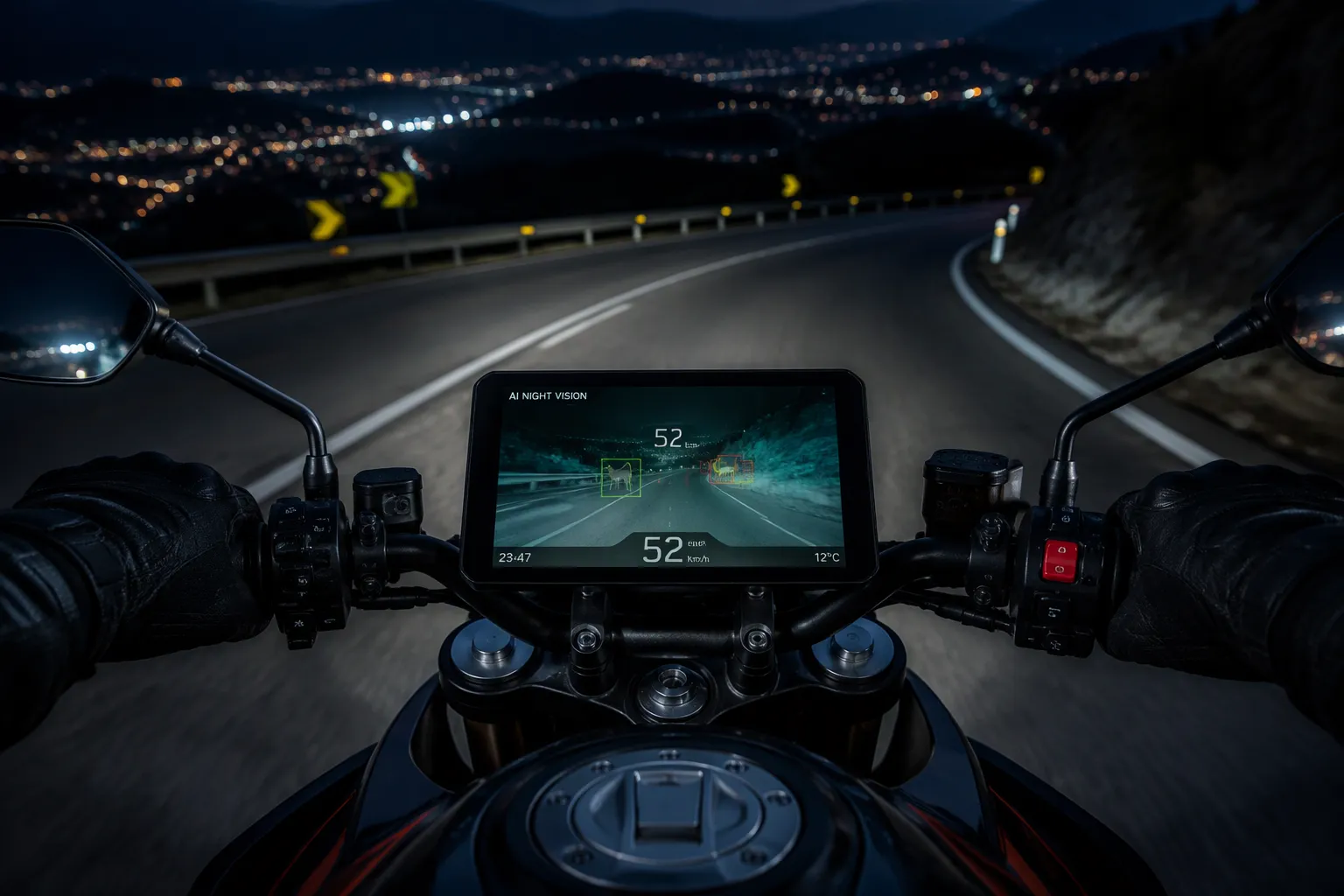
An AI motorcycle night vision system can mean several different product categories: a motorcycle-mounted camera system, a thermal or low-light imaging device, a helmet-mounted display, or software that highlights objects in a video stream. These categories are not interchangeable. Before comparing offers, define the intended riding scenario, mounting position, display method, and validation requirements.
Key Takeaways
• Start with the job to be done: hazard awareness, recording, navigation display, or engineering evaluation.
• Do not compare HUDs, intercoms, thermal devices, and motorcycle-mounted cameras as though they provide the same function.
• Ask for model-specific test evidence, interface documents, installation requirements, and region-specific compliance documentation before purchase.
• Treat AI alerts as rider assistance only. They do not replace safe riding practices, lighting, observation, or the rider’s judgment.
Define the System Category Before Comparing Offers
A buyer should first identify the system architecture. A motorcycle-mounted imaging system may use a forward-facing sensor and a separate display. A helmet-mounted product may focus on displaying navigation or camera information. A thermal device may detect temperature contrast, while a low-light camera depends on available illumination. An intercom improves communications but is not, by itself, a night-vision system.
This distinction prevents misleading comparisons. A supplier should state which sensor is used, where processing occurs, how alerts are presented, and which operating conditions have been tested. If a claim uses the word “AI,” ask what the function actually does: object classification, image enhancement, alert prioritization, or something else.
Buyer Evaluation Checklist
Use the following checklist before shortlisting a system:
1. Intended use: Define whether the system is for commuter riding, touring, off-road operation, fleet trials, or an OEM integration project.
2. Sensor and optics: Request the detector or camera type, resolution, lens field of view, frame rate, and performance limits under relevant lighting and weather conditions.
3. Detection evidence: Ask for dated test methods and results. The target type, distance, motion, weather, and acceptance criteria should be clear.
4. Installation: Confirm mounting location, vibration protection, power range, cable routing, environmental protection, and service access for the exact motorcycle platform.
5. Display and human factors: Check glare, distraction risk, fit, visibility with required protective equipment, and whether the rider can view information without obstructing the road.
6. Integration: For OEM or fleet projects, request interface documents, power budget, software-update process, diagnostics, and change-control information.
7. Compliance: Ask the supplier for current, product-specific documentation for the market where the system will be used. Do not assume an approval for a base helmet, camera, or accessory automatically covers the combined system.
Pilot Test Before a Larger Purchase
A small pilot is more useful than a generic product ranking. Test candidate systems on the motorcycle and routes that match the intended use. Document the mounting arrangement, rider feedback, image stability, display visibility, power behavior, weather exposure, and any false or missed alerts. Agree in advance on pass/fail criteria and retain the test record with the purchase decision.
For a procurement team, the pilot should also cover installation time, training needs, replacement parts, software support, and the supplier’s response process for faults. A system that looks promising in a demonstration may still be unsuitable if it cannot be mounted reliably or maintained in the target fleet.
Questions to Ask a Supplier
• What is the exact model and configuration being quoted?
• Which functions are sensor-based, and which functions are software-based?
• What test method supports each material performance claim?
• Which motorcycle platforms, mounting brackets, and power conditions have been validated?
• What documentation is available for installation, service, updates, and compliance?
• What limitations should riders and installers understand?
FAQ
What should I verify first?
Verify the exact product category and intended use. Then request the model-specific technical documents and test evidence needed for the application.
Does AI make a night vision system safer?
AI may provide an additional alert or image-processing function, but its performance depends on the sensor, software, installation, operating conditions, and validation. It should be treated as assistance, not as a guarantee of safety.
Can one system fit every motorcycle?
Not necessarily. Mounting space, vibration, power supply, display placement, wiring, and rider ergonomics vary by motorcycle. Validate the installation on the intended platform.
Conclusion
The right AI motorcycle night vision system is the one whose function, evidence, installation, and limitations match the intended application. Use a defined evaluation checklist and a documented pilot rather than an unsupported “best product” ranking.