
Thermal imaging drone infrastructure inspection changes how you think about safety, speed, and cost. Drones help you find problems fast and keep workers safe from danger. The table below shows how much drones make inspections better:
Metric | Impact |
|---|---|
Fault Detection Accuracy | 30% higher accuracy with AI-enhanced processing |
Inspection Time Reduction | Up to 25% reduction in inspection time |
False Alarms Reduction | 20% reduction in false alarms |
Field Operation Time | 50-60% reduction in field operation time |
Market Growth | Projected to reach USD 2.5 billion by 2028 |
Drone Integration | Over 70% of global enterprises using drones |
You get faster action, better information, and safer checks. The Verytek TL640 module helps this change with clear images, quick answers, and live data. You do not have to change everything—drones make your work easier.
Key Takeaways
Thermal imaging drones make inspections more accurate by 30%. They also make inspections faster by up to 25%. Using drones helps keep workers safe. Workers do not have to go to high places or near live wires. Drones give real-time data. This helps people make quick choices and find problems early. The TL640 module from Verytek gives clear thermal images. This makes inspections better. Using thermal drones can save a lot of money. There is less need for scaffolding and doing inspections again.
Challenges in Infrastructure Inspection
Traditional Methods and Limitations
Inspecting infrastructure with old methods is hard. Workers must climb tall towers or walk on bridges. Sometimes, they go into small spaces. These jobs take a lot of time and energy. You might need to turn off machines or close roads. This can stop people from doing their normal work. Manual checks use eyes and hand-held tools. It is easy to miss hidden problems. Small defects are hard to spot.
Traditional inspections often need more repairs and repeat visits. This makes the process slow and costly. Getting good data is tough in bad weather or at night. If you only use human judgment, you might miss tiny details. Missing these can cause bigger problems later.
Tip: Automated solutions like thermal imaging drones help you solve these problems. They give you fast, accurate, and safe inspections.
Safety and Data Issues
Safety is a big worry when checking infrastructure. Workers can get hurt by falling, electricity, or weak structures. You want your team to stay safe. Manual checks can put them in danger. Good data helps you make smart choices. Bad weather, glare, or poor light can hide problems. These things can also cause false alarms.
The table below shows how these problems affect reliability:
Challenge | Impact on Reliability |
|---|---|
Environmental Variability | Weather can change how things look. This can cause false alarms or missed defects. |
Surface Reflectivity | Glare and odd angles can hide defects. This makes it hard to find problems. |
Risk of Fine-Scale Defect Loss | Low detail or poor notes can miss small defects. |
Quality Assurance | You need strong checks to always see and classify defects right. |
You need good data to find problems early and save money. Using advanced thermal imaging gives you clear pictures and live data. This technology lowers risks, boosts accuracy, and helps you decide faster. You can trust the results and keep your team safe.
Thermal Imaging Drone Infrastructure Inspection
How Thermal Drones Work
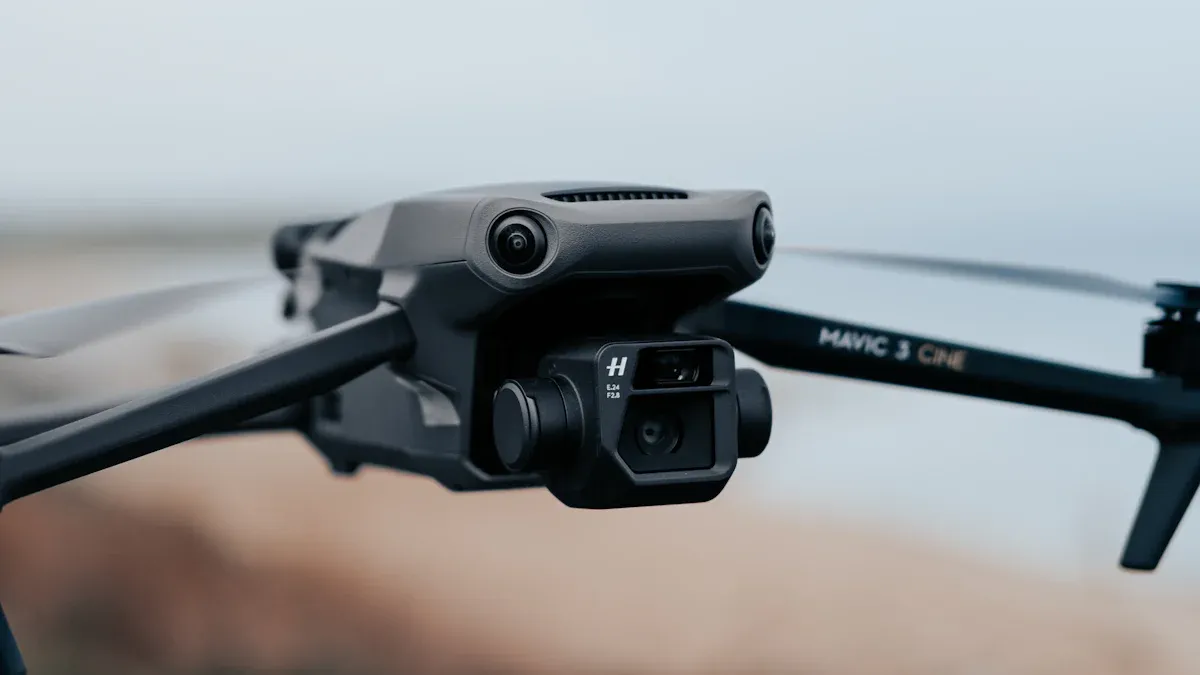
Thermal drones let you see things your eyes cannot. These drones have cameras that sense heat, not just light. The cameras find infrared energy and turn it into pictures. This is called thermal imaging. When a drone flies over a bridge or building, the camera shows where heat escapes or builds up. You can spot loose wires, broken insulation, or leaks fast.
Thermal imaging drone infrastructure inspection uses special sensors. These sensors notice even small temperature changes. For example, a drone can find a hot spot on a power line. This could mean there is a problem. The system works in darkness, smoke, or fog. You do not need to wait for clear weather or daylight. Some drones use thermal imaging with 3D LiDAR and GPS. This helps you make a full map and track changes over time.
Thermal drones use Long-Wave Infrared (LWIR) and Mid-Wave Infrared (MWIR) lenses. These lenses help you see details that normal cameras miss. You get a clear thermal imagery map of your area. The TL640 module from Verytek makes this possible. It gives you sharp images and fast data transfer. You see results right away and can decide quickly.
Here are some ways thermal drones help during inspection:
They capture heat from equipment and buildings.
They find temperature changes that show hidden problems.
They work in low light, like at night or in smoke.
They turn heat into pictures you can study.
They use special lenses to make inspections better.
You can trust the data from thermal imaging drone infrastructure inspection. This technology lets you find problems before they get worse.
Type of Issue | Description |
|---|---|
Moisture intrusion | Wet insulation or roof parts hold heat differently than dry spots. |
Heat loss | Missing insulation or leaks let heat out, raising energy bills. |
Electrical resistance | Loose wires or overloaded parts show up as hot spots. |
Mechanical stress | Motors and bearings under stress get hotter than normal. |
Key Benefits for Inspections
Thermal drones change how you do inspections. You save time and money. Your team stays safe. You do not need to send people into dangerous places. The drone does the risky work for you. You get fast and accurate results every time.
Here are the main benefits of using thermal drones for inspection:
Faster detection: You find problems in one inspection. You do not have to guess or check twice.
Safer operations: You keep people away from heights or live wires. The drone goes where it is too risky for humans.
Cost savings: You need fewer workers and less gear. You do not need scaffolding or lifts. This saves money.
Better data: You get clear and repeatable data. You can compare results and spot trends.
Real-time decisions: You see thermal imagery live. You can fix problems before they get worse.
Thermal imaging drone infrastructure inspection helps you find issues old methods miss. You can see:
Mechanical and utility losses
Steam line leaks
Hot rooftop units that waste energy
Pipes and ducts that are not insulated well
The TL640 module from Verytek gives you sharp thermal images. It works fast and sends real-time data. You can add it to your drone system easily. This makes inspections quicker, more accurate, and safer.
Tip: Using thermal drones means you do not need as many repeat inspections. You are less likely to miss small problems. This means fewer repairs and less downtime.
The table below shows how thermal imaging drone infrastructure inspection compares to old methods:
Benefit | Traditional Methods | Thermal Drones |
|---|---|---|
Safety | High risk from heights and hazards | Less risk, safer for workers |
Efficiency | Slow, manual checks | Fast, automated, and complete inspections |
Cost-Effectiveness | High labor and equipment costs | Lower costs, fewer workers, no scaffolding needed |
Documentation | Inconsistent, hard to track | Organized, repeatable, and easy to study |
Thermal drones give you a better way to do inspections. You get good data, keep people safe, and save money. You can trust the results and make smart choices for your infrastructure.
Applications of Thermal Drones
Powerline Inspection Drones
You use powerline inspection drones to check electrical lines safely. These thermal drones fly near power grids and find problems you cannot see. The drones spot wires that are too hot, broken insulators, and weak spots. Workers do not need to climb towers or go into dangerous places. The TL640 module from Verytek gives you clear thermal images and live data. You get results fast and can make choices quickly.
Here is a table that shows the main benefits of powerline inspection drones:
Benefit Type | Description |
|---|---|
Drones keep workers off towers and away from live wires, making the job safer. | |
Speed & Efficiency Gains | Drones use set flight paths and smart software to check lines faster and study data better. |
Cost Reductions | Drones cut costs by using fewer helicopters and less ground crew. |
Drone Powerline Inspection Use Cases
You can use drone powerline inspection for many jobs. These thermal drones check big areas and find problems before they cause blackouts. You get clear pictures of broken parts, hot spots, and trees that are too close. The drones help you plan repairs and keep the power on.
Here are some real-world examples:
Example | Description |
|---|---|
Drones check long power lines fast. They find broken parts or trees in the way. This keeps the grid safe. | |
AI-equipped drones for substation inspection | Drones look for hot spots and problems in substations. This helps stop power loss and keeps the lights on. |
Tip: You can use thermal drones to fix things before they break. You see warning signs early and repair them before they get worse.
Other Infrastructure Applications
Thermal drones work in many fields. You use them to check bridges, buildings, and factories. These drones find hot machines, bad insulation, and wet spots. You do not have to stop work to do inspections. The TL640 module gives you quick answers and fits easily with your drone.
Here is a list of common ways to use thermal drones:
Find hot machines and electrical problems
Check for rust and bad materials
Spot wet spots and surface damage
Make inspections safer by staying far away
Cut downtime by checking things while they run
Use data to make better choices
Thermal drones fix problems that old ways miss. You get fast, clear, and safe checks. You spend less money and work faster. The TL640 from Verytek helps you do better inspections and solve tough problems in infrastructure.
Features of Thermal Drones for Inspection
Camera Resolution and Sensitivity
You need clear images to check things well. The best thermal drones have strong cameras. These cameras show small details. When picking a drone, look for high resolution and good sensitivity. The TL640 module from Verytek has 640×512 resolution. This helps you see tiny temperature changes and hidden problems. Seeing these details helps you find faults early. It also makes your checks more reliable.
Feature | Description |
|---|---|
Thermal Camera Resolution | Higher resolution cameras give you clear thermal images. This is important for measuring temperatures exactly. A common top resolution is 640×512. |
Thermal Sensitivity (NETD) | NETD shows the smallest temperature change the sensor can find. Lower numbers (like <50 mK) mean better sensitivity and clearer images in tricky spots. |
With a good camera, you get quick and correct results. You can trust your data and do fewer repeat checks.
Flight Time and Range
Flight time and range are important for thermal drone checks. Longer flights let you look at bigger areas in one trip. The best thermal drones can fly up to 90 minutes. This helps you inspect large places without stopping. Some drones, like the DJI Matrice 350 RTK, can go up to 12.4 miles. You can check far-away sites without many stops.
Drone Model | Flight Time | Operational Range |
|---|---|---|
Skydio X10 | Up to 40 minutes | N/A |
DJI Matrice 350 RTK | Up to 55 minutes | 12.4 miles (20 km) |
Inspired Flight IF800 Tomcat | Up to 54 minutes | N/A |
eBee X | Up to 90 minutes | Covers up to 500 ha in one flight |
You save time and money by needing fewer flights. This makes your checks faster and helps you fix problems quickly.
Data Integration and Analysis
Thermal drones give you more than pictures. You get smart tools for data and analysis. These tools help you spot problems fast and make better choices. The best thermal drones, like ones with the TL640, send live data to your team. You see results right away and can act fast.
Smart data tools help you find issues during checks.
You watch changes in the area more easily.
Hard data becomes simple, so you make good choices.
You fix the main problems of old checks: slow results, hard data, and high risk. With thermal drones, you get quick, correct, and safe inspections every time.
Comparing Thermal Drone Modules
TL640 Overview
You want inspections to be quick, safe, and correct. The TL640 Uncooled Infrared Module from Verytek helps you do this. This module is small and light. You can put it on many drones without slowing them down. The TL640 shows clear thermal images with 640×512 resolution. You can spot tiny temperature changes in every check. You get live data, so you can decide fast and stop delays. The module works in very cold or hot places. You can trust it for checks anywhere. Its smart image tools and easy setup make it great for modern inspections.
Competing Modules
There are many thermal imaging modules for drone checks. Some have high resolution but are heavy or hard to use. Others last longer but may not show enough detail. The TL640 does all these things well. It gives sharp pictures, quick answers, and easy data sharing. You can use it for power lines, bridges, and buildings. Other modules may not work in bad weather or send live data. The TL640 helps you avoid slow checks and risky climbs.
Choosing the Right Module
Think about what you need before picking a module. Ask yourself these questions: Do you need sharp images for close checks? Will you work in tough weather or at night? Is live data important for your team? Do you want a module that is easy to add to your drone? The TL640 fits most inspection needs. It helps you spend less on workers and do less maintenance. You get better data and safer checks every time. Soon, thermal imaging drones will get even better, like: AI and smart tools for better data and flying, longer battery life for bigger areas, wireless charging and solar power for more flight time. You can trust the TL640 to keep up and help you get the best results from your checks.
ROI and Decision Factors
Cost-Benefit Analysis
You want inspections to be quick, safe, and save money. Thermal imaging drones give you a good return. You pay less for workers because drones do most jobs. You do not need to check things again and again. Drones find problems early, so you fix them before they cost a lot. Safety gets better because workers stay away from danger. You do not need to buy lifts or scaffolding. The TL640 module from Verytek helps you get good data fast. This helps you make smart choices and spend less on checks. Over time, you have fewer delays and less time when things stop working.
Integration and Compliance
Adding thermal imaging drones can be tricky. You need your systems to work together well. Standard interfaces help drones connect with other tools. You must follow rules to keep your data good. The table below shows important points for integration and compliance:
Challenge/Requirement | Description |
|---|---|
Thermal drones need standard interfaces and protocols to work with different systems. | |
Compliance with Standards | Following rules like ISO 18436 keeps your data right and reliable. |
Environmental Factors | Rain or fog can make sensors work less well and hurt data quality. |
Security Concerns | You must protect data from hackers and keep it safe with encryption. |
You also need people who know how to use drones. Training teaches them how to use the camera and read images. They learn to spot heat and find problems fast. They must follow privacy laws and keep data safe. This keeps your checks safe and legal.
Technical operation: Learn to use the camera and see heat signs.
Tactical application: Find heat and spot trouble quickly.
Legal compliance: Follow privacy rules and keep data private.
Long-Term Value
Thermal imaging drones help you for many years. You make safety better and lower risks for your team. You get better data, so you plan repairs and upgrades well. The TL640 module gives you live data and easy setup, so checks stay quick. Over time, safety gets better and accidents happen less. Your checks are more reliable and you spend less fixing things. Using advanced thermal imaging keeps your infrastructure safe and costs low.
Thermal imaging drones make checking infrastructure easier. You spot problems early and keep workers safe. You also save money. The TL640 from Verytek gives you sharp images and quick answers. You get live data you can trust. This helps you make smart choices.
Advantage | Description |
|---|---|
Safety | Drones go to dangerous places so you stay safe. |
Efficiency | You finish inspections faster and use less energy. |
Cost Savings | Finding problems early means fewer repairs and lower costs. |
Data Quality | You get clear and reliable data for every inspection. |
First, write down what you need. Then, try a solution like the TL640 to see how it helps.
FAQ
What makes thermal imaging drones better than traditional inspection methods?
You get faster, safer, and more accurate checks. Drones with thermal imaging spot hidden problems quickly. You do not need to send workers into risky places. You save time and lower costs.
How does the Verytek TL640 help with inspections?
The TL640 gives you high-precision thermal images. You see small temperature changes right away. The module sends real-time data and fits easily on many drones. You finish inspections faster and with better results.
Can thermal drones lower inspection costs?
Yes! You use fewer workers and less equipment. Drones finish jobs quickly. You do not need scaffolding or lifts. Early problem detection means fewer repairs and less downtime.
Is it hard to add the TL640 to my drone system?
No. The TL640 has a compact design and supports many interfaces. You can connect it easily to most drone platforms. You start using it with little setup time.
What types of problems can thermal imaging drones find?
You can spot heat loss, electrical faults, leaks, and weak spots. Drones show you issues that eyes miss, even in darkness or smoke. You get clear data to plan repairs.
See Also
The Importance of Thermal Imaging Cameras in 2025
Utilizing Thermal Imaging Cameras for Rescue Operations in 2025
Vanadium Oxide Thermal Imaging Cameras for Effective Rescue
Best Reviewed AI Video Boxes for Cars in 2025
Key Trends Influencing Android Auto Wireless Adapter Development