
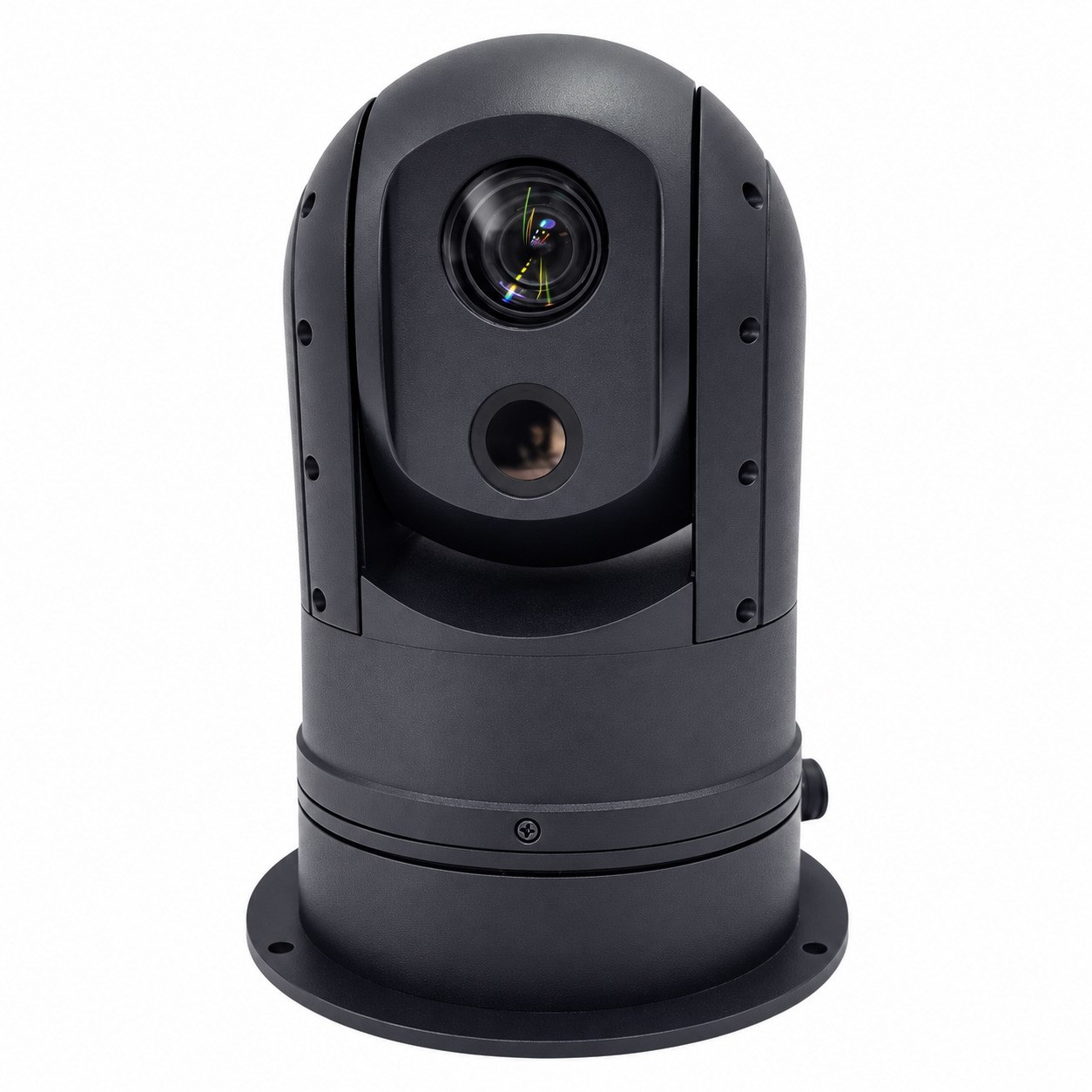
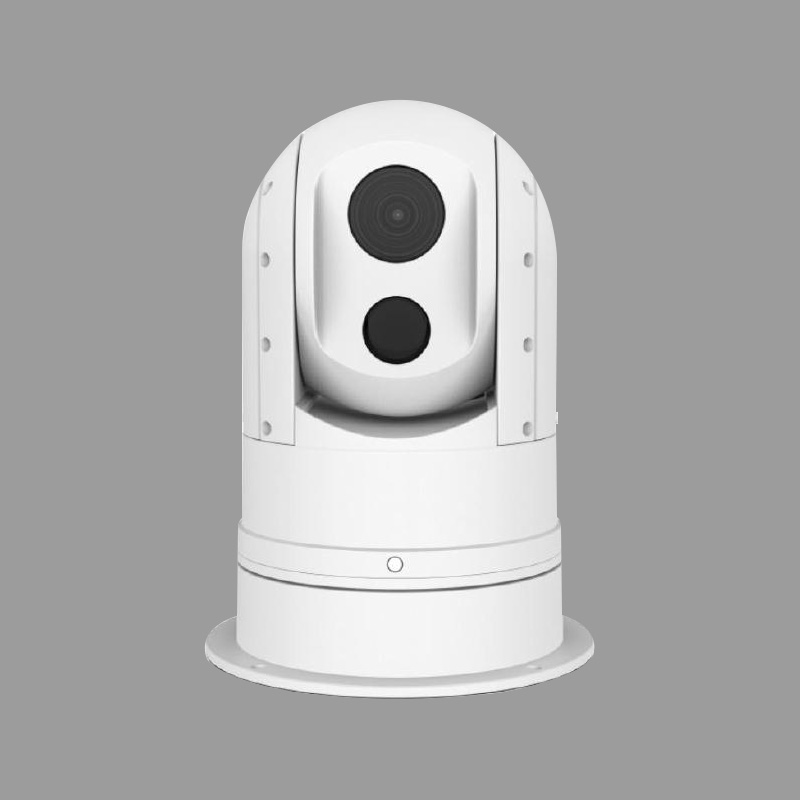
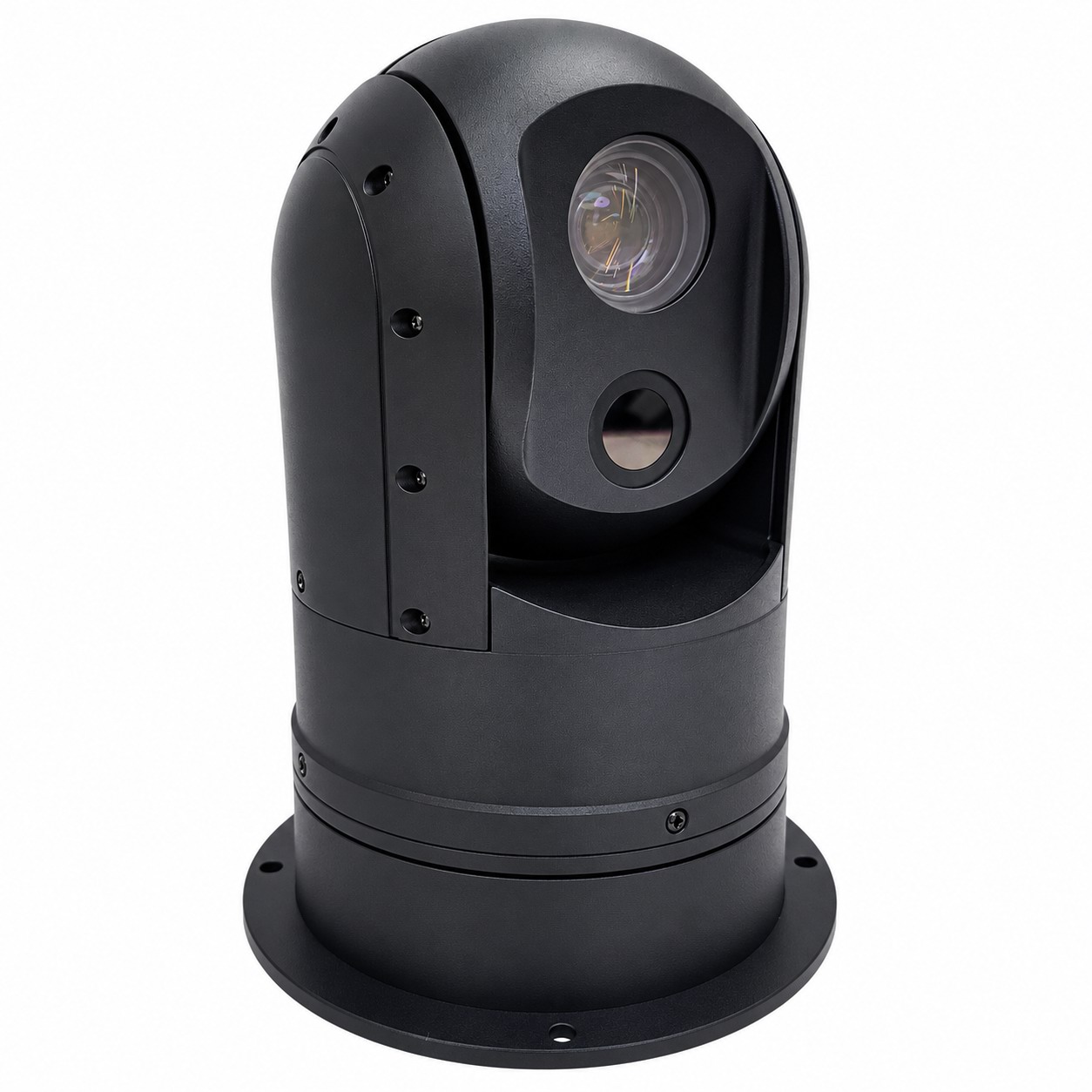
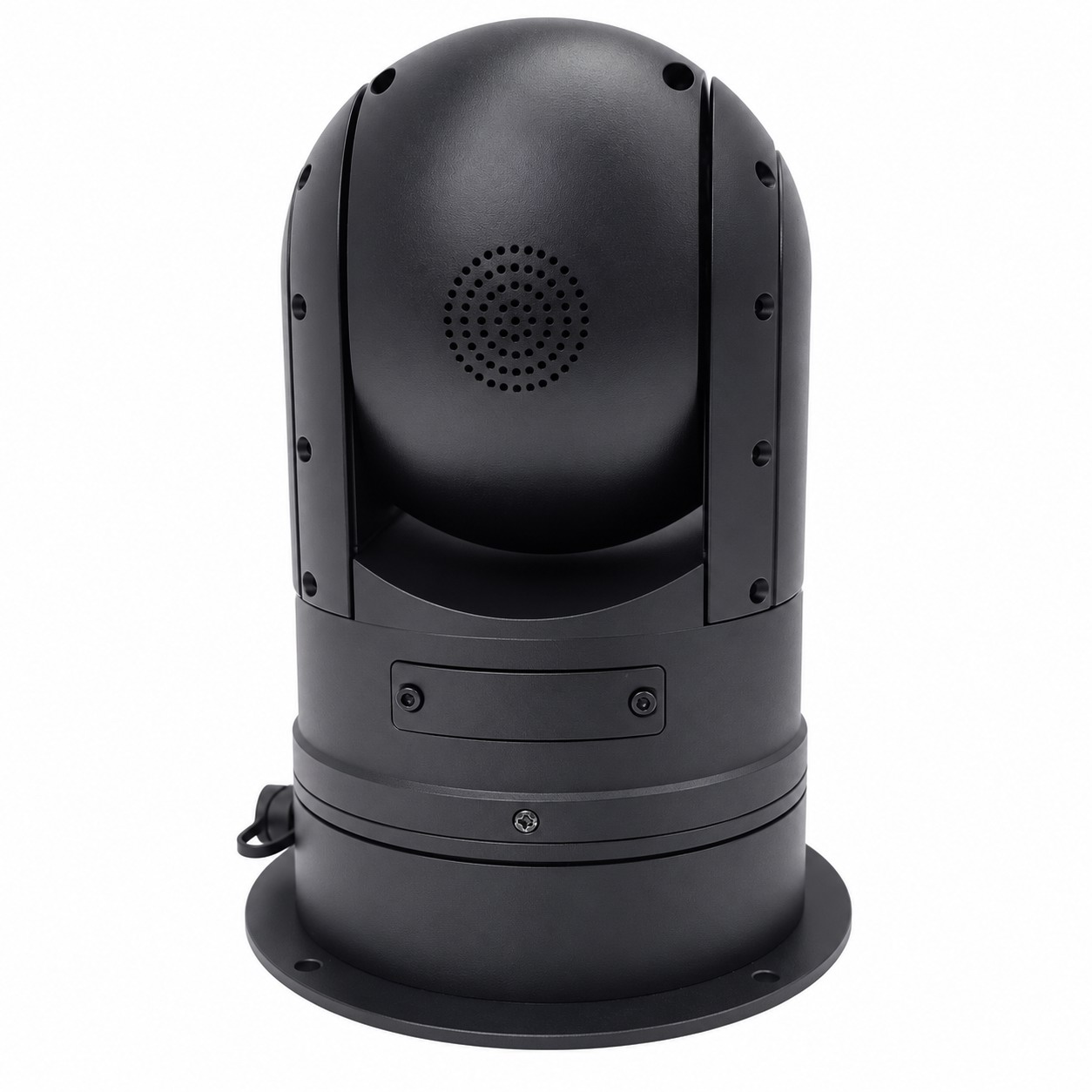
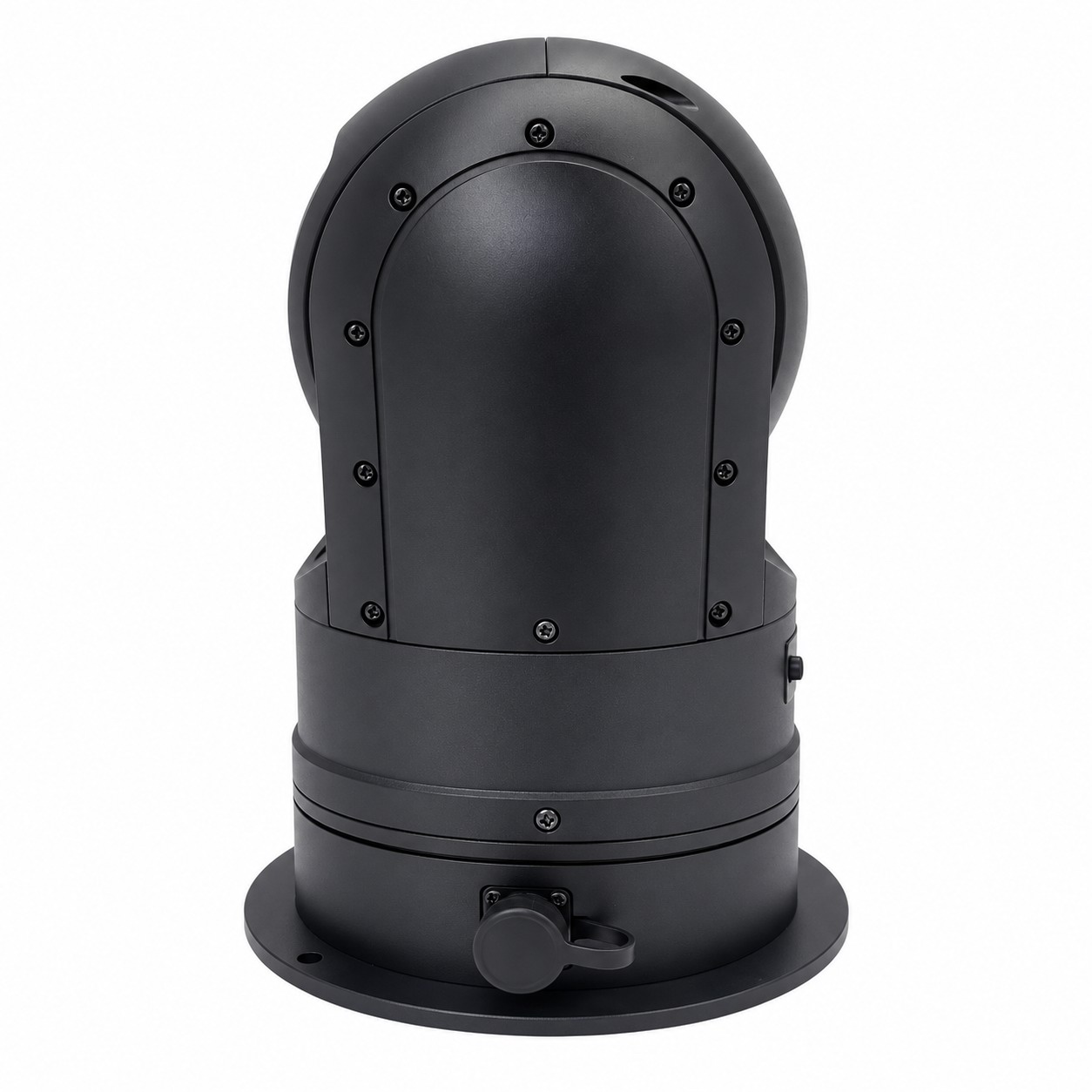
TEK-S Series AI Dual-Spectrum Thermal Network PTZ Camera for Vehicles & Marine
640×512 Thermal Imaging, 1080P Optical Zoom and Intelligent 360° PTZ Surveillance
The VERYTEK TEK-S Series Dual-Spectrum Thermal PTZ Camera is an intelligent network surveillance system that combines infrared thermal imaging, visible-light video, motorized pan-tilt movement, and AI target detection in a single compact housing.
Designed for applications requiring observation during both daytime and nighttime, the TEK-S integrates a 640 × 512 thermal imaging channel with a 2MP Full HD visible-light camera featuring 10× optical zoom.
The visible-light camera captures conventional video for detailed visual observation when lighting conditions permit. The thermal imaging channel detects infrared radiation, enabling operators to observe temperature-contrasting targets in complete darkness without relying on visible illumination.
A built-in AI processor supports person, vehicle, and animal detection across the dual-light system, along with thermal target ranging and configurable smart alarm functions.
With 360° continuous pan rotation, IP66 protection, ONVIF/RTSP streaming, and flexible network integration, the TEK-S Series is designed for vehicle-mounted observation, marine surveillance, robotic systems, unmanned vehicles, and outdoor security applications.


Why Choose the TEK-S Dual-Spectrum Thermal PTZ Camera?
1. Dual-Spectrum Imaging for Day and Night Observation
The TEK-S Series integrates two complementary imaging channels.
Thermal Imaging Channel
- 640 × 512 infrared detector resolution
- 12 μm pixel pitch
- 8–14 μm infrared spectral range
- 9.1 mm standard lens configuration
- Optional 13 mm and 19 mm lenses
- Seven thermal color palettes
- Observation in complete darkness
Thermal imaging provides useful information when visible-light observation is limited by insufficient illumination.
Visible-Light Imaging Channel
- 1/2.8-inch low-light CMOS sensor
- 1920 × 1080 Full HD resolution
- 25/30 fps video output
- 10× optical zoom
- 4.9–47 mm focal length
- Digital wide dynamic range (WDR)
- Automatic day/night switching using an ICR filter
By combining both imaging channels, operators can switch between thermal information and conventional visual detail according to the operating conditions.
This makes the TEK-S Series suitable for applications where one imaging technology alone may not provide enough information.
2. Continuous 360° Pan and Motorized Tilt Control
The TEK-S Series features a motorized pan-tilt mechanism designed for flexible observation.
PTZ Specifications:
- Pan rotation: 360° continuous
- Tilt movement: −30° to +90°
- Maximum pan speed: 100°/second
- Maximum tilt speed: 60°/second
- Up to 256 preset positions
- Multiple configurable cruise tracks
The 360° continuous pan capability allows the camera to rotate horizontally without the normal endpoint limitation of conventional noncontinuous pan mechanisms.
Preset positions and cruise functions help operators repeatedly observe selected monitoring areas.
Typical applications include perimeter observation, vehicle-mounted security monitoring, mobile inspection platforms, and maritime surveillance.
3. AI Person, Vehicle and Animal Detection
The TEK-S incorporates a 3 TOPS AI processing capability for intelligent target analysis.
The system supports:
- Person detection
- Vehicle detection
- Animal detection
- Dual-light synchronized target analysis
- Thermal target ranging
- Customizable alarm regions
- Cross-region alarm linkage
The product documentation specifies the following maximum AI detection ranges:
| Target Type | Maximum Specified AI Detection Range |
|---|---|
| Person | 80 m |
| Vehicle | 200 m |
| Animal | 50 m |
The thermal ranging function also supports self-calibration based on mounting height. The manufacturer’s stated ranging performance is 90% within 40 meters, subject to the applicable configuration and test conditions.
Important: These are manufacturer-listed reference figures. Actual AI detection and ranging performance depends on target dimensions, thermal contrast, environmental conditions, camera installation, and system configuration.
4. 10× Optical Zoom for Detailed Visible-Light Monitoring
The integrated visible-light camera supports 10× optical zoom.
Unlike digital enlargement, optical zoom changes the camera’s effective optical focal length to provide a closer view of distant objects.
The visible-light channel features:
- Wide-angle field of view: 67.6° × 54.8°
- Telephoto field of view: 7.15° × 5.8°
- Digital WDR
- Automatic ICR day/night switching
This allows operators to use a wide field of view for general observation and adjust the optical zoom when additional visual detail is required.
The optical zoom specification applies to the visible-light channel, not the fixed-focal-length thermal imaging channel.
5. Network Video Transmission with ONVIF and RTSP
The TEK-S Series uses an embedded Linux system and supports mainstream IP video protocols.
Supported protocols and functions:
- ONVIF
- RTSP
- DHCP
- Ethernet configuration
- Wi-Fi-based configuration
- Web browser live viewing
- Independent visible-light and thermal video streams
- H.264 and H.265 compression
- MP4 recording
The network architecture makes the camera suitable for integration into compatible network video systems and OEM control platforms.
Independent imaging streams allow system developers to access visible-light and thermal video separately.
ONVIF compatibility, including the applicable profiles and supported functions, should be verified with the intended video management system.
6. IP66 Protection and Compact Vehicle-Mountable Construction
The TEK-S PTZ camera features an integrated structure designed for outdoor applications.
Key mechanical and environmental characteristics:
- IP66 protection rating
- Operating temperature: −20°C to +60°C
- Aluminum mounting flange
- Compact PTZ construction
- Product weight below 2.5 kg
- Black or white housing options
The compact design is intended for installation on vehicles, vessels, and other equipment where mounting space and overall payload weight matter.
For marine installations, the complete system should be evaluated for salt exposure, mechanical vibration, corrosion resistance, connector protection, and environmental sealing.
7. Smart Alarm and Remote Configuration
The TEK-S supports intelligent alarm functions for monitored areas.
Capabilities include:
- AI-based target event detection
- Custom alarm regions
- Cross-region alarm linkage
- Local alarm functions
- WebSocket/HTTP alarm output
- Web-based configuration
- Dedicated Android application for Wi-Fi viewing and setup
These capabilities can help system integrators develop monitoring and alerting workflows tailored to their applications.
Applications of the TEK-S Dual-Spectrum Thermal PTZ Camera
Vehicle-Mounted Thermal Surveillance
The TEK-S can be used as a dual-spectrum observation component in specialized vehicle systems.
Typical applications include:
- Mobile command vehicles
- Commercial vehicle surveillance
- Emergency response vehicles
- Specialized inspection vehicles
- Vehicle-mounted monitoring platforms
The combination of thermal imaging, visible-light zoom, and motorized PTZ control enables operators to observe different directions and switch between imaging modes.
Marine Thermal Imaging and Vessel Monitoring
For marine equipment manufacturers and system integrators, the TEK-S provides thermal and visible-light observation capabilities in one network-connected unit.
Potential applications include:
- Fishing vessel monitoring
- Commercial boat observation
- Unmanned surface vessels (USVs)
- Marine patrol platforms
- Small-vessel nighttime surveillance
The thermal channel can provide an additional observation method in darkness, while the visible-light camera is useful for visual identification when lighting conditions allow.
Marine installation suitability, including corrosion resistance and any required marine certifications, should be confirmed for each project.
Unmanned Vehicles and Robotics
The TEK-S Series is suitable for evaluation in remotely operated robotic and unmanned observation platforms.
Applications include:
- Unmanned ground vehicles (UGVs)
- Robotic inspection platforms
- Robot dogs
- Mobile security robots
- Autonomous monitoring equipment
Its network interfaces, motorized PTZ movement, and onboard AI functions provide useful building blocks for integrated robotic observation systems.
Autonomous navigation, collision avoidance, and other safety-related functions require separate system-level design and validation.
Railway, Border and Perimeter Surveillance
The TEK-S can be used in outdoor observation projects requiring both thermal and visible-light imaging.
Potential applications include:
- Railway infrastructure monitoring
- Remote site monitoring
- Industrial security
- Perimeter surveillance
- Mobile security observation
Preset positions and cruise tracks support repeated monitoring of designated areas.
Custom AI alarm regions provide additional options for identifying people, vehicles, and animals within configured monitoring zones.
TEK-S Thermal Lens Options
The TEK-S Series supports several thermal lens configurations.
| Model Configuration | Thermal Resolution | Focal Length | Thermal Field of View |
|---|---|---|---|
| TEK-S640-9.1 | 640 × 512 | 9.1 mm | 45° × 37° |
| TEK-S640-13 | 640 × 512 | 13 mm | 34° × 27° |
| TEK-S640-19 | 640 × 512 | 19 mm | 23° × 18° |
9.1 mm Standard Lens
Suitable for applications that require a wider thermal observation area.
13 mm Optional Lens
Offers a narrower field of view for applications requiring greater concentration on more distant areas.
19 mm Optional Lens
Provides the narrowest listed thermal field of view and can be considered for longer-distance observation requirements.
The most appropriate configuration depends on target dimensions, observation distance, mounting position, and project requirements.
TEK-S Series Technical Specifications
System and PTZ Control
| Parameter | Specification |
|---|---|
| Product Series | TEK-S |
| Product Type | Dual-Spectrum Smart Network PTZ Camera |
| Embedded System | Linux |
| Network Protocols | ONVIF / RTSP / DHCP |
| Configuration | Ethernet / Wi-Fi |
| Web Live View | Supported |
| Video Channels | Independent visible-light and thermal streams |
| Pan Range | 360° continuous |
| Tilt Range | −30° to +90° |
| Pan Speed | 100°/s |
| Tilt Speed | 60°/s |
| Preset Positions | Up to 256 |
| Cruise Tracks | Multiple supported |
Visible-Light Camera
| Parameter | Specification |
|---|---|
| Sensor | 1/2.8-inch low-light CMOS |
| Resolution | 1920 × 1080 |
| Frame Rate | 25/30 fps |
| Optical Zoom | 10× |
| Focal Length | 4.9–47 mm |
| Aperture | F2.36–F2.4 |
| Wide FOV | 67.6° × 54.8° |
| Tele FOV | 7.15° × 5.8° |
| Wide Dynamic Range | Digital WDR |
| Day/Night | ICR Filter Switching |
Infrared Thermal Camera
| Parameter | Specification |
|---|---|
| Thermal Resolution | 640 × 512 |
| Pixel Pitch | 12 μm |
| Standard Thermal Lens | 9.1 mm |
| Optional Thermal Lenses | 13 mm / 19 mm |
| Spectral Range | 8–14 μm |
| 9.1 mm FOV | 45° × 37° |
| 13 mm FOV | 34° × 27° |
| 19 mm FOV | 23° × 18° |
| Thermal Color Palettes | White-hot, Black-hot, Iron-red, Warm-hot, Rainbow, Lava, Red-hot |
AI Processing and Detection
| Parameter | Specification |
|---|---|
| AI Computing Capability | 3 TOPS |
| AI Processing Rate | >25 fps |
| AI Target Types | Person / Vehicle / Animal |
| Dual-Light AI | Synchronized target processing |
| Maximum Person Detection Range | 80 m |
| Maximum Vehicle Detection Range | 200 m |
| Maximum Animal Detection Range | 50 m |
| Thermal Ranging | Supported |
| Ranging Performance | Manufacturer-listed 90% within 40 m |
| Ranging Calibration | Mounting-height-based self-calibration |
| Smart Alarm | Custom regions / cross-region linkage |
| Alarm Output | WebSocket / HTTP / Local Alarm |
Video, Mechanical and Electrical Specifications
| Parameter | Specification |
|---|---|
| Video Compression | H.264 / H.265 |
| Video Bitrate | 512 Kbps–4 Mbps |
| Main Stream | 1080P / 960P / 720P |
| Sub Stream | D1 / VGA / CIF |
| Recording Format | MP4 |
| Protection Rating | IP66 |
| Operating Temperature | −20°C to +60°C |
| Nominal Power Input | DC 12 V |
| Product Weight | <2.5 kg |
| Dimensions | Ø118 × 221.1 mm (datasheet-listed; confirm against mechanical drawing) |
| Mounting | Aluminum Flange |
| Interfaces | RS485 / RJ45 / DC Power |
| Housing Colors | Black / White |
| Android App | Dedicated Wi-Fi Viewing and Configuration App |
Optional Accessories
- Carrying case
- Tripod mounting disc
- Aluminum tripod
- Four-section tripod configuration
- Listed tripod weight: 1.5 kg
- Listed maximum tripod load: 8 kg
Accessory availability and compatibility should be confirmed when requesting a quotation.
How to Choose a Thermal PTZ Camera for OEM Integration
Selecting a dual-spectrum thermal PTZ camera involves several considerations.
1. Thermal Resolution
Determine the required thermal image detail and target observation needs. The TEK-S Series uses a 640 × 512 thermal imaging sensor.
2. Thermal Lens Selection
Choose between 9.1 mm, 13 mm, and 19 mm thermal lens configurations based on field of view and target distance.
3. Visible-Light Zoom
Determine whether 10× optical zoom and 1080P visible-light imaging satisfy the application.
4. PTZ Control
Confirm whether continuous 360° pan, tilt range, movement speeds, presets, and cruise functions meet the system requirements.
5. Network Integration
Verify the required ONVIF implementation, RTSP stream format, network settings, alarm interfaces, and control requirements.
6. Mechanical and Electrical Integration
Check the camera’s weight, mounting flange, electrical supply, connector layout, and environmental specifications.
7. Application Testing
For vehicle-mounted, robotic, and marine projects, real-world testing is recommended to validate thermal detection, mechanical stability, communications, and alarm performance.
Frequently Asked Questions
Q1. What is a dual-spectrum thermal PTZ camera?
A dual-spectrum thermal PTZ camera combines a thermal infrared camera and a visible-light camera with motorized pan and tilt functionality.
The VERYTEK TEK-S Series combines 640 × 512 thermal imaging, 1080P visible-light video, and continuous 360° pan rotation.
Q2. Can the TEK-S thermal PTZ camera operate in complete darkness?
Yes. Its thermal imaging channel detects emitted infrared radiation rather than relying on visible illumination.
Visible-light image quality depends on lighting conditions and camera settings.
Q3. Does the TEK-S support optical zoom?
Yes. The visible-light camera supports 10× optical zoom.
The thermal channel uses a fixed-focal-length lens selected from the available configurations.
Q4. Does the camera support 360-degree rotation?
Yes. It provides continuous 360° horizontal pan rotation and a tilt range from −30° to +90°.
Q5. What objects can the built-in AI detect?
The TEK-S supports AI detection of people, vehicles, and animals.
The manufacturer lists maximum detection ranges of 80 m for people, 200 m for vehicles, and 50 m for animals under its specified conditions.
Q6. Does the camera support ONVIF and RTSP?
Yes. The TEK-S supports ONVIF, RTSP, and DHCP.
For specific NVR or VMS systems, compatibility and supported protocol functions should be verified.
Q7. Can the TEK-S be installed on marine vessels?
The TEK-S is intended for vehicle and marine observation applications and features an IP66-rated enclosure.
Marine-specific environmental and certification requirements must be reviewed for the intended installation.
Q8. Is the TEK-S suitable for robotic platforms?
The TEK-S can be evaluated as an observation camera for robotic and unmanned vehicle platforms.
Its Ethernet interface, PTZ movement, and AI detection features are relevant to robotic system integration.
Q9. What is the difference between the TEK-S and a fixed network thermal camera?
The TEK-S combines thermal and visible-light imaging with motorized pan-tilt control and optical zoom.
A fixed network thermal camera generally observes a predetermined direction unless it is installed on an external motorized platform.
Q10. Does the TEK-S support video recording?
The product documentation lists MP4 recording support, H.264/H.265 video compression, and independent visible-light and thermal video streams.
Recording storage architecture and capacity should be confirmed for the intended configuration.
Q11. Can I configure the camera remotely?
The camera supports web-based setup and viewing, Ethernet/Wi-Fi configuration, and a dedicated Android application.
Remote access across external networks depends on the deployed network architecture and security configuration.
Q12. What information should I provide when requesting a quotation?
Please provide the application, thermal lens preference, mounting requirements, networking and software integration needs, expected purchase quantity, and delivery requirements.
VERYTEK can review the requested configuration and discuss the available technical documentation and commercial terms.
Why Work with VERYTEK?
VERYTEK AI Tech Limited, established in 2013, specializes in technology product development, engineering solutions, and manufacturing.
VERYTEK offers thermal imaging products for OEM equipment manufacturers, system integrators, distributors, and industrial project customers.
The TEK-S Series provides a compact dual-spectrum PTZ platform for customers developing vehicle-mounted, marine, robotic, and security observation systems.
Our team can assist with product configuration discussions, technical documentation requests, and project quotations.
Request a Quotation for the TEK-S Series
Looking for a dual-spectrum thermal PTZ camera for your next project?
Contact VERYTEK to discuss:
- Thermal lens configuration: 9.1 mm / 13 mm / 19 mm
- Vehicle or vessel installation requirements
- PTZ and AI functions
- Network video integration
- Mounting and power requirements
- Optional accessories
- OEM project quantities and delivery requirements
VERYTEK AI TECH LIMITED
Website: https://verytek.com/
Email: sales@verytek.com
VERYTEK — Thermal Imaging and Intelligent Vision Solutions for OEM Integration.


