
VERYTEK develops compact uncooled LWIR thermal camera modules for UAV manufacturers, drone payload developers and OEM system integrators.
For most UAV projects requiring 256×192, 384×288 or 640×512 resolution, compact dimensions, low power consumption and reliable production supply, we recommend starting with the VERYTEK UVR Series.
UVR is particularly suitable for projects where the thermal module must move quickly from engineering evaluation to pilot production and volume manufacturing.


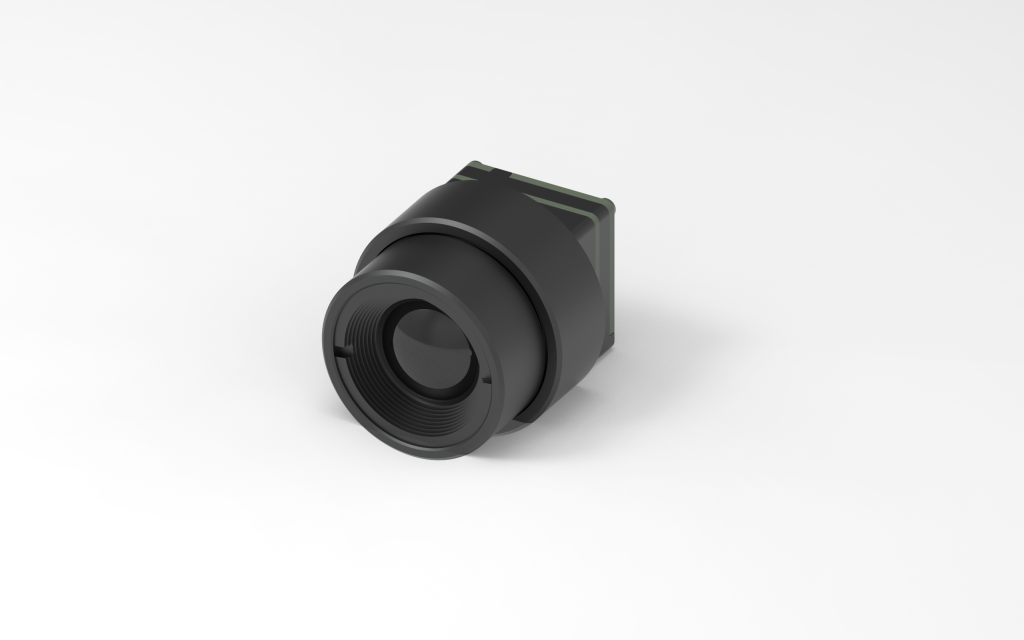
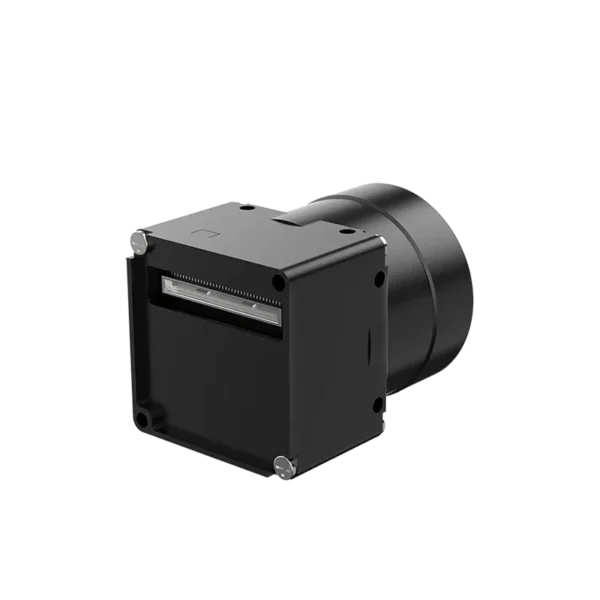
The series is available in three resolution levels:
- UVR2 — 256×192
- UVR3 — 384×288
- UVR6 — 640×512
All three versions use a 12 μm uncooled LWIR architecture and share a compact platform designed around UAV SWaP requirements.
Why UAV Manufacturers Start with UVR
A thermal module for a drone cannot be selected by resolution alone.
The complete payload has to meet limits for:
- Size
- Weight
- Power consumption
- Lens dimensions
- Interface
- Image stability
- Production availability
- Lead time
This is where UVR has an advantage.
The platform combines compact hardware with multiple resolution options and is already positioned for UAV OEM production rather than only laboratory evaluation.
For customers with tight development schedules, UVR is also VERYTEK’s priority product family when shorter stocking and production cycles are important.
Actual delivery time depends on resolution, lens, interface, quantity and customization, so current availability should always be confirmed before ordering.
UVR2, UVR3 or UVR6?
UVR2 — 256×192
Choose UVR2 when cost, low power consumption and compact integration are more important than maximum image detail.
Typical applications include:
- Small commercial drones
- Entry-level thermal payloads
- Night detection
- Fire monitoring
- Portable thermal systems
- High-volume cost-sensitive products
UVR3 — 384×288
Choose UVR3 when the project needs more thermal detail than 256×192 without moving immediately to a 640×512 platform.
It is a practical middle option for:
- Industrial inspection UAVs
- Infrastructure monitoring
- Search applications
- Security drones
- Commercial thermal payloads
UVR6 — 640×512
Choose UVR6 when the UAV requires higher image detail and professional thermal imaging performance.
It is our preferred UVR configuration for:
- Professional UAV systems
- EO/IR gimbals
- Search and rescue
- Power-line inspection
- Security surveillance
- Industrial inspection
- Fire detection
- Professional drone payloads
Why 640×512 Is Popular in Professional UAVs
A 640×512 detector provides substantially more scene information than lower-resolution formats while remaining practical for compact airborne systems.
It is therefore a common choice when the operator needs to observe smaller targets, identify more scene detail or use a narrower field of view without giving up too much image information.
Higher resolution, however, should not be selected automatically.
A smaller detector may still be the better choice when:
- Cost is the primary constraint
- The payload must be extremely light
- Detection is more important than recognition
- The application operates at short distance
The correct choice is the lowest resolution that reliably meets the mission requirement.
Shutterless Imaging for Airborne Platforms
Airborne thermal systems benefit from continuous imagery.
UVR supports shutterless image correction, helping avoid the periodic image interruption associated with traditional mechanical correction cycles.
This can be useful for:
- Continuous observation
- UAV navigation support
- Inspection flights
- Search operations
- Moving-target observation
- EO/IR payloads
Interfaces for UAV Integration
The host platform should be defined before selecting the final module configuration.
UVR supports several digital integration options suitable for embedded systems.
Depending on configuration, the system can be integrated with UAV processors, embedded computing boards, AI platforms, gimbal controllers and video transmission systems.
When requesting a recommendation, tell us:
- Host processor
- Required video interface
- Communication interface
- Power supply
- Maximum module dimensions
This allows the engineering team to recommend a configuration that fits the aircraft rather than forcing the aircraft to adapt to the camera.
Lens Selection Matters as Much as Resolution
A 640×512 detector with the wrong lens can perform worse for the mission than a lower-resolution detector with correctly selected optics.
Lens selection depends on:
- Target dimensions
- Required detection distance
- Recognition distance
- Desired field of view
- Flight altitude
- Detector resolution
If the focal length has not been decided, send VERYTEK the target size, working distance and required field of view.
From Prototype to Mass Production
A good UAV thermal platform should support more than the first engineering sample.
During development, the priorities change.
Engineering Stage
The team evaluates:
- Image quality
- Interface compatibility
- Lens
- Mechanical fit
- Power consumption
Flight-Test Stage
The focus moves to:
- Image continuity
- Vibration
- Video latency
- Thermal behavior
- Payload balance
Pilot Production
The buyer then needs:
- Batch consistency
- Supply availability
- Stable configuration
- Quality control
Volume Production
Finally, the commercial program depends on:
- Repeatable quality
- Production capacity
- Lead-time control
- Long-term availability
UVR is intended to cover this complete path rather than only the prototype stage.
Alternative VERYTEK Modules for Special UAV Requirements
UVR is our first recommendation for most UAV OEM projects, but it is not the only option.
| Requirement | Recommended Platform |
|---|---|
| Fast delivery / short production cycle | UVR |
| UAV mass production | UVR |
| 256×192 | UVR2 |
| 384×288 | UVR3 |
| 640×512 UAV | UVR6 |
| Very compact 17×17 mm-class footprint | UVG6 |
| Alternative OEM interface requirements | UVB |
| Lightweight 640×512 architecture | TL640i |
| 1280×1024 requirement | TL1280i / UVL12 |
The purpose of this comparison is not to make every project use UVR. It is to choose the simplest platform that satisfies the real system requirement.
Why Work with VERYTEK?
VERYTEK supports thermal imaging projects from module selection through OEM integration and production.
Customers can discuss:
- Resolution selection
- Lens configuration
- Interfaces
- Mechanical integration
- Firmware requirements
- Development documentation
- Sample evaluation
- Production quantities
- Delivery schedule
For time-sensitive projects, tell us the required delivery date during the first technical discussion.
FAQ
What is the best VERYTEK thermal module for UAV OEM projects?
For most projects using 256×192, 384×288 or 640×512 resolution, UVR should be evaluated first because it combines compact SWaP characteristics, UAV-oriented integration and a relatively short stocking and production cycle.
Which module should I choose for a 640×512 drone camera?
Start with UVR6 when fast delivery, UAV integration and production scalability are important.
UVG6, UVB and TL640i can be evaluated when the project has different dimensional or interface requirements.
Can UVR be used for UAV mass production?
Yes. UVR is positioned as an OEM platform and has been used in volume UAV applications.
How quickly can VERYTEK deliver UVR?
Lead time changes with resolution, lens, interface, order quantity and current inventory. Send us your required delivery date and configuration for a current lead-time check.
What information should I send for a recommendation?
Please provide:
Application, resolution, target distance, lens or FOV requirement, interface, maximum payload size and weight, quantity and required delivery date.
Start Your UAV Thermal Module Evaluation
For most new UAV OEM projects, start with the VERYTEK UVR Series.
Send us:
Application + Resolution + Target Distance + Interface + Quantity + Required Delivery Date
CTA: Check UVR Stock & Lead Time
CTA: Request UVR Datasheet
CTA: Request Evaluation Sample
CTA: Get OEM Quote
Rank Math
SEO Title:
UAV Thermal Camera Module Manufacturer & OEM | VERYTEK
Meta Description:
Compact 256×192, 384×288 and 640×512 12μm LWIR modules for UAV OEM integration and mass production. Explore VERYTEK UVR thermal modules.
Focus Keyword:
UAV thermal camera module
Secondary Keywords:
UAV thermal imaging module
drone thermal camera module
UAV thermal camera manufacturer
thermal module for drone
UAV OEM thermal module
China UAV thermal camera manufacturer
thermal camera module for UAV mass production
PAGE 2 — 640×512 12 μm LWIR Thermal Camera Module
Recommended URL:/640x512-12um-thermal-camera-module/
640×512 12 μm LWIR Thermal Camera Modules for OEM Integration
A 640×512, 12 μm uncooled LWIR module is one of the most practical starting points for professional OEM thermal imaging systems.
It provides substantially more image detail than 256×192 or 384×288 while remaining compact enough for UAVs, portable equipment, embedded systems and other SWaP-sensitive applications.
VERYTEK offers several 640×512 / 12 μm platforms for different engineering requirements.
For UAV projects where delivery speed, production scalability and compact integration are important, we recommend evaluating UVR6 first.
Other options include UVG6, UVB and TL640i when the project has different mechanical, interface or architecture requirements.
Recommended for UAV OEM: UVR6
UVR6 combines:
- 640×512 resolution
- 12 μm uncooled LWIR architecture
- Compact module format
- Low power consumption
- Lightweight construction
- Shutterless operation
- Multiple digital integration options
- UAV production experience
It is also the VERYTEK platform we prioritize when customers need a shorter production cycle.
This makes UVR6 a strong first candidate for:
- UAV thermal payloads
- Drone gimbals
- EO/IR systems
- Search and rescue
- Inspection drones
- Security platforms
- Portable thermal products
Why 640×512?
640×512 contains more than three times as many detector pixels as 384×288.
That additional spatial information can improve:
- Target detail
- Digital zoom usefulness
- Scene interpretation
- Recognition capability
- Image quality with narrower-FOV lenses
It does not automatically mean longer range.
Range still depends heavily on:
- Lens focal length
- Target dimensions
- Thermal contrast
- Atmospheric conditions
- Image processing
- Required detection or recognition criteria
Resolution and lens should therefore be selected together.
Why 12 μm?
A smaller pixel pitch allows more detector pixels to fit into a smaller physical area.
For OEM designers, this can help reduce:
- Detector dimensions
- Optical dimensions
- Overall module size
This is especially useful in UAV, handheld and embedded applications where mechanical space is limited.
The practical benefit is not simply “smaller pixels are better.”
The benefit is the ability to combine useful resolution with a compact optical and mechanical system.
VERYTEK 640×512 Platform Comparison
| Model | Main Reason to Choose It |
|---|---|
| UVR6 | UAV OEM, short lead time, volume production |
| UVG6 | Ultra-compact mechanical design |
| UVB6 | Flexible OEM integration and interface options |
| TL640i | Lightweight embedded imaging architecture |
UVR6
Choose UVR6 when:
- The application is UAV or drone-based
- Production delivery matters
- 640×512 is required
- Low SWaP is important
- The project may move into volume production
UVG6
Choose UVG6 when mechanical footprint is one of the most important design constraints.
Its compact design makes it useful for:
- Small embedded systems
- Handheld products
- Automotive integration
- Compact electro-optical equipment
UVB6
Choose UVB when the integration requires a flexible OEM platform with multiple output options and customization possibilities.
Typical use cases include:
- UAV
- Security
- Automotive night vision
- Industrial imaging
TL640i
Choose TL640i when a lightweight 640×512 architecture and embedded digital interfaces are important.
It can be considered for:
- Small UAV systems
- Helmet night vision
- Compact observation products
- Embedded EO systems
How to Select the Correct 640×512 Module
Do not select a module only because every option says “640×512 / 12 μm.”
Ask these questions instead.
1. What Is the Application?
A drone payload and a fixed industrial camera may use the same detector resolution but require completely different mechanical and interface designs.
2. What Is the Maximum Module Size?
If the available PCB area is extremely limited, UVG6 may be more appropriate.
If UAV production and lead time are the priority, start with UVR6.
3. Which Interface Does the Host Need?
Determine this before ordering samples.
Possible requirements may include:
- USB
- MIPI
- DVP
- BT.656
- Other digital or analog outputs
4. What Lens Is Required?
Provide:
- Target size
- Target distance
- Required FOV
- Available lens space
The optical requirement may determine the final module choice.
5. Is Imaging Enough?
If the system only needs a thermal video image, choose an imaging module.
If it needs calibrated temperature data, select a radiometric or temperature-measurement platform instead.
6. What Is the Production Quantity?
A prototype project and a 5,000-unit annual program have different priorities.
For volume programs, evaluate:
- Supply continuity
- Batch consistency
- Lead time
- Configuration control
- Long-term product availability
Which 640×512 Module Is Best for a Drone?
For most new UAV OEM programs, we recommend starting with UVR6.
It should be compared against the alternatives only when the project has a requirement UVR6 does not satisfy.
For example:
Need the smallest possible footprint?
Evaluate UVG6.
Need another interface architecture?
Evaluate UVB.
Need a different lightweight core format?
Evaluate TL640i.
This approach avoids overcomplicating the selection process.
FAQ
Who supplies 640×512 12 μm thermal modules?
VERYTEK supplies multiple uncooled 640×512 / 12 μm thermal module platforms for UAV, embedded, industrial, security and OEM applications.
Which VERYTEK 640×512 module is recommended for UAVs?
UVR6 is our preferred starting point for UAV OEM programs, particularly when short production cycles and volume deployment matter.
Is UVG6 better than UVR6?
Neither is universally better.
UVG6 is particularly useful when ultra-compact mechanical design is critical. UVR6 is better positioned for UAV OEM programs where production scalability and delivery speed are priorities.
Does a 640×512 detector guarantee long detection range?
No. Detection range depends on lens focal length, target size, thermal contrast, atmosphere and detection criteria as well as detector resolution.
Can VERYTEK customize a 640×512 module?
Customization depends on the selected platform, required interfaces, firmware, optics and project quantity. Send the engineering requirements for evaluation.
Request a 640×512 Module Recommendation
Send us:
Application + Required FOV/Distance + Interface + Size Limit + Quantity + Delivery Schedule
For UAV projects, ask about UVR6 first.
Rank Math
SEO Title:
640×512 12μm Thermal Camera Module Supplier | VERYTEK
Meta Description:
Compare VERYTEK 640×512 12μm LWIR modules including UVR6, UVG6, UVB and TL640i for UAV, embedded and OEM thermal imaging projects.
Focus Keyword:
640×512 12um thermal camera module
Secondary Keywords:
640×512 thermal module
12um LWIR module
640×512 thermal camera core
640×512 UAV thermal module
12 micron thermal camera module
uncooled 640×512 thermal module